
Breakthrough Raises Hopes of Cheaper US Titanium Costs
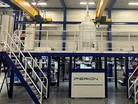
IperionX has announced that it has successfully validated the production of titanium in a continuous titanium production platform, GenX, based on the company’s patented hydrogen magnesiothermic reduction (HAMR) titanium production process. It was previously producing titanium via batches using the innovative HAMR process.
“Achieving continuous primary titanium production has long been the ultimate aspiration for the titanium industry,” says IperionX CEO Taso Arima.
“IperionX’s GenX process is a continuous titanium production platform that is more efficient to operate and easier to scale. These first results exceeded our expectations: more than 500 kilograms of recycled titanium powder processed across four separate runs, with every sample meeting its relevant oxygen specification.”
By eliminating the need for discharging, cooling and recharging steps, the company says that it has achieved a sixfold increase in throughput volume, and a 75% reduction in energy intensity compared with the previous batch process.

Changing economics of titanium production
IperionX is a US titanium metal and critical materials company, which uses metal technologies to produce high performance titanium alloys, from titanium minerals or scrap titanium, at lower energy, cost and carbon emissions.
Titanium is a critical input for defence, aerospace, medical and industrial technologies, titanium offers a high strength to weight ratio and is highly resistant to corrosion. Its high production costs has limited the scope for its application to be considered by other industries.
The introduction of continuous production opens the prospect of a significant reduction of the costs of titanium production via the HAMR process, compared with traditional Kroll production, which is also reliant upon batch production. The process was developed at the University of Utah by Dr. Z. Zak Fang, under the sponsorship of the US Department of Energy’s ARPA-E program.
IperionX expects continuous GenX operation to improve throughput, reduce unit costs, reduce processing time and lead to higher capacity utilisation. As well as reducing Capex intensity per tonne of capacity, continuous production is also expected to lead to reduced fixed operating costs, as labour requirements are expected to be reduced per tonne of production.
From an environmental perspective, continuous production is also expected to lead to a reduction in the need for magnesium, HAMR’s largest reagent cost. Reduced use of magnesium is also expected to reduce the requirement for downstream leaching and handling to process the resulting by-product, although IperionX notes that the full impact of these savings will need to be evaluated and quantified in further production campaigns.
- HAMR or “hydrogen assisted magnesiothermic reduction” (HAMR) allows TiO2 to be reduced and deoxygenated directly by Mg to form TiH2.
- The process can take almost any form of titanium or scrap titanium alloy feedstock and produce titanium powders at very low energy intensity, enabling the potential for low cost, low carbon emission production in a sustainable closed loop.
- The two-stage process uses hydrogen to destabilise titanium powder, allowing the direct reduction of TiO2 by Mg and deoxygenation to form TiH2 with low oxygen levels that can meet the needs of the industry.
- The majority of the energy and emissions savings compared with the Kroll process comes through eliminating the need to chlorinate TiO2 to make TiCl4 and removing the need for vacuum distillation after the reduction of TiCl4.
- The HAMR process is also less environmentally impactful than the Kroll process, as the process requires less Mg than the Kroll process and the recovery of Mg from the MgCl2 by-product is also energy-intensive.
IperionX’s business partners:
Aperam
Aperam is a global player in stainless, electrical and specialty steel and recycling. Aperam’s US recycling division signed an agreement with IperionX in 2025 for the upcycling of up to 12 metric tons of titanium scrap from the consumer electronics sector to manufacture a range of high-performance titanium products.
Carver Pump
Carver Pump is a leading centrifugal pump manufacturer, supplying pumps for civil and military end-users. In 2025, Carver Pump placed an initial purchase order with IperionX for IperionX to produce and test cost competitive casting replacements for pump systems installed aboard US Navy vessels.
GKN Aerospace
GKN Aerospace is a leading global tier one supplier of airframe and engine structures, landing gear, electrical interconnection systems, transparencies, and aftermarket services.
Ford
In 2023, IperionX signed an agreement to collaborate with auto manufacturer Ford to design, test, and additively manufacture a series of titanium components for future Ford Performance production vehicles.
Lockheed Martin
In 2023, Lockheed Martin placed an order with IperionX for titanium plate components, which IperionX agreed to produce using its HSPT process, which offers comparable strength and corrosion-resistance properties to wrought titanium.
Company portals




Executives

Taso Arima
Co-Founder & CEO