
Fortescue And Metso Report Green DRI Advance In Pilbara
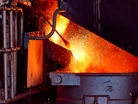
Australian iron ore producer Fortescue has announced that it has successfully produced the first hot metal from its electric Direct Reduced Iron (DRI) production plant at Christmas Creek.
Fortescue Metals Chief Executive Officer, Dino Otranto says: "This is a significant milestone for our Green Metal Project and another step towards producing commercial-scale green metal in Australia.
"For decades Australia has exported iron ore to the world. The next opportunity is to create more value from that ore by producing green metal here at home.”
Mining Digital notes the beginning of hot metal production validates the concept of producing hot metal or iron using iron ore fines from the Pilbara region using an electric DRI plant supplied by Finland based technology supplier Metso.
The installation of Metso’s equipment commenced in September 2025.
“We congratulate Fortescue on this significant step forward. The production of first hot metal at the Christmas Creek Green Metal Project demonstrates the role of Metso’s DRI Smelting Furnace technology in advancing lower-emission ironmaking,” says Piia Karhu, President, Minerals at Metso.
“The project will provide important learnings as Fortescue works towards developing a pathway for green iron production at scale using Pilbara ore. We are proud to support Fortescue in this pioneering work,” adds Piia.
The announcement followed on from the first commercial order for Metso's DRI Smelting Furnace in September 2026. Metso confirmed an order for a 30MVA Outotec DRI Smelting Furnace by Türkiye-based fertiliser producer Eti Bakir: the plant will be used to convert leach residue into molten hot metal at Eti Bakir's Mazidagi plant in Mardin Province.
Metso and Eti Bakir have worked together for several years on cutting-edge technological solutions for the Mazidagi plant. Metso has delivered a beneficiation plant, calcination plant, off-gas cleaning plant, sulfuric acid plant, and metal recovery leaching plant for the Mazidagi site.
Creating DR pellets without using DR feed
Metso’s DRI Smelting Furnace technology offers a route to producing high-quality iron units suitable for downstream steelmaking with lower emissions than conventional blast furnace routes.
The technology has been developed to unlock the utilisation of extensive iron ore reserves for green ironmaking that have previously been considered unsuitable for the DRI steelmaking route due to their higher gangue content.
DRI plants typically produce using hot metal from high purity direct reduction quality iron ore feed, with an iron content of above 64% Fe and low levels of impurities (such as silica, phosphorus and sulfur), which are collectively known as gangue.
The importance of the Fortescue trial is that it demonstrates the practicality of producing iron metallics from the lower Fe iron ore fines produced in the Pilbara region. The Fe content varies from producer to producer, and even between products supplied by producers, but some of the iron ore exported by iron ore producers has Fe content of close to or below 60%. Such products tend to have higher proportions of gangue elements, which have traditionally made them unsuitable for use in metallics production.

Potential renewable electricity advantages
Fortescue is also interested in the possibility of producing DR pellets using the country’s renewable energy supplies. Mining Digital has recently covered Fortescue’s investments in expanding raw materials.
“Australia has some of the world's best renewable energy resources and one of the world's largest iron ore industries. That's a competitive advantage we should be building on. If we don’t, other renewable-rich countries will.
“The real opportunity goes beyond green metal. It's about building a new industrial economy around Australia's renewable energy advantage.
"Nobody has solved green metal production using Pilbara ore at commercial scale yet. That's the challenge we're taking on."
- Metso’s Metso’s Outotec DRI Smelting Furnace offers a mechanical replacement for blast furnaces when combined with a direct reduction plant.
- For the primary steel plant, replacing the blast furnace with a DRI Smelting Furnace reduces carbon dioxide emissions and permits the use of existing iron ore sources as feedstock.
- The process is flexible enough for slag chemistry to be changed to achieve high iron yields and good-quality slag.
- Metso’s Metallurgical Digital Twin helps operators plan and optimise operations with the help of real-time and predictive scenarios.
- The advantage of the small scale Fortescue trial installation is it allows steelmakers to evaluate the potential substitution of blast furnace output for the specific qualities of the ore being used as feedstock: Fortescue's largest iron ore customers are located in Mainland China.
Fortescue’s business partners:
Baowu, formally known as China Baowu Steel Group, is a state-owned iron and steel company headquartered in Pudong, Shanghai, China. Baowu owns a minority stake in Fortescue's FMG Iron Bridge subsidiary.
Formosa Steel owns a 31% stake in Fortescue's Iron Bridge magnetite concentrate project in the Pilbara. Formosa Steel is a steelmaking subsidiary of Formosa Plastics, and has invested in a large integrated steelmaking project in Vietnam, Formosa Ha Tinh.
Taiyuan Iron and Steel, TISCO, a subsidiary of China Baowu, are exploring new low-carbon hydrogen-based metallurgical processes to help the steel industry accelerate its decarbonisation.


Executives
Dino Otranto
Chief Executive Officer

Piia Karhu
President, Minerals