
FQM Sees Wider Trolley-Assist System Mine Vehicle Benefits
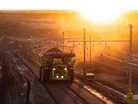
One of the early adopters of the technology, copper miner First Quantum Minerals, has invested heavily in the development, installation and operation of trolley-assist systems at its mining operations. It has gained over 14 years of experience designing, refining and operating trolley-assist systems across its sites.
Gordon White, First Quantum’s Director, Mine Operations & Technology, praises the potential of trolley-assist technology: “The implementation of trolley-assist technology at our mines has led to notable greenhouse gas (GHG) emission reductions. Replacing diesel with renewable energy, this technology saved an estimated 45,000 tonnes of GHG emissions in 2025.”
The mining company currently has over 15km of trolley-assist lines installed across our three largest sites. In 2025, First Quantum mine vehicles completed almost half a million km under trolley across the group’s operations.
We believe that this technology is pivotal for decarbonising load and haul operations.
Patented trolley-assist solution
The company announced in September that its proprietary trolley-assist solution, Quantum Electra-Haul, had been granted a patent and trademark at the UK Intellectual Property Office.
“We spent years at Kansanshi developing and refining its trolley assist system. It works by utilising electric cables that are strung above haul roads, allowing trucks to draw power directly from the line through a pantograph, reducing or eliminating diesel use on those sections.”
Gordon also paid tribute to First Quantum’s close collaboration with its OEM partners, including Liebherr, Hitachi and Komatsu, who have worked with the miner since 2011 in the development of the truck and energy network infrastructure.
“First Quantum has mastered this technology by working with long-term partners to provide stable platforms with multiple trucks on the overhead line at the same time. In addition, we have worked to design and implement critical hardware such as transformers, E-Houses, and trolley line systems.”
The hardware associated with First Quantum’s patented solution is designed to be lightweight and mobile. This addresses the challenge of relocating hardware as the mine evolves through various cutbacks.
Emissions reductions and efficiencies
The use of the trolley-assist technology allows the truck to travel at a higher speed than if it were operating under diesel power. The higher speed offers a significant timesaving, equivalent to approximately a 2-minute time saving per trolley-assist stretch.
Mining Digital notes that the reduction in cycle time is expected to have a positive impact on other key performance indicators such as vehicle utilisation rates and mechanical availability, and even eventually on fleet requirements.
Turning towards the environmental aspect of First Quantum’s investment in the technology, Gordon notes “pit electrification is an area of focus for First Quantum as we seek productive, safe and profitable decarbonisation of our mining activities.”
The use of trolley-assist technology allows trucks to reduce their diesel consumption by up to 90% compared with traditional operations, which directly reduces emissions during operations at the mine.
First Quantum’s long-term life-of-mine plans include significant expansion of trolley assist technology. The company plans to increase this to up to 100% of each up up-ramp cycle.
The company is also expanding other energy-efficiency initiatives including in-pit crushing and conveying, fuel optimisation through rolling resistance programs and blast optimisation to reduce energy intensity.
However, a major focus for First Quantum is increasing its renewable power procurement.
"The company targets a 50% reduction in absolute Scope 1 and 2 GHG emissions and copper production CO2e intensity by 2035. This is dependent on decarbonising power at both Panama and Zambia."
Gordon adds that First Quantum is developing its own sources of renewable energy in Zambia, as an off-taker for 430 MW of solar and wind project with TotalEnergies and Chariot Energy with commissioning expected in 2027.
"The two projects together (wind and solar) are expected to supply around 40% of Kansanshi's annual energy at a fixed USD price over 20 years, which diversifies supply, adds new generation to the Zambian system, and de-risks the expanded project."
Full-electric truck trials and wider electrification
Meanwhile, First Quantum has been investigating the introduction of full electric trucks into its fleet. Since June 2024 First Quantum has been trialling an Ultra-large Full Battery Dump Truck combined with its trolley assist technology at its Kansanshi mine in Zambia. The trial is being conducted in partnership with Hitachi Construction Machinery.
The trial aims to verify the practical performance of all rock haulage operations required of a battery-powered dump truck under actual operating conditions, as well as the verification of dynamic battery charging and discharging cycles.
“Regarding the ongoing trial of the Hitachi Full Battery Dump Truck, we are very pleased that Kansanshi could contribute as a site for the verification tests. Our extensive trolley line infrastructure provides an optimal environment for validating this groundbreaking technology. The success of the trial marks a significant step towards decarbonisation in the mining industry.”
Gordon adds that other open cast miners considering installing a similar trolley system should be aware that a mine needs more than willingness. “It needs infrastructure, expertise, and a proven track record of running trolley systems efficiently in a live production environment.”
- FQM targets a 50% reduction in absolute Scope 1 and 2 GHG emissions and copper production CO2e intensity by 2035.
- First Quantum currently uses grid power, a combination of direct imports from the national grid and purchases from ZESCO for its Zambian mines.
- In 2025, FQM commissioned a 10-year offtake agreement with a power trader for a 100 MW domestic solar installation.
- First Quantum is developing its own sources of renewable energy in Zambia as an off-taker for 430 MW from a solar and wind project developed by TotalEnergies and Chariot Energy, with commissioning expected in 2027.
- These efforts run alongside new hydropower developments in the Northwest and Northern Provinces, all on track for commissioning by the end of the decade.
Key copper miners in Zambia
First Quantum operates two of the largest copper mines in Zambia. The Sentinel Copper Mine in Northwestern Province and the Kansanshi Mine near Solwezi. First Quantum announced a US$1.25bn capacity expansion at Kansanshi in 2025.
Barrick Mining’s Lumwana Mine is undergoing a US$2bn ‘Super Pit Expansion Project’ which aims to double its copper production to 240,000 tonnes a year. The project is part of Barrick’s direct support of Zambia’s growth targets.
Mopani Copper Mines is jointly owned by Abu Dhabi's International Resources Holding and Zambia's state miner ZCCM-IH.
Konkola Copper Mines (KCM) is owned by India's Vedanta and is also investing in a capacity expansion.
The country is also home to the Chinese-owned Nkana Mining and Minerals Processing, as well as US-backed KoBold Metals.
Company portals

Executives
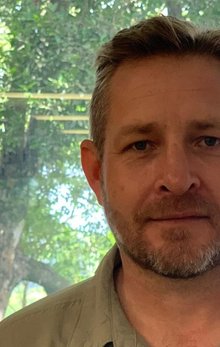
Gordon White
Group Manager Mining