
Rio Tinto And Shougang Commission Industrial Scale CCS Trial
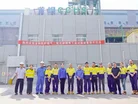
Chinese steelmaker Shougang has successfully built and commissioned an industrial scale carbon capture facility to capture blast furnace gas produced during the production of crude steel at its Jingtang steelmaking complex in Caofeidian, in China's Tangshan steelmaking heartland.
The achievement follows scarcely three months since Shougang’s bioethanol producing subsidiary Shougang Lanzatech announced the completion of the world’s first demonstration project for the biosynthesis of anhydrous ethanol from offgases from a blast furnace, its Hebei Shouland Phase II project.
Jingtang blast furnace carbon capture trial
The trial facility will have the capacity to process up to 3,000 cubic metres of blast furnace gas per hour, and to capture up to 10,000 tonnes of carbon dioxide each year.
Shougang Group Vice President Zhu Guosen comments: “This achievement represents an important milestone for blast furnace decarbonisation and provides valuable demonstration value for reducing emissions in the conventional steelmaking route.
“The project has effectively addressed key challenges associated with carbon reduction in the blast furnace process… Looking ahead, we will continue to optimise the technology, advance the utilisation of captured carbon resources, and contribute to the green and low-carbon transformation of the steel industry.”
The newly built facility follows a smaller-scale blast furnace carbon capture facility commissioned in 2024, as part of the phased technology development program under the partnership. Using waste heat from the existing operations has the potential to further reduce carbon capture costs.
Rio Tinto Iron Ore Sales and Marketing Vice President Ramona Sim says: “This milestone is an important step in our 30-year relationship with Shougang and our work together to find practical ways to reduce emissions from steelmaking.”
“Steelmakers are exploring a range of technologies to lower emissions from existing blast furnace operations, and carbon capture and utilisation could play a key role as these technologies continue to develop.”
Rio Tinto and Shougang are also exploring ways to use the captured CO₂, including converting it into syngas that can be recycled back into the steelmaking process, reducing the amount of new carbon needed to make steel.
However, the Shougang Group has also been actively investigating the possibilities offered by using captured carbon-rich offgases as feedstock for bioethanol production.

Carbon capture as bioethanol feedstock
Shougang has been investigating the possibility of recycling captured carbon at its Jingtang steel mill in Caofeidian since 2018, when it started up bioethanol production using captured carbon from the steel mill as feedstock.
Shougang established a China-based joint venture, Shougang Lanzatech, with its US technology partner, LanzaTech. Shougang Lanzatech has continued to commercialise its products, having initially produced synthetic vehicle fuel. In late September 2026, Shougang Lanzatech exhibited its products at the 2026 China Metallurgical Exhibition.
Meanwhile, in June 2026, Shougang Lanzatech announced that it had achieved a technical breakthrough, completing the world’s first demonstration project for the biosynthesis of anhydrous ethanol from offgases from a blast furnace. The anhydrous ethanol was produced with a concentration of 99.9%. Shougang Lanzatech also added that it had entered commercial operations.
- CCUS can be retrofitted to existing power and industrial plants, which could otherwise still be significant emitters by 2050
- CCUS can tackle emissions in hard to abate sectors, such as in the production of cement, iron and steel or chemicals, and to produce synthetic fuels for long-distance transportation
- In many cases, CCUS products, such as synthetic fuels, are combusted and the carbon contained within them is released to the atmosphere as CO2.
- Applications other than synthetic fuels are being considered; these include oxygenated compounds (polycarbonate, urethane, etc.), biomass-derived chemicals and commodity chemicals (such as bioethanol)
- The reuse of CO2 to reduce industrial emissions will enable the further development of CO2 capture technology without the deployment of CO2 transportation infrastructure
Meet Rio Tinto's decarbonisation partners
Caterpillar - Rio Tinto is partnering with Caterpillar to help develop 220-tonne zero-emission autonomous haul trucks. Rio Tinto is also working with Caterpillar on validating its emerging zero-emissions technology.
Prysmian - Rio Tinto and Prysmian announced that they would partner in March 2026 on an industrial trial to produce low-carbon aluminium cables designed for the rapidly growing data centre market to help customers reduce the carbon footprint of critical IT infrastructure.
Shougang - Rio Tinto has been collaborating with Chinese steelmaker Shougang as part of a plan to develop carbon capture technology to reduce emissions from blast furnace route steelmaking.
US Department of Energy - Rio Tinto is participating in a three-year project as a part of a program funded by the US Department of Energy’s Advanced Research Projects Agency-Energy (ARPA-E). The project is exploring the carbon storage potential of the Tamarack nickel joint venture in central Minnesota.





Executives
Ramona Sim
Vice President Iron Ore Sales and Marketing