
US Passes New Legislation for Stronger Mineral Security

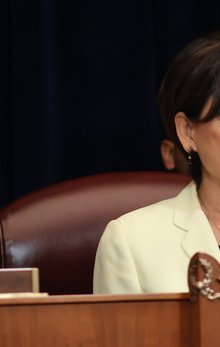
The Developing Overseas Mineral Investments and New Allied Networks for Critical Energies (DOMINANCE) Act, H.R. 7037, introduced by House Foreign Affairs Subcommittee on East Asia and the Pacific Chair Young Kim (R-CA) and Ranking Member Ami Bera (D-CA), have successfully passed through the US House of Representatives.
This will develop stronger resilience for mineral supply chains, limiting risk as global demand increases.
How DOMINANCE works
With the People's Republic of China (PRC) currently overseeing approximately 70% of worldwide rare earth extraction and 90% of refinement, vital energy and mineral networks are increasingly vulnerable to external pressures. This strategic landscape underscores the necessity of the DOMINANCE Act in safeguarding these essential resources.
Through the DOMINANCE Act, the United States aims to prioritise its development, diplomatic and financial mechanisms to lead within the critical mineral and energy resource sectors.
Congresswoman Young shares her support for the new legislation: “The United States needs a durable plan to strengthen critical mineral supply chains and reduce strategic dependencies that threaten our economic and national security. PRC has spent decades expanding its influence across global critical minerals supply chains.
“Our DOMINANCE Act creates the long-term partnerships, institutions and strategy needed to compete with China and secure reliable access to critical minerals for decades to come. We are proud to see our legislation pass the House with overwhelming bipartisan support and look forward to working with our Senate colleagues to advance it into law.”
Organisational support
Significant industry organisations, such as the American Critical Minerals Association (ACMA) and the American Energy Leadership Institute (AELI), lend its support for the DOMINANCE Act. These groups acknowledge the legislation's capacity to fortify operational supply networks and protect the procurement of vital mineral assets.

The ACMA says the new act is vitally important for its operations: “The American Critical Minerals Association (ACMA) applauds Senator Rosen, Senator Curtis, Representative Olszewski, Representative Huizenga and Representative Kim on the introduction of the Critical Mineral Mining Education Act of 2026.
“As the US continues to invest in critical minerals projects, we must advance policies that will support growth and certainty for the sector and ensure a sophisticated and robust workforce to support those efforts. This requires a focus on recruiting, training and preparing our workforce for careers in the production, processing and recycling of minerals. The Department of Energy states that the future of the ‘critical minerals and materials economy will require thousands of workers spanning all levels of operation.’”
Christopher Johnson, President of the American Energy Leadership Institute provides his insight on how the act impacts global affairs: “We appreciate the committee’s bipartisan recognition of the critical role an energy bureau at the State Department plays in advancing US energy diplomacy and strengthening global energy security.
“Establishing the Bureau of Energy Security and Diplomacy will help ensure the United States continues to advance affordable, reliable and secure energy around the world, support allies amid geopolitical instability and reinforce America’s role as a global energy leader.”
In 2026, US President Donald Trump signed H.J. Res. 140 into law. The resolution supports mineral development and long-term stability in northern Minnesota.
Company portals
Executives
Young Kim (R-CA)
Member of the US House of Representatives