
Mercuria: Securing Mining Assets Amid Global Disruption
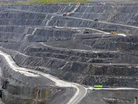
Commodity traders are repositioning as mine financiers and equity investors in extraction operations as supply-chain disruption and geopolitical risk force a rethink of how critical materials are sourced and controlled.
Mercuria Energy Group is deploying more than US$3bn in pre-payment financing across copper and zinc mining operations, providing upfront capital to mine operators in exchange for future offtake. The Swiss trader is taking equity stakes in extraction assets, marking a fundamental shift in how trading houses engage with metals supply chains.
Key agreements include financing for copper mine production in Kazakhstan and Zambia, alongside offtake arrangements tied to mining operations in the Democratic Republic of Congo. Together, they underline how traders are increasingly acting as mine financiers, not just intermediaries moving material between buyers and sellers.
For Mercuria, the strategy could mean greater control over sourcing at a time when both copper and zinc markets remain fundamentally tight. By providing capital directly to mine operators, the company is positioning itself closer to extraction at a moment when access to primary supply is becoming as critical as logistics and processing.

Mine financing secures extraction supply
The move into mine financing reflects broader trends across commodity trading. Energy consultancy Baringa has noted energy trading houses were expanding into metals, with a particular focus on materials critical to the energy transition.
David Kane, partner and expert in commodities and energy trading at Baringa, says: "This move is not about broad diversification into all metals but a targeted play on those critical to the energy transition."
Copper and zinc mining operations in resource-rich regions across Africa and Central Asia are attracting investment as companies seek to diversify away from traditional supply bases and mitigate geopolitical risk. Mercuria's financing deals in Kazakhstan, Zambia and DRC could provide visibility over long-term supply flows from extraction through to delivery.
Pre-payment financing structures allow traders to secure future supply while providing mine operators with immediate capital for expansion or operational costs. This model strengthens relationships between traders and producers while reducing exposure to spot market volatility.
Industry analyst Federica Maiorano says: "Mercuria's move into direct aluminium smelter ownership is an important sign of how commodity traders are changing their role in the supply chain. By moving into asset ownership, Mercuria is positioning itself closer to production at a time when both copper and aluminium markets remain fundamentally tight."
Copper mining becomes strategic priority
Mercuria is also targeting copper mining investments, reflecting strong long-term demand driven by electrification and energy transition technologies. Securing upstream exposure to copper mine operations is likely to become a central pillar of its supply chain strategy.
The company is taking a 25% stake in an aluminium smelter in Indonesia operated by China's Tsingshan, its first equity investment in processing capacity. The facility relies on bauxite mining for aluminium production, linking extraction operations with downstream processing in a region where resource-rich countries are attracting capital.
Indonesia's growing role in metals processing reflects a wider supply chain realignment. Access to bauxite mining and other extraction assets in Asia and Africa is becoming increasingly important as traders seek control over primary supply.
The shift into equity ownership marks a further step in that evolution. By taking stakes in production assets, Mercuria can reduce exposure to market dislocation while strengthening visibility over mine output and processing capacity.
Volatility reinforces upstream control
Supply chains face renewed pressure following disruption in the Strait of Hormuz, a key maritime chokepoint. The closure has constrained flows equivalent to around one-fifth of global aluminium supply, exposing the fragility of heavily concentrated shipping routes.
Prices have responded accordingly, with benchmark aluminium rising sharply since the disruption began. For traders like Mercuria, this volatility is reinforcing the need for greater control over mine financing and extraction operations.
Mercuria's expanding metals and energy portfolio has driven up debt levels, prompting scrutiny from lenders as trading houses scale up capital-intensive operations. However, the company maintains it has sufficient liquidity to support its growth.
Mercuria CEO Marco Dunand says: "We're pushing further into energy and adjacent sectors where we see long‑term structural demand. At the end of the day, capital follows logic - markets evolve, and strategies have to evolve with them."
Commodity traders are repositioning as integrated supply chain players, combining mine financing, equity stakes in extraction assets and logistics to navigate an era defined by disruption, resource competition and shifting trade flows. That evolution could reshape how critical materials are sourced, financed and delivered in the years ahead.


Executives

Marco Dunand
CEO