
Anglo American's Innovation to Tackle Nature-Based Risks
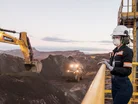
Anglo American is expanding its nature-positive strategy to tackle environmental risks across its entire value chain.
By using a mix of high-tech monitoring and strategic partnerships, the mining company is moving from simple risk management to active stewardship of the ecosystems it touches.

Understanding the rubber trail
The leading global mining company, which is focused on the responsible production of copper, premium iron ore and crop nutrients, recognises that nature-related risks and impacts exist both upstream and downstream in the value chain.
To combat this, Anglo American has begun to pilot new ways of understanding, prioritising and influencing change where the company does not hold direct operational control. The use of mining tyres represents a critical input for mining operations, but they come with the demand for natural rubber – which has largely been associated with deforestation, biodiversity loss and social impacts in tropical landscapes.
In order to have a greater understanding of these risks, Anglo American used a detailed pilot assessment of the tyre supply chain, with a focus on natural rubber sourcing linked to Michelin. Through a Taskforce on Nature-related Financial Disclosures (TNFD) pilot, it followed the LEAP process (Locate, Evaluate, Assess, Prepare), providing a structured way to assess nature-related dependencies in complex supply chains.
Using global datasets and tools such as the WWF Biodiversity Risk Filter, ENCORE, IBAT and Global Forest Watch, Anglo American mapped priority suppliers and identified high-risk sourcing regions, including rubber plantations in Indonesia.
The assessment uncovered dependency on ecosystem services, including soil fertility and water regulations. Significant risks related to deforestation, habitat loss and impacts on threatened species and local livelihoods were identified.
Nature-related risks could manifest as supply disruptions, volatile pricing, regulatory hurdles and reputational damage for mining operations.
Anglo American leveraged this data to engage directly with suppliers to secure commitments on zero deforestation and ecosystem restoration, innovate through systemic solutions such as circular recycling programmes and alternative materials, and invest in landscape-scale, nature-based initiatives.
All sustainability, net zero and sustainable procurement leaders should attend:
- Procurement & Supply Chain LIVE: The Net Zero Summit - QEII Centre, London, March 4-5
- Procurement & Supply Chain LIVE: The US Summit - Navy Pier, Chicago, April 21-22
Co-located with Sustainability LIVE, these events brings together CPOs, CSCO, CSOs, ESG leaders and senior decision-makers at a moment when sustainability, supply chains and commercial performance are increasingly interconnected.
Tickets can be booked online today for The Net Zero Summit and The US Summit. Group discounts available.
Marine health monitoring with eDNA
Traditional marine surveys are often expensive and provide only a snapshot in time. In contrast, eDNA monitoring offers a non-invasive, highly sensitive way to track biodiversity.
By analysing genetic material found in seawater, Anglo American can identify everything from sensitive local species to potential invasive threats with greater spatial coverage and accuracy.
In Saldanha Bay, Anglo American utilised eDNA to establish a biodiversity baseline and monitor how shipping and port activities influence the ecosystem over time. This data acts as an early-warning system for shifts in species composition, detection of non-native species introduced via global shipping, and informed dialogue with port authorities and customers.
In partnership with the Saldanha Bay Water Quality Trust, this ongoing monitoring guides practical conservation actions and ensures transparency across the value chain, ensuring that economic activity and ecosystem resilience can thrive side-by-side.
Building systemic resilience in mining
These upstream and downstream initiatives are driven by a singular realisation: nature-related risks are systemic. They do not exist in isolation at a single mine site; they are cumulative and embedded across the entire lifecycle of mining products.
By engaging across the full value chain, Anglo American shifted from reactive mitigation to proactive leadership by anticipating risks earlier, influencing outcomes in areas beyond its direct operational control, and building resilience through contributing to the health of broader landscapes and seascapes.
Duncan Wanblad, Chief Executive Officer at Anglo American, says: "Our Sustainability Strategy is based on what we firmly believe to be the right thing to do over the long term for our company and our people, local communities, host governments and of course our investors."
At its core, this approach supports Anglo American's commitment to a nature-positive future in mining. By partnering with suppliers, customers and stakeholders, the company moves beyond mine-level fixes to deliver meaningful change at scale.
Company portals
Executives
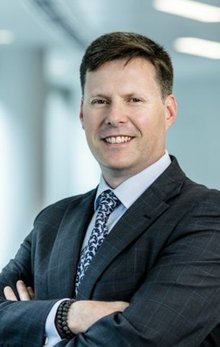
Duncan Wanblad
Chief Executive Officer