
Antennas Maximise the Value of Mining Data Communications
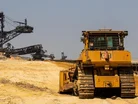
Mines rely on real-time data in the same way as connected farms, smart cities and networked industries.
Uninterrupted access to robust wireless connectivity enables sensor networks, moving objects, machines and assets to communicate critical data and ensure optimised operations.
There are two key types of mines to consider: surface mines, which are open to the sky, and underground mines which pose greater challenges for wireless signal propagation.
The surface opportunity
Surface or open-pit mines benefit from having significant open space available for network infrastructure deployments which gives antennas a large coverage angle.
Examples such as drag mining, types of quarrying and open pit mining happen over large areas which are suitable for technologies such as global navigation satellite system (GNSS) with real-time kinematic (RTK) correction to be easily utilised.
The high walls on the haul roads mean there can be some multipath effect and signal blockage so it's essential to have the best antenna design to reject left-hand circular polarisation (LHCP) signals and maximise the visible satellites. In general, things become more challenging as mines get deeper and the side walls of mines become more significant obstacles to clear visibility.
Complexity increases underground
In contrast, underground mines have numerous characteristics that are unhelpful for radio communications. Some mining methods involve following mineral seams in confined spaces with multiple twists and turns, linking extensive networks of drifts and galleries. This means there are several challenges involved in connecting mining areas with underground vehicles, extraction systems and robust links to the surface.
In addition, satellite positioning via GNSS and RTK is not possible in underground scenarios so use cases, such as intelligent vehicle management at surface mines, cannot be replicated underground. GNSS RTK technology on the surface enhances safety and efficiency by providing precise positioning for mining equipment for transport vehicles.

Technology choices
Mining organisations have an extensive choice of wireless technologies to select from and decisions should be made following careful assessments of connected use cases. Technologies such as Wi-Fi are unable to provide the highly robust, predictable and secure wireless connectivity that automated mining operations demand. It’s unacceptable for a mining machine to deviate off course or to suffer downtime while it waits for inputs.
TETRA and P25-based radio networks were never built to support broadband data and video communications and therefore can’t handle the rich information that mining assets need to communicate.
For lower-bandwidth use cases, such as sensors that need a long battery life and only transmit small amounts of data at intermittent intervals, LoRaWAN can provide a cost effective, low power solution for large area coverage.
5G adoption
Increasingly, mines are adopting private 5G networks because of their extended mobile broadband capabilities. These include sub-10 millisecond latency, up to 20Gbps bandwidth and five-nines reliability.
The technology is robust and supports high end-user density. 5G coverage can be complex to achieve and a network may need a combination of small cells, microcells or picocells along with micro-remote radio heads (RRHs) and distributed antenna systems (DAS) to ensure full coverage.
Combo antennas add flexibility
Maximised versatility can be achieved with combo antennas that combine 5G, GNSS, LoRaWAN and other wireless technologies in a single antenna. This enables use cases that traverse surface and underground mine sites while providing unparalleled robustness in complex signal environments so the system can failover to the best available wireless technology without interruption.
Typically, combo antennas with high IP and IK ratings and low profile housings are best suited to mining environments because they maximize uptime while being small enough to be deployed in compact tunnels. To find out which antennas are suited to your mining scenario, contact [email protected] for a free consultation.
- Written by Colin Newman, Director of Global Antenna Business Development, Quectel
Company portals

Executives
Colin Newman
Director of Antenna Business Development