
What Does Argentina's Bill Mean for Mining Sustainability?
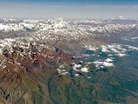
A new bill has been passed in Argentina, authorising the mining in ecologically sensitive areas of glaciers and permafrost.
The bill was initially promoted by the President of Argentina, Javier Milei, despite environmental protests.
The law will make it easier to mine metals such as copper, lithium and silver from frozen parts of the Andes, positioning Argentina into a more advantageous role within metal supply chains.

A recent ruling
In 2010, Argentina passed the Glacier Law which prohibited all mining and exploration activities in glacier regions. This was under the ruling that they were protected as water reserves. In recent years, however, there has been a move to reform the ruling, moving the responsibility of defining protected glacier areas from the Argentine Institute for Snow, Ice and Environmental Sciences (Ianigla) to various provincial governments.
This reform has been backed by President Javier Milei, who had said the change enabled the provinces to make use of the resources in their region. In February 2026, the bill was approved by Argentina's Senate, but the ruling by Congress in early April was the final step to starting mining action.
After nearly 12 hours of debate, 9 April marks the approval. The chamber of deputies approved the amendment with 137 votes in favour, 111 against and three abstentions. Environmentalists, however, disagree with the ruling, stating that protections for crucial water sources will be weakened following the legislative changes.
"Attempts by foreign organisations to interfere failed, and environmentalists determined to block the progress of the Argentine Republic were defeated once again," President Milei celebrates.
Sustainability, procurement and supply chain leaders won’t want to miss Procurement & Supply Chain LIVE, taking place at Navy Pier, Chicago, on April 21–22.
Co-located with Sustainability LIVE: The US Summit, the event unites senior decision-makers at a time when supply chains, sustainability and business performance are more interdependent than ever.
Secure your place now for The US Summit – group booking discounts available.
Opportunities for growth
In Argentina, there are approximately 17,000 glaciers or rock glaciers. In the last decade, glacial reserves have shrunk by 17% in the north-west, where mining is concentrated. According to those pushing the bill, it is an essential one to pass in order to attract large-scale mining projects. Based on industry forecasts, the Central Bank of Argentina has estimated that Argentina could triple its mining exports by 2030.
"THE OBSTACLE IS OVER: WE'VE MODIFIED THE GLACIER LAW," stated Martín Menem, President of the Chamber of Deputies of Argentina on X.
"For years, ideological obstacles hampered the development of the provinces and blocked thousands of jobs. Today, that begins to change. It's not about the environment or development: it's about growth with clear rules, guaranteeing the protection of natural resources and respecting federalism so that Argentina can finally take off.
"That is the course set by the president. Legal certainty and freedom to invest."
Those in support of the bill argue that it will help set clearer boundaries on mining, allowing mining companies to operate more effectively and economically.
In response to Martín's post, Luis Caputo, Minister of Economy of the Argentine Republic stated: "US$165bn in exports by 2035. Thousands of jobs. Provinces that will be forever changed."
The bill has been backed by governors in northern Andean provinces, specifically those with strong mining sectors. This includes those from Mendoza, San Juan, Catamarca and Salta.
The previous legislation was seen as a hinderance, as it barred mining and industrial activity in those areas. Now, the reform allows for further investment into the sector and could position Argentina as a key supplier for copper and lithium amid the energy transition.
President Milei's government is aiming to attract companies like Glencore and BHP by granting tax, currency and legal incentives to mining companies. As the demand for copper and lithium increase to meet the wider energy transition, Argentina's resources could make it a vital player in the supply chain.
Social concerns
Though the approval of the mining bill could bring greater economic prosperity to the country, alongside more job opportunities, those in opposition are concerned about the impact on the environment and more vulnerable resources.
Environmentalists argue that the bill will reduce the country's fresh water reserves and negatively impact its people. Protestors outside Parliament on 8 April held signs stating "water is more precious than gold".
Activists have argued that the bill prioritises economic gain over the Argentinian people themselves, showing concerns for decreasing water reserves and a negative impact on the environment.
"Without water, we can't even think about a growth and development project," states Congresswoman Natalia de la Sota.
The debate is firmly taking place between those who see the bill as an opportunity and those who see it as step in the wrong direction. Though it will allow for greater economic resilience in the ongoing energy transition, if implemented without care, Argentina could be facing greater social and environmental challenges.