
Caterpillar & RPMGlobal: The Future of Mining Tech
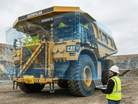
Caterpillar has finalised its acquisition of RPMGlobal Holdings, the Brisbane-headquartered mining software company.
The transaction, which was first announced in October 2025 and completed in February 2026, could represent a notable expansion of Caterpillar's technology capabilities and reflects wider changes in how the global mining sector approaches operations.
RPMGlobal offers software solutions across the mining value chain, supporting customers in planning, operating and managing their sites. The company will maintain its brand identity and continue delivering its existing products and services under the RPMGlobal name.
"Acquiring RPMGlobal is a notable milestone supporting our strategy to solve the challenges our mining customers face every day," says Denise Johnson, Group President of Caterpillar Resource Industries.
"By combining RPMGlobal's software capabilities with Caterpillar's proven equipment and technology solutions, we will unlock new opportunities to help customers improve mine site performance, while advancing the future of mining technology in a way that is practical, scalable and grounded in their needs."
Integrating equipment with operational intelligence
Caterpillar has historically been associated with heavy equipment including trucks, dozers and excavators. The acquisition could suggest a shift towards providing comprehensive operational frameworks rather than standalone machinery.
The integration of RPMGlobal's tools, such as XPAC for scheduling and HAULSIM for simulation, into Caterpillar's existing MineStar ecosystem could enable more seamless communication between planning software and physical equipment.
When both systems originate from the same provider, this integration could create an operational environment that makes it more challenging for competitors such as Komatsu or Epiroc to establish presence at Caterpillar-equipped sites.
Richard Mathews, Chief Executive of RPMGlobal, adds: "Given the complementary nature of the two companies' technology offerings, Caterpillar is an ideal home for both our people and our software products.
"By deeply integrating our solution sets, we will be able to better solve the most difficult challenges mining companies grapple with daily. The team and I are looking forward to working with the Caterpillar team for the benefit of our customers."
Addressing efficiency in critical minerals extraction
The timing of this transaction aligns with increasing global demand for lithium, copper and nickel, materials considered essential for energy transition.
According to industry observations, declining ore grades at numerous sites mean miners must process greater volumes of rock to extract comparable amounts of metal, creating pressure on operational efficiency.
In this context, predictive modelling and simulation software have become increasingly important operational tools.
RPMGlobal's capabilities could allow mining companies to optimise machine time and fuel consumption, potentially addressing cost pressures in the current mining environment. With the global mining software market projected to reach US$21.45bn in 2026, software has emerged as a significant factor in cost management.

Environmental reporting and operational design
Environmental, social and governance considerations are influencing mining operations across multiple jurisdictions.
In certain regions, real-time carbon reporting has become a licensing requirement, whilst companies face growing expectations to demonstrate progress towards emissions reduction targets.
RPMGlobal's software enables miners to design operations with consideration for environmental impact and haulage route efficiency.
When integrated with Caterpillar's equipment data, this could enable real-time tracking of carbon emissions per tonne of material moved, a capability that appears to be transitioning from competitive advantage to regulatory necessity.
For Caterpillar, the acquisition could diversify revenue streams beyond cyclical hardware sales towards software subscriptions that tend to generate more consistent margins.
For the mining sector, the move could accelerate development timelines for autonomous operations, where safety and efficiency are managed through digital modelling and simulation rather than continuous human presence on site.
The transaction reflects a broader pattern in mining, where operational decisions are increasingly informed by data analysis and predictive technology rather than equipment capacity alone.
Company portals


Executives

Denise Johnson
Group President

Richard Mathews
CEO