
Can Lithium Mining Keep Up with Soaring Clean Energy Demand?
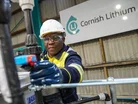
Lithium now sits at the centre of the global push to decarbonise.
The mineral, long used in everything from ceramics to medicine, is now indispensable for EVs and battery storage.
As the shift away from fossil fuels accelerates, mining enough lithium - ethically, sustainably and quickly - has become one of the energy transition’s biggest challenges.

Clean energy means more mining
Clean technologies rely on a different mix of resources than traditional fossil fuel systems. Where a petrol-powered car might only need a modest set of metals, an electric one demands six times more minerals.
A wind farm needs nine times more mineral input than a gas-fired plant. Since 2010, the mineral requirements for new power generation have increased by 50%.
This demand comes from the essential role minerals play in the performance of renewable systems.
For batteries, five minerals dominate: lithium, nickel, cobalt, manganese and graphite. These influence how long a battery lasts, how well it stores energy and how efficiently it can release it.
Then there's copper and aluminium, needed in the vast wiring networks that connect solar panels, wind farms and EV charging stations. Rare earth elements help build the magnets in turbines and electric motors. But no mineral has risen in importance like lithium.
According to the International Energy Agency (IEA), lithium is the most essential mineral for meeting climate goals.
If countries stick to existing climate policies, the IEA’s Stated Policies Scenario, lithium demand will double by 2040.
Under more ambitious plans, such as the Sustainable Development Scenario aligned with the Paris Agreement, demand could rise more than 40 times. By 2040, lithium is expected to make up nearly 90% of the total mineral demand for clean energy.
Expanding supply to meet demand
With such a steep climb in consumption ahead, countries are trying to expand production as fast as possible.
In Chile, the world’s second-largest lithium reserve holder, state-owned copper firm Codelco has joined forces with SQM, a major lithium producer. Their partnership will begin extracting lithium from the Salar de Atacama salt flats by 2025, with Codelco set to lead operations from 2031 through to 2060.
Máximo Pacheco, Codelco’s Chairman, says: “Just as we have contributed to making Chile the world leader in copper production, we will now contribute to making our country a leader in the production of lithium.”
The project is not just industrial but also environmental. Codelco and SQM commit to high environmental standards, local community engagement and technology upgrades to make lithium extraction more sustainable.
The aim is to cement Chile’s role as a stable supplier of climate-critical minerals, while supporting local development.
Meanwhile, global mining giant Rio Tinto has finalised a US$6.7bn acquisition of Arcadium Lithium. The deal gives Rio control over some of the world’s best lithium deposits, as well as customers like General Motors, Tesla and BMW.
Chief Executive Jakob Stausholm says the move will “create a world-class lithium business” that supports the clean energy transition.
With copper, aluminium and iron ore already in its portfolio, Rio is now aiming to offer an integrated supply of materials for low-carbon technology.
Supply chain bottlenecks pose real risks
Even with new projects coming online, supply remains well below what’s needed. The IEA warns that by 2030, current plans will meet only half of projected demand for lithium and cobalt. For copper, it's 80%. That gap risks slowing the energy transition and raising costs.
The supply challenge isn’t just about volume. It's also about where and how minerals are sourced. More than 70% of cobalt and 60% of rare earth elements come from just one or two countries, mainly the Democratic Republic of the Congo and China. This creates supply vulnerabilities.
Mining projects are also slow to develop.
From discovery to production takes an average of 16.5 years—far slower than the rollout of renewables and EVs. Environmental concerns make permitting difficult. Lithium mining, especially in arid places like the Atacama Desert, faces criticism over water use, pollution and local disruption.
Recycling could help, but only a fraction of global demand, around 10% by 2040, will be met this way. Battery recycling is still maturing and most EVs on the road today won’t be scrapped for years.
Costs are already rising. For lithium-ion batteries, raw materials now make up 50–70% of the total price. That’s up from 40–50% just five years ago.
If lithium or nickel prices double, battery costs could rise by 6%, undermining cost-saving gains from mass production. Electricity grids will also feel the squeeze as copper and aluminium prices climb.
The challenge ahead is not only mining enough lithium, but securing it reliably and sustainably. Governments and industries will need to coordinate efforts.
That includes setting clear climate policies to encourage mining investment, building resilient supply chains, investing in technology to reduce mineral dependency and developing strong recycling systems.