
IEA: Why Lithium Battery Demand Puts Pressure on Mining
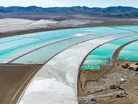
The global lithium-ion battery market has expanded sixfold since 2020, reaching a value of US$150bn.
Yet, behind this growth lies a sobering reality for the mining sector: the industry must now extract more mineral ores over the next three decades than humans have mined throughout the past 70,000 years to support the energy transition, according to EY.
This surge has been driven predominantly by electric vehicle demand, which accounts for more than 70% of battery deployment, according to new analysis from the International Energy Agency (IEA).
One in four cars sold globally in 2024 was battery powered, while grid-scale storage systems claimed approximately 15% of the market.
Meanwhile, portable electronics have collapsed to below 5% of current output.

Mining faces structural supply constraints
The battery boom has created an unprecedented supply-demand squeeze for critical minerals. McKinsey & Company forecasts that battery production will consume 95% of total lithium supply by 2030, yet the mining sector faces significant structural bottlenecks that could prevent it from meeting this requirement.
Deloitte highlights that new mining projects often encounter lead times exceeding 15 years due to complex permitting processes. Meanwhile, PwC estimates that the industry requires US$500–$600bn in capital expenditure by 2040 to bridge the widening gap between mineral demand and available supply.
The challenge is compounded by China's dominance in mineral processing. Currently, 70% of lithium chemicals are refined in China, creating what PwC describes as a strategic "power shift" as Western firms prioritise "friendly-shoring" to secure supply chains.
This dependency extends throughout the battery production ecosystem – China manufactured more than 80% of all batteries in 2024, while Chinese, Korean and Japanese firms accounted for virtually all global cell production.
All supply chain, sustainability, Scope 3 and net zero leaders should attend:
- Procurement and Supply Chain LIVE: The Net Zero Summit - QEII Centre, London, March 4-5
- Procurement and Supply Chain LIVE: The US Summit - Navy Pier, Chicago, April 21-22
Co-located with Sustainability LIVE, these events brings together CSCOs, CSOs and senior decision-makers at a moment when sustainability, supply chains and commercial performance are increasingly interconnected.
Tickets can be booked online today for The Net Zero Summit and The US Summit. Group discounts available.
Price dynamics threaten producer viability
Falling costs have accelerated battery adoption but raised questions about market sustainability. In 2024, average battery prices dropped by 8%, driven by efficient manufacturing and intense competition between producers.
Grid storage systems fell to a third of their 2020 levels, making batteries as competitive as gas peaker plants in some markets. However, these gains have come with geographical disparities.
The IEA found that Chinese battery packs sold for around 30% less than American equivalents and were 35% cheaper than European prices. Lithium iron phosphate batteries saw prices fall by more than 15%, compared with less than 5% for nickel-rich alternatives. As a result, LFP batteries now cost 40% less than nickel-manganese-cobalt options and command more than half of the EV market.
The IEA warns that these low prices could be unsustainable, with many producers losing money. This price pressure threatens the capital-intensive investments required for mining expansion, potentially exacerbating future supply constraints.
Geographic concentration creates vulnerability
Nearly every battery powering electricity grids relies on China for at least one critical supply chain step.
According to the IEA, 70% of EVs built outside China contain batteries or components sourced from Chinese suppliers, while more than 90% of battery storage systems worldwide depend on LFP cells produced in China.
Beijing's export controls on key battery components—first introduced in 2023—have begun to expose these vulnerabilities.
Korean producers are racing to build LFP production lines as alternatives, but face punishing competition from established Chinese manufacturers in an oversupplied market. Production capabilities in Europe and the US have been increasing as both regions court battery sector investments.
However, the IEA finds that production costs in the EU and US can run as much as 50% higher than in China.
Matching Chinese manufacturing efficiency will require years of sustained investment and partnerships with experienced manufacturers.