RIGI Approval Advances Glencore’s Argentinian Copper Hub
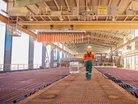
Glencore’s MARA operation, a large-scale mining project located in Argentina’s Catamarca province, has received approval under the Intensive Regime for Large Investments (RIGI).
The project will integrate Agua Rica, a deposit holding an estimated 12 billion tonnes of mineral resources, with the processing facilities of the dormant Minera Alumbrera. Once fully synergised, Glencore expects the combined MARA plant to become a top 25 copper producer.
The company has also confirmed that its Alumbrera restart is ahead of schedule, setting the project on track to reach its first production stage in late 2027. RIGI’s approval will provide the necessary fiscal and tax stability to carry the project forward.
“We thank the national authorities and the province of Catamarca for their constructive engagement throughout the process,” says Martín Pérez de Solay, CEO of Glencore Argentina.
“Together with the restart of Alumbrera and our plans for El Pachón, Argentina represents a key pillar of Glencore’s copper growth.”
Against the backdrop of the Andes-Atlantic Corridor, announced in September 2026 – an infrastructure investment partnership set to expand US access to Argentinian mining products – a fully launched, RIGI-backed MARA could have significant market implications for both Argentina and Glencore.
Brownfield infrastructure: large-scale at a low cost
Closed in 2018, Alumbrera is Argentina’s oldest and largest open pit mine. It ranked among the top 10 largest copper mines in the world in 2000.
The operational structure of the MARA project relies on linking the undeveloped Agua Rica deposit with dormant but well-maintained processing infrastructure at Alumbrera, located 35km away.
By synergising Agua Rica with Alumbrera’s established concentrator plant, slurry pipeline and logistics network, Glencore can significantly reduce the operational costs associated with a greenfield copper project.
The brownfield integration strategy delivers several operational benefits:
- Eliminating additional land clearance for new plant construction
- Retaining skilled regional workers ahead of full MARA integration
- Reducing risk once Agua Rica’s first ore is ready for processing
- Shortening time to market for first copper concentrate production
- Optimising logistics pathways connecting Catamarca to ports
Additionally, with Glencore’s history as Alumbrera’s operator before its 2018 closure, the company brings existing asset and logistics knowledge to the project, offering the potential to further streamline Agua Rica’s eventual ramp-up.
““Argentina represents a key pillar of Glencore’s copper growth.” ”

The Andes-Atlantic Corridor: implications for Glencore
The advancement of MARA coincides with broader international policy initiatives designed to secure copper supply.
As US-Argentinian critical minerals coordination strengthens, MARA positions Glencore as a frontrunner in the emerging Argentinian copper market.
The Andes-Atlantic Corridor deal will see an investment partnership financed in part by the Export-Import Bank of the United States, with a framework of up to US$7bn committed through 2027.
The deal aims to renovate and extend Argentina’s transport links in order to support export economics, designed to improve the connection between Atlantic ports and Western markets. It has the potential to significantly bolster Argentina’s role as an alternative copper source for the US.
As global demand for copper intensifies across power grids and electric mobility, the combination of domestic incentives like RIGI and international trade corridors provides the structural backing required to bring large-scale South American deposits into production.
“RIGI approval is a significant milestone for MARA and a clear sign of confidence in Argentina’s long-term investment framework, helping to underpin the country’s ambition to be one of the world’s leading copper producers,” says Martin.
With MARA sitting alongside Glencore’s El Pachón project in the Calingasta province, the company is in a strong position to boost its copper market standing.
Meet Glencore’s key partners
General Motors
General Motors is a global automotive manufacturer headquartered in Detroit, US, employing over 150,000 people. The company maintains a multi-year commercial supply agreement with Glencore to source Australian-processed cobalt for its Ultium battery cathodes. This strategic partnership secures critical raw material inputs directly from audited processing facilities, de-risking high-volume assembly lines across its North American EV manufacturing sites while reinforcing supply chain transparency and regulatory compliance for battery component origination.
BHP
BHP is a global natural resources company headquartered in Melbourne, Australia, employing over 80,000 workers. BHP partners with Glencore through a shared 33.75% equity stake in Compañía Minera Antamina in Peru, one of the world’s largest copper-zinc deposits. The joint venture framework enables both companies to optimize capital efficiency, share regional infrastructure expenditure and co-manage operational risk across large-scale extraction, grinding and logistics operations in South America.
Tesla
Tesla is an electric vehicle and clean energy manufacturer headquartered in Austin, US, with a global workforce exceeding 140,000 employees. Tesla maintains long-term supply arrangements with Glencore to purchase high-purity cobalt and battery metals directly from certified industrial operations, including Murrin Murrin in Australia. Sourcing raw materials directly from audited primary producers guarantees material traceability, reduces spot market exposure and supports aggressive production scaling targets across global assembly facilities.
Company portals
Executives
Martín Pérez de Solay
Chief Executive Officer