
Scania: Leading the Charge in Mining Truck Electrification
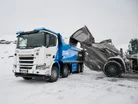
Scania has expanded its collaboration with Swedish mining company LKAB, introducing a fully-electric 8x4 heavy tipper to active duty at the Malmberget iron ore mine in northern Sweden.
It marks the first time Scania has equipped an electric truck with two steerable front axles, adding both power and manoeuvrability to heavy underground haulage.
Improved load capacity and stability
Nicknamed “Sleipner”, after the eight-legged horse from Norse mythology, Scania and LKAB's vehicle represents a push towards reducing the emissions generated by mining operations.
Built on Scania’s modular electric platform, it delivers improved load capacity and stability tailored for the rugged and steep mine roads of Malmberget.
Peter Gustavsson, Project Manager for Electrification of Mobile Machines at LKAB, comments: “If it performs as expected, we will have a fully fossil-free solution for transporting waste rock in truly demanding mining operations."
LKAB transports more than 5 million tonnes of waste rock every year from its sites. Converting this load to an electric solution carries the potential for substantial CO₂ emissions reductions.
The collaboration between Scania and LKAB is designed to test the truck in full-scale, day-to-day operations while delivering a practical climate benefit.
“Partnerships like this are essential for learning and accelerating progress,” adds Tony Sandberg, Head of Scania Pilot Partner.
Demands on electrification
The 60-tonne tipper operates along a five-kilometre route between a chute loading station and a backfilling site at Tingvallskulle.
The course includes a 250-metre elevation gain, which adds load and stress to the drivetrain. Scania’s engineers use this route to measure traction, braking, battery management and driver experience.
The vehicle carries a 38-tonne payload, replacing a diesel truck of equivalent size. It is powered by two MP20 battery packs with a combined installed capacity of 416 kWh. A 400 kW EM C 1-4 electric motor provides propulsion, delivering performance comparable to combustion-engine models without the exhaust emissions or vibration.
Scania has built Sleipner for the mining and construction segment, focusing on strength and adaptability in tight underground and open-pit environments. The twin steerable front axles improve turning radius and stability, especially when navigating narrow access roads or loaded inclines.

The mining sector, known for its heavy-duty applications and challenging terrain, places particular demands on electrification. Weight, battery life, charging infrastructure and reliability under pressure all become critical.
Sleipner is the latest result from Scania’s effort to prove electric vehicles can handle these operational realities.
Building on experience
Sleipner follows an earlier Scania electric tipper already in use at the same site. The first truck, a 6x4 fully electric model, has been running at Malmberget since 2022. Scania uses these deployments to gather operational data, assess battery performance and iterate on the next generation of mining-specific electric trucks.
Each deployment serves a dual purpose: helping the customer decarbonise and giving Scania insights into how electric powertrains hold up in production mining cycles. Feedback from drivers, mechanics and operations teams plays into the development of subsequent units.
“Each new truck we put into operation helps us and our customers understand how to scale electrification across the toughest environments," continues Tony. "This vehicle is just the start of many more mining solutions to come."
The goal is not just to replace diesel trucks with electric ones, but to build a mining transport system that meets LKAB’s target of a fossil-free value chain.
By pushing the technology through demanding use cases, Scania is testing the limits of current electric solutions while shaping future platforms.
Company portals

Executives
Tony Sandberg
Vice President Scania Pilot Partner
