
Syrah Resources: Navigating Africa's Resource Nationalism
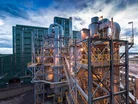
Mozambique has ushered in new laws that enforce 15% state ownership in all mining ventures and processing of materials.
It is the third African state to tighten regulations around critical minerals, following Zimbabwe and the Democratic Republic of Congo (DRC), raising the question of how Western mine operators in the African region will navigate state relationships going forward.
All three countries are home to large reserves of minerals critical to the world’s transition to green energy. Zimbabwe is the continent’s leading producer of lithium, the DRC is the world’s biggest producer of cobalt and second biggest producer of copper.
Mozambique holds the world’s largest reserves of graphite at the Syrah Resources’ Balama mine. All of these minerals are critical to the production of electric vehicles and energy storage.
Beyond green energy minerals, the UK’s Gemfields owns the Montepuez ruby mine, the biggest of its kind, in northern Mozambique, and the country has significant coal assets.

A pattern across Africa
Zimbabwe led the way when it imposed export quotas on lithium reserves, as well as enforced more local processing of materials. The government even suspended exports of lithium and other unprocessed materials for a period, claiming malpractices and leakages among mining operators.
In the DRC, President Felix Tshisekedi imposed a cobalt export suspension before implementing an annual quota system, capping exports at 96,600 tonnes for 2026 to 2027.
Tshisekedi describes the measures as "a real lever to influence this strategic market," according to Reuters.
Mozambique's new regulations are just the latest example of an African state waking up to the quantities of unprocessed minerals that are leaving its shores only to be turned into something far more valuable somewhere else, and intervening.
The accelerant is the global demand for battery power, driven by electric vehicle uptake and grid-scale energy storage systems for data centres and other infrastructure.
What it means for mining companies
Tighter regulation in African states is here to stay. The operators that will prosper in the new era of state involvement are those that treat governments as partners and strike favourable deals.
Even with solid agreements in place, the economic outlook for operators will shift significantly. A 15% stake means the Mozambique government gets significant equity with zero investment, and the costs of local material processing are high.
These costs will be shouldered entirely by the operators.
There is a long-term opportunity for operators that invest in localised processing early and establish strong relationships with the state.
Based on the sheer volume of its production, Syrah Resources is immediately most exposed via the Balama mine, but it also has long-standing relationships with authorities.
Gemfields and its Montepuez ruby mine are also directly affected, but potential new operators now face much larger barriers to entry than before, which could mean fewer competitors for established operators in the long run.
How the industry adapts
So-called resource nationalism is not a new phenomenon, but it is spreading at a rapid pace, especially in Africa. The old model of extraction-focused relationships between operators and governments on the continent is gone.
Operators now need to focus on local investment and relationships, something Chinese operators have been doing for decades, which has led to China’s dominance in the production of certain critical materials.
Some Western operators will see these changes as a commercial obstacle, others will accept it as an inevitable cost of doing business. The latter will come out on top, securing long-term access to lucrative minerals.
Africa holds the critical materials and there is a global demand that is not going away. The terms of access are changing, the industry has to adapt.