
Transforming Mining Demand Through Solid-State Batteries
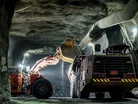
The mining industry stands at a pivotal moment as Toyota and Sumitomo Metal Mining forge a partnership that could redefine demand for battery-grade materials.
The joint agreement to mass-produce cathode materials for all-solid-state batteries in battery electric vehicles represents a fundamental shift in how mining companies must approach mineral extraction, processing and supply chain positioning.
Toyota expects deployment of the higher-performing all-solid-state batteries in its BEVs between 2027 and 2028, creating an immediate timeline for mining operations to adapt their production capabilities and refining processes to meet the exacting standards these next-generation batteries demand.

All-solid-state batteries are primarily composed of a cathode, anode and solid electrolyte, differing from traditional lithium-ion batteries that use liquid electrolytes.
All-solid-state batteries offer higher output and offer a longer life compared to traditional liquid electrolyte batteries. Toyota expects all-solid-state batteries to offer BEVs longer range, shorter charging times and a higher output.
Toyota is also looking at their application in HEVs as well as PHEVs.
Sustainability, procurement and supply chain leaders won’t want to miss Procurement & Supply Chain LIVE, taking place at Navy Pier, Chicago, on April 21–22.
Co-located with Sustainability LIVE: The US Summit, the event unites senior decision-makers at a time when supply chains, sustainability and business performance are more interdependent than ever.
Secure your place now for The US Summit – group booking discounts available.
Implications for mineral demand
The partnership between Toyota and Sumitomo Metal Mining to mass-produce cathode materials for all-solid-state batteries signals a transformative shift for the mining and metals industry.
The move towards all-solid-state batteries intensifies the focus on high-quality cathode materials. While lithium remains essential, the specific chemical compositions required for highly durable cathodes (likely involving nickel, cobalt and manganese) will demand more sophisticated refining and powder synthesis capabilities from miners.
This technological evolution means mining companies must adapt to changing material specifications. Companies that only provide raw ore may be sidelined by those capable of delivering the advanced chemical precursors necessary for solid-state stability.
The mining sector is transitioning from being a simple bulk commodity provider to a high-tech partner in chemical engineering.
Vertical integration accelerates
Toyota's direct collaboration with Sumitomo Metal Mining, a major miner and refiner, highlights a trend where automakers bypass traditional middle-market suppliers. This ensures battery-grade purity and supply chain stability, pressuring other mining entities to seek similar long-term downstream partnerships.
Sumitomo has more than 20 years of experience in supplying cathode materials for a wide range of EVs.
Since 2021, Toyota and Sumitomo have been conducting joint research on cathode materials for all-solid-state batteries, focusing on challenges such as cathode material degradation during repeated charging and discharging cycles.
With Sumitomo's proprietary powder synthesis technology, the companies have developed a durable cathode material suitable for all-solid-state batteries.
Sustainability and supply security
As Toyota targets a 2027-2028 market launch for all-solid-state batteries, mining operations will face stricter ESG scrutiny. The transition to carbon-neutral transport systems demands responsibly sourced materials from the outset.
Sumitomo's role emphasises that green batteries must begin with responsibly sourced and processed raw materials. The mining industry must prioritise supply chain security and specialised material science, forcing the sector to innovate in refining and durability to meet the rigorous standards of next-generation EV infrastructure.
Sumitomo aims to supply Toyota with the newly developed cathode material for a mass production line. The companies aim to achieve the world's first use of an all-solid-state battery in a BEV.
Takero Kato, President of the Toyota BEV Factory, says: "We will need various options for batteries, just like we have different variations of engines. It is important to offer battery solutions compatible with a variety of models and customer needs."
The scale of opportunity for mining companies is substantial. According to the RAC (Royal Automobile Club), global electric vehicle sales surpassed 20m units in 2025, up from 17.3m in 2024.
Toyota predicts that by 2030 it will offer at least 30 BEV models and it expects to sell around 3.5m BEVs a year globally. For mining operations, these figures translate into sustained demand for battery-grade materials, provided they can meet the technical specifications and sustainability standards that partnerships like Toyota and Sumitomo Metal Mining are establishing as the industry benchmark.
Company portals

Executives
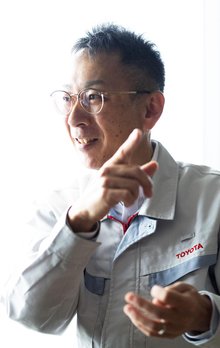
Takero Kato
BEV Factory President