Unlocking Critical Minerals Potential With EU-US Partnership
As much of the world seeks to diversify its critical materials sourcing away from China, the EU and US have announced a growing partnership.
On 24 April 2026, the US and EU signed a Memorandum of Understanding (MoU), developing a strategic coordination on a western critical minerals push.
This is one step in developing supply chain resilience amid ongoing geopolitical and economic disruption.

Growing demand
The demand for critical minerals has increased significantly over recent years, mostly driven by the ongoing energy transition. Materials like copper, aluminium, lithium and cobalt are essential for today's technology demands. Battery performance, magnets in electric vehicles and wind turbines and electricity networks all rely on critical materials.
Each region has a different classification for 'critical material', with differing opinions over what constitutes as critical and which materials that specific region has highest demand for. There are, however, some materials which are generally considered critical by most regions – such as copper, aluminium and lithium.
The recent rise in demand for critical minerals has meant that mining companies and producers are working at a pace they never have before. As a result, this demand may not be sustainable.
For copper, lithium, nickel, cobalt, granite and rare earth elements, most materials come from the same regions. According to the IEA, the market share of the top three refining nations rose to 86% in 2024, with almost all coming from China, with other key players including Indonesia and the Democratic Republic of the Congo.
Geopolitical instability, however, has meant that this overreliance on China has become a risk-heavy one. To combat this, western regions are looking to diversify sourcing and develop more resilient critical mineral supply chains.
"The over-concentration of these resources and the fact that they’re dominated by one or two places is an unacceptable risk," stated Secretary of State Marco Rubio at the signing.
"We need diversity in our supply chains, diversity in the places we get critical minerals. And this Memorandum of Understanding, which isn’t just going to be a piece of paper – it’s going to be brought to life through real action."
Amid this turbulence, the European Union has signed a Memorandum of Understanding (MoU) with the US on a strategic partnership and have agreed on an EU-US Critical Minerals Action Plan.
"Secure and sustainable access to critical minerals is vital for the competitiveness and resilience of the EU economy," explains Stéphane Séjourné, Executive Vice-President for Prosperity and Industrial Strategy at European Commission.
"The MoU with the United States is the EU’s 16th bilateral instrument on critical raw materials. Together, these MoUs make a significant part of our strategy to reduce dependencies, foster innovation, and ensure that our supply chains are resilient against global disruptions. By working together with partners across the globe, we can shape fair and transparent markets that benefit our economies and industries."
Developing resilience
The partnership is demonstrative of the EU's commitment to deepen cooperation on critical raw materials. During ongoing economic and geopolitical challenges, this shows a dedication to supply chain diversification and resilience.
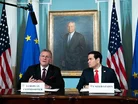
The MoU was signed by Commissioner for Trade and Economic Security Maros Šefčovič and US Secretary of State Marco Rubio, formalising the strategic partnership between the two nations. A high priority for nations around the world is to gain reliable access to secure and sustainable critical minerals supply chains. The MoU reflects a future cooperation between the nations, which will work throughout the entirety of the critical minerals value chain.
It will operate across exploration, extraction, processing, refining, recycling and recovery. Moreover, it will support in innovation, investment and geological mapping.
The Action Plan for Critical Minerals Supply Chain Resilience was formed by Commissioner Šefčovič and US Trade Representative Jamieson Greer, creating an opportunity to develop a plurilateral trade initiative with global partners.
"The vision is there – now the real test is execution, by turning shared ambitions into impactful projects. This will define our success. Critical minerals sit at the core of every future-facing industry – resilience is therefore inevitable and addressing vulnerabilities an imperative."
The Action Plan will facilitate ongoing collaboration between the EU and the US as they explore trade policies and international action attempts. This could include price gap subsidiaries, offtake agreements, standards-based markets and border-adjusted price floors. It will also encourage the development of mining, processing and recycling standards, stockpiling strategies, response mechanisms for disruption, as well as joint research and innovation.
The partnership aims to help western supply chain stability, particularly amid the ongoing energy transition.