
What the US UNESCO Exit Means for Mining
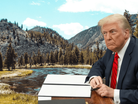
The US has confirmed it will leave UNESCO, the United Nations Educational, Scientific and Cultural Organisation, by December 2026, marking the second time the country steps away from the UN agency under President Trump’s leadership.
The choice is framed as political, but its impact stretches into environmental protection, international conservation and the way America manages natural resources and cultural heritage.
The departure sits at the heart of debates over sovereignty and cooperation.
For the environment, the implications are immediate, especially in areas where global oversight has played a role in slowing extractive industries like oil, gas and mining.

Why the US walks away
The Trump Administration has repeated concerns over what it calls UNESCO’s “divisive social and cultural causes” and its support for the UN’s Sustainable Development Goals.
Joe Biden reversed the withdrawal in 2023, stressing that American absence weakens influence over issues like AI ethics and global education standards. But Trump’s campaign reasserts the "America First stance on international diplomacy” and links UNESCO to what it labels a "globalist ideological agenda".
The choice is not only about politics. UNESCO, with its World Heritage programme, has been a major actor in environmental cooperation, often clashing with industrial projects.
For mining, oil drilling and energy expansion, the loss of US engagement means fewer checks on decisions that risk undermining natural sites.
World Heritage and mining pressure
The US has 26 UNESCO World Heritage sites, 13 of which are natural. These include the Grand Canyon, Yellowstone, Yosemite, the Everglades and Carlsbad Caverns. UNESCO recognition adds visibility and international scrutiny to these landscapes, which have repeatedly faced pressure from extraction industries.
Examples show how political choices open land to mining and drilling.
Alaska’s Arctic National Wildlife Refuge, once protected, has been targeted for oil exploration. Uranium mining proposals near the Grand Canyon return whenever oversight weakens.
Gas pipeline projects push towards Yellowstone, and Bears Ears National Monument has lost protection, exposing it to coal and mineral mining. Indigenous sacred sites have also seen damage linked to resource extraction.
The lack of global accountability leaves these areas more vulnerable.
Ingmar Rentzhog, Contributing Author at Forbes and CEO of We Don’t Have Time, argues: "It’s about power, profit and the fear of science stopping them."
UNESCO’s monitoring role has often provided the external pressure to slow or stop projects that risk lasting harm. Without it, there is a gap in the global voice that challenges short-term economic gain over long-term environmental stability.
UNESCO’s continuing mission
Audrey Azoulay, Director-General of UNESCO, makes clear her disappointment: “I deeply regret President Donald Trump's decision to once again withdraw the United States of America from UNESCO.”
She warns the move “contradicts the fundamental principles of multilateralism and may affect first and foremost our many partners in the United States of America – communities seeking site inscription on the World Heritage List, Creative City status and University Chairs.”
UNESCO has undergone reforms to rely less on US funding.
In 2011, American contributions made up 22% of the budget, now cut to 8%. Member states and private donors have doubled voluntary contributions since 2018, strengthening financial resilience.
Audrey states: “The reasons put forward by the United States to withdraw from the organisation are the same as seven years ago, even though the situation has changed profoundly. UNESCO today constitutes a rare forum for consensus on concrete and action-oriented multilateralism.”
For the US, leaving means stepping back not only from cultural diplomacy but also from partnerships that balance industry with protection. The risk is that mining and extraction move faster without international visibility, reshaping landscapes that are globally recognised for their value.
The decision echoes beyond the US. It signals to other countries that sovereignty may outweigh shared responsibility for the planet’s most fragile sites. It also shifts influence to nations like China, who can expand their role in shaping standards around sustainability, technology and education.
The question remains whether public scrutiny in the US will push back against the trade-off between profit and preservation. What's clear is that leaving UNESCO strips away an international layer of oversight, exposing World Heritage landscapes to the same economic pressures already straining them.