Top 10: Global Mining Equipment Companies
The global mining equipment industry stands at a pivotal crossroads. Surging demand for the critical minerals that underpin the energy transition, lithium, copper, cobalt and rare earths, is colliding with mounting pressure to decarbonise operations and reduce their environmental footprint.
The result is an industry in the throes of profound technological reinvention, accelerating the shift from diesel-powered iron to battery-electric and hydrogen-fuelled machines, while simultaneously deploying artificial intelligence and automation to extract more from less.
Consolidation continues apace as legacy manufacturers snap up specialist firms to fill gaps in their portfolios.
Meanwhile, Chinese manufacturers are aggressively disrupting market dynamics that Western and Japanese firms have dominated for decades. What follows is a ranking of the ten companies whose engineering, scale and strategic vision define where this industry is headed.
10. The Weir Group (UK)
CEO: Jon Stanton
HQ: Glasgow, Scotland, UK
Sector: Slurry Pumps & Wear-Resistant Solutions

If a mine is the beating heart of the extractive industry, slurry pumps are its circulatory system and no company understands that anatomy better than The Weir Group.
Based in Glasgow, Scotland, Weir has spent more than 150 years mastering the art of engineering components capable of handling the most punishing conditions on earth: abrasive, corrosive, high-pressure slurries that would destroy lesser materials within hours.
Its WARMAN pump range is the de facto standard on mine sites worldwide. Following the sale of its oil and gas division, Weir has sharpened its focus exclusively on mining, positioning itself as the indispensable aftermarket partner for mill circuits and tailings systems.
In an era of extended asset lifecycles and cost-conscious mine operators, that focus on wear parts and service contracts is a business model of quiet, durable brilliance.
9. XCMG Group (China)
CEO: Yang Dongsheng
HQ: Xuzhou, Jiangsu Province, China
Sector: Heavy Construction & Mining Equipment
XCMG has transformed itself from a domestic construction equipment supplier into a genuine global mining equipment contender with remarkable speed. The company's rise has been built on competitive pricing, rapid product development cycles and an increasingly credible push into electrification.
Its headline moment came in 2025 when it secured one of the largest single orders in the industry's history: a contract to supply between 150 and 200 battery-electric haul trucks for Fortescue's operations in Australia. A landmark deal that sent a clear signal to the incumbent majors that Chinese OEMs are no longer competing on price alone.
XCMG's aggressive export strategy across Africa, Southeast Asia and Latin America is steadily expanding its installed base and, critically, its aftermarket revenue streams, the metrics that truly define a mining equipment company's longevity.
8. Sany Heavy Industry (China)
CEO: Liang Wengen (Founder)
HQ: Changsha, Hunan Province, China
Sector: Heavy Machinery, Excavators & Dump Trucks
Sany Heavy Industry's ascent to the upper echelons of global mining equipment is one of the most striking industrial stories of the past two decades. Now among the world's largest construction and mining machinery manufacturers, Sany has leveraged China's vast domestic market as a springboard to international expansion.
Its wide-body dump trucks and hydraulic excavators have found particularly fertile ground across African and Asian mining markets, where their price-to-performance proposition resonates strongly with operators managing tight capital budgets.
The company is investing heavily in R&D for autonomous and electric equipment, recognising that without credible technology credentials, its growth ceiling in premium markets remains fixed.
Sany's challenge now is to close the perception gap with Japanese and Western rivals on reliability and dealer network depth, a gap that is narrowing, but has not yet closed.
7. Metso (Finland)
CEO: Sami Takaluoma
HQ: Helsinki, Finland
Sector: Mineral Processing & Aggregates
Metso occupies a distinct and strategically powerful niche in the mining equipment universe: it does not build the haul trucks that traverse the pit, but it controls virtually everything that happens to the ore once it reaches the processing plant.
Following its transformative merger with Outotec in 2020, the Finnish group emerged as the global leader in mineral processing technology, offering an integrated 'pit-to-port' portfolio spanning crushers, grinding mills, flotation cells, filtration systems and tailings management.
As mines push into lower-grade ore bodies, the efficiency of comminution and separation becomes the primary lever for profitability, precisely where Metso's expertise is concentrated.
Its Planet Positive programme, targeting measurable reductions in customer energy and water consumption, is resonating with miners facing intensifying regulatory and ESG scrutiny from investors and governments alike.
6. Hitachi Construction Machinery (Japan)
CEO: Kotaro Hirano
HQ: Tokyo, Japan
Sector: Hydraulic Excavators & Electric Dump Trucks
Within the world of giant hydraulic excavators, Hitachi Construction Machinery occupies a position of quiet authority. Its EX-series ultra-large excavators are prized by surface mine operators for their precision, reliability and digging force. The company has built a loyal following among major iron ore and coal producers in Australia, North America and southern Africa.
Hitachi's pivot towards digital mine management has added a compelling new dimension to its offer: the LANDCROS Connect platform delivers real-time fleet health data, predictive maintenance alerts and operational efficiency analytics that help customers squeeze more out of their asset base.
The company also produces electric-drive dump trucks capable of handling extreme payloads, a segment where the long-term shift away from mechanical drive systems is gradually creating a structural tailwind. A continued partnership with ABB on trolley-assist technology underlines its commitment to decarbonisation pathways.
5. Liebherr Group (Switzerland / Germany)
CEO: Jan Liebherr (President)
HQ: Bulle, Switzerland (Group HQ); Biberach an der Riss, Germany
Sector: Ultra-Class Surface Mining Equipment
Few machines command the respect of a Liebherr T 284 ultra-class haul truck. At a nominal payload capacity of 363 tonnes, it is among the largest haul trucks ever built and it epitomises what the family-owned Swiss-German conglomerate does best: engineering for the end of the performance envelope.
Liebherr's mining equipment division is a relatively small part of an enormous, privately held industrial group that spans cranes, aerospace and refrigeration, but it punches well above its weight in prestige and technological credibility.
The group's independence from capital markets allows it to pursue long development cycles without quarterly earnings pressure, a genuine competitive advantage when designing machines that must survive two decades of punishment in a Pilbara iron ore operation or a Chilean copper pit.
Its hydraulic excavator range, particularly the R 9800, is similarly formidable in scale and engineering ambition.
4. Epiroc AB (Sweden)
CEO: Helena Hedblom
HQ: Stockholm, Sweden
Sector: Drilling, Hydraulic Attachments & Underground Equipment
Since its demerger from Atlas Copco in 2018, Epiroc has operated with the energy and urgency of a company determined to establish its own identity and it has done so with considerable success.
The Swedish group has become the industry's most vocal and credible champion of electrification, committing to offering a fully battery-electric version of every product in its underground equipment range by 2030.
That is not merely an ESG marketing pledge: it is a strategic positioning exercise that anticipates the direction of regulatory pressure and customer demand in underground mines, where diesel exhaust ventilation costs can account for a substantial share of operating expenditure.
Epiroc's acquisition of ASI Mining, a specialist in autonomous haulage, has extended its ambitions into surface autonomy. Its hydraulic rock drill and breaker attachments meanwhile, maintain dominant market positions in both mining and demolition, providing a reliable earnings foundation from which to fund its innovation agenda.
3. Sandvik AB (Sweden)
CEO: Stefan Widing
HQ: Stockholm, Sweden
Sector: Underground Mining, Rock Excavation & Digitalisation
Ask any underground mine manager to name the gold standard in hard-rock drilling and loading equipment and Sandvik will be the most common answer.
The Swedish engineering giant has spent decades building an unrivalled position in drill rigs, loaders and trucks specifically designed for the punishing environment below surface, where tight headroom, poor air quality and extreme abrasion place demands that surface equipment simply cannot meet.
But Sandvik's contemporary ambition extends beyond iron and steel. Under its Sandvik Mining and Rock Solutions division, the company is aggressively pursuing the concept of the 'connected mine,' integrating its equipment with OptiMine analytics and AutoMine automation platforms to deliver fleet management, remote operation and production optimisation as a service.
Its battery-electric loader and truck ranges are already deployed at mines on multiple continents, providing real-world validation of a technology that competitors are still developing on paper.
2. Komatsu Ltd. (Japan)
CEO: Takuya Imayoshi
HQ: Tokyo, Japan
Sector: Surface & Underground Mining Equipment, AHS
Komatsu's rivalry with Caterpillar is one of the great industrial competitions of the modern era and in one critical arena, autonomous haulage at scale, the Japanese manufacturer has arguably held a measurable lead.
Its Autonomous Haulage System has accumulated billions of tonnes of material moved across mines in Australia, Chile and North America, with a safety record that has been a powerful commercial argument in its favour.
Komatsu has broadened its ambitions beyond surface mining through its acquisition of Joy Global, rebranded Komatsu Mining, which brought world-class underground longwall and continuous mining systems into the portfolio, creating a genuinely end-to-end hard-rock and soft-rock mining equipment business.
More recently, the purchase of GHH Group has strengthened its underground hard-rock presence in Europe and beyond. The company's Greenhouse Gas reduction targets signal a serious commitment to developing hydrogen and battery-electric solutions for the next decade.
1. Caterpillar Inc. (USA)
CEO: Joseph Creed
HQ: Irving, Texas, USA
Sector: Surface Mining, Autonomy & Energy Transition
Caterpillar's yellow machines have become as synonymous with mining as the ore itself. No company on earth sells more surface mining equipment and no brand carries greater recognition from the pit floor to the boardroom.
But Cat's dominance is not merely a legacy of scale and distribution: it is being actively defended and extended through technology. The Command for Hauling autonomous system is now deployed across multiple mine sites globally and Caterpillar is integrating autonomy, electrification and digital fleet management into a coherent platform it calls Cat MineStar, arguably the most comprehensive mine technology ecosystem in the industry.
Its financial services arm, dealer network spanning 190 countries and aftermarket parts business create an economic moat that rivals struggle to replicate. Caterpillar's challenge is the challenge of every incumbent at a moment of technological discontinuity: to cannibalise its own diesel franchise before a disruptor does it for them.
So far, the evidence suggests it is meeting that challenge with characteristic purpose.
Company portals



Executives
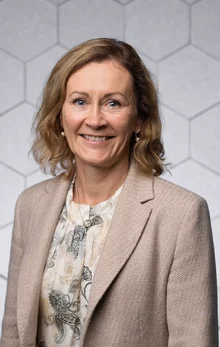
Helena Hedblom
CEO and President
Joe Creed
Chief Executive Officer
Jon Stanton
Chief Executive Officer
Stefan Widing
President and CEO