A schedule turns a theoretical mine plan into on-site action. It controls which truck goes where, what it does and what order it does it in.
If mining operators get the scheduling wrong, equipment ends up sitting idle, while targets slip and the wrong grade reaches the mill.
The vendor pool for dedicated scheduling tools has consolidated in a big way over the last few years, through acquisitions by Sandvik, Weir and, most recently, Caterpillar.
In this article, we rank the best scheduling platforms in mining, from specialist tools built for a single planning horizon, to the largest names now competing for a share of production scheduling.
10. Maptek
CEO: Eduardo Coloma
Founded: 1981
Location: Adelaide, Australia
Maptek is one of the last major independent players in mining software. Its Vulcan platform includes a dedicated scheduling engine built around three-dimensional pit and stope models.
Vulcan's scheduling tools let engineers sequence extraction against blending and stockpile constraints while keeping the schedule tied directly to the underlying geological block model.
The company has leaned into automation, using machine learning to speed up grade control and feed more reliable data into short-term production schedules.
9. Micromine
CEO: Andrew Birch
Founded: 1986 (Micromine) / 1871 (Weir)
Location: Perth, Australia
Micromine, acquired by Weir Group in a deal worth approximately US$840m in 2025, builds scheduling directly into its Beyond and Origin planning suite.
Its Alastri Tactical Scheduler handles medium-to-long term, equipment-level scheduling for open-pit operations, while Beyond extends scheduling into underground stope design and sequencing.
Kiril Alampieski, Micromine’s Chief Strategy and Product Officer, says Micromine's planning and scheduling tools are engineered to meet the needs of mine planners at each planning horizon and primary mining method.
8. IBM
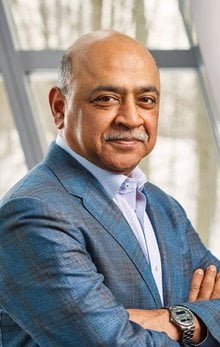
CEO: Arvind Krishna
Founded: 1911
Location: Armonk, US

IBM has no dedicated mine scheduling product, but it has an important role in the space in the form of Maximo, an asset lifecycle management platform that schedules maintenance windows, inspections and compliance checks for equipment fleets.
Maximo reduces unplanned downtime that would otherwise disrupt a production schedule built elsewhere.
Its integration with IBM Envizi ties maintenance scheduling to Scope 1 and 2 emissions reporting. For miners running scheduling tools from other vendors, Maximo keeps equipment available to execute the plan.
7. Datamine
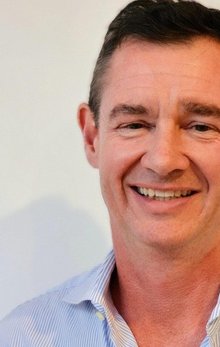
CEO: John Bailey
Founded: 1981
Location: Brisbane, Australia
Datamine serves more than 6,000 mining clients across 20 countries, according to the company. Its MineScape platform includes constraint-based scheduling tools that account for real-world limitations such as one-way haulage routes or the availability of specific blasting crews.
The acquisition of Mineware in March 2026 added Syncromine Core, consolidating production scheduling, safety monitoring and reporting into one web-based platform.
The 2026 MineScape release adds AI-enabled scheduling assistance.
6. Deswik
CEO: Stefan Widing (Sandvik)
Founded: 2008 (Deswik) / 1862 (Sandvik)
Location: Brisbane, Australia
Deswik, acquired by Sandvik in a deal completed in 2022, builds its entire product suite around a single scheduling environment shared by geological models, mine designs and production schedules.
Deswik Planning handles both long-range planning and detailed short-term scheduling in one platform, using an interactive Gantt chart interface that dynamically links designs to schedules as they change.
Deswik OPS extends scheduling into shift execution, closing the loop between the plan and what happens on site.
5. Dassault Systèmes
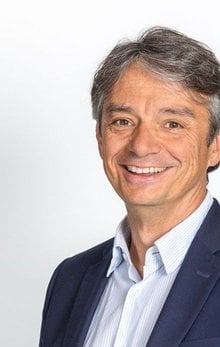
CEO: Pascal Daloz
Founded: 1981
Location: Vélizy-Villacoublay, France

GEOVIA is Dassault Systèmes' mining brand within its wider 3DEXPERIENCE platform.
MineSched, alongside Surpac and Whittle, provides long-term production scheduling that engineers can run against multiple pit design scenarios before capital is committed.
The standout feature in 2026 is GEOVIA's virtual twin, letting operators simulate how a schedule would perform against a full digital replica of the mine before it goes live.
Dassault added generative scheduling to underground design in February 2024.
4. SAP
CEO: Christian Klein
Founded: 1972
Location: Walldorf, Germany
Major miners including BHP, Rio Tinto, Anglo American, Glencore and Vale run SAP as their enterprise backbone.
Its mining configuration extends scheduling into production order processing and contractor scheduling.
Where dedicated planning tools schedule equipment against a geological model, SAP's value lies in synchronising that schedule with maintenance windows, procurement and finance, ensuring high-value equipment is never idle for want of a spare part.
A 2026 AI module forecasts labour and equipment needs months ahead.
3. Hexagon
CEO: Anders Svensson
Founded: 1992
Location: Stockholm, Sweden
Hexagon's HxGN MinePlan traces its scheduling heritage back to 1970 through the Mintec MineSight product it absorbed, making it one of the longest continuously developed scheduling platforms in the industry.
The suite includes MinePlan Activity Scheduler, a Gantt-based tool for short-term tactical scheduling, and MinePlan Schedule Optimizer, which applies constraint-based logic to longer production schedules using a built-in optimisation engine.
Because Hexagon also manufactures the GPS and sensor hardware used on many mine sites, schedules built in MinePlan can update in real time as field conditions change, reducing the lag between the plan and what is happening in the pit.
Hexagon is present at more than 20% of mines globally, according to GlobalData's 2025 survey. Hexagon's mining division was unaffected by the May 2026 separation of Octave, its software spin-off.
2. Epiroc
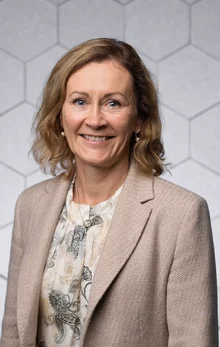
CEO: Helena Hedblom
Founded: 2018 (Epiroc) / 1873 (origins)
Location: Nacka, Sweden
Epiroc has no standalone scheduling platform of its own. Instead, it handles production schedules through its Deep Automation, which connects planning tools, cave control systems and Epiroc's own machinery, so schedules can interface directly with underground operations.
Ben Semple, 6th Sense Solutions Product and Sales Support Lead at Epiroc, says scheduling, cave control systems and Epiroc machinery are now all able to interface and deliver optimised, safe production.
LinkOA, Epiroc's OEM-agnostic automation platform, extends that connectivity further, linking autonomous haulage, drilling and blasting equipment from any manufacturer into one ecosystem, regardless of which scheduling software a mine already runs or which brand built the machine.
Retrofittable onto equipment a mine already owns, it is designed for operators reluctant to rip out an existing fleet just to standardise on a single vendor's full automation stack.
1. RPMGlobal (Caterpillar)
CEO: Joe Creed
Founded: 1977 (RPMGlobal) / 1925 (Caterpillar)
Location: Brisbane, Australia

RPMGlobal has built its reputation on XECUTE, a short-term scheduling solution designed to connect the mine plan directly to fleet management and operational systems, replacing the flat-file handoffs that historically slowed mine scheduling down.
In February 2026, Caterpillar completed its acquisition of RPMGlobal, bringing one of mining's most established scheduling specialists inside the world's largest manufacturer of mining equipment.
Denise Johnson, Group President of Caterpillar Resource Industries, says the deal will help customers improve mine site performance by combining RPMGlobal's software with Caterpillar's equipment and technology.
RPMGlobal continues to operate under its own brand, with XECUTE and its longer-range XPAC scheduling tools sitting alongside Caterpillar's fleet and autonomy technology, a combination that could reshape how schedules and machines talk to each other.
Company portals




Executives
Anders Svensson
President and CEO
Andrew Birch
Chief Executive Officer
Arvind Krishna
CEO
Christian Klein
CEO & Member of the Executive Board
Eduardo Coloma
Chief Executive Officer
Helena Hedblom
CEO and President
Joe Creed
Chief Executive Officer
John Bailey
CEO
Pascal Daloz
CEO
Stefan Widing
President and CEO