Top 10: Resource Allocation Softwares
As the global demand for critical minerals intensifies, the ability to optimise resource allocation has become the primary differentiator between a profitable operation and a stalled project. Modern mining is no longer a battle of brute force, but a game of high-precision mathematics.
Resource allocation in this sector isn't just about scheduling staff; it involves the complex synchronisation of geological models, multi-billion-dollar autonomous fleets and volatile market prices.
The software titans in this space have evolved into unified command centres that manage the entire ‘pit-to-port’ value chain. By integrating AI and real-time sensor data, these platforms allow engineers to re-allocate assets in seconds in response to changing ore grades or equipment failures, ensuring maximum throughput with minimal environmental impact.
10. RPMGlobal
CEO: Richard Mathews
Founded: 1968
Location: Brisbane, Australia

RPMGlobal has entered a new chapter following its high-profile acquisition by Caterpillar.
Its XPAC Revolution platform is the global benchmark for financial optimisation of resource allocation, allowing planners to view the precise unit cost of every truckload and blast in real-time.
RPMGlobal’s asset management technology remains the industry standard for allocating maintenance resources, ensuring equipment longevity at the lowest possible total cost of ownership.
9. Datamine (Studio RM / OP)
CEO: Mark Miller (Constellation Software)
Founded: 1981
Location: London, UK / Toronto, Canada
Part of the Constellation Software family, Datamine provides a modular suite of tools that covers the Entire Mining Lifecycle. Its Studio OP and Studio UG platforms are specialised for short-term scheduling, the granular allocation of resources on a shift-by-shift basis.
Datamine’s strength lies in its Constraint-Based Scheduling, which accounts for real-world limitations like one-way traffic in tunnels or the availability of specific types of explosives.
8. Maptek (Vulcan)
CEO: Eduardo Coloma
Founded: 1981
Location: Adelaide, Australia
Maptek is one of the last major independent players and its Vulcan software is a staple in large-scale open-pit operations.
Vulcan is a powerhouse in advanced resource estimation. It allows engineers to allocate blocks of ore into different categories (proven, probable, inferred) with high statistical confidence.
Maptek is leaning heavily into machine learning to automate the grade control process. This allows a mine to allocate its processing resources based on highly accurate, machine-learning-generated predictions of where the metal is located within a blast.
7. The Weir Group (Micromine)
CEO: Jon Stanton
Founded: 1871 (Weir) / 1986 (Micromine)
Location: Glasgow, Scotland / Perth, Australia
Micromine, brought into The Weir Group’s ecosystem, is highly regarded for its intuitive production control.
Its Micromine Alastri module is a world leader in open-pit tactical scheduling, helping engineers allocate their equipment to meet short-term production targets.
What makes Micromine stand out is its next-generation 3D engine, which can handle massive datasets – like LIDAR scans from drones – to update the as-built mine map in real-time.
6. Seequent (Leapfrog)
CEO: Nicholas Cumins (Bentley Systems)
Founded: 2004 (Seequent)
Location: Christchurch, New Zealand
A subsidiary of Bentley Systems, Seequent is a leader in implicit geological modelling.
While other tools focus on moving trucks, Seequent’s Leapfrog software focuses on allocating the "underground resource" itself.
It uses a fast radial basis function (RBF) to turn massive amounts of drill-hole data into 3D models in minutes rather than weeks. This speed allows exploration teams to allocate drilling budgets more effectively.
5. Epiroc (MineRP / MineCycle)
CEO: Helena Hedblom
Founded: 1873 (Origins) / 2018 (Epiroc)
Location: Nacka, Sweden
Epiroc, through its acquisitions of MineRP and partnerships with Bentley Systems, focuses on the Unified Resource-to-Market value chain.
Its platform is designed to break down the silos between different departments. In a traditional mine, the geologist, the engineer and the accountant often work in different worlds; MineRP creates a unified data bus that connects them.
This allows for dynamic resource allocation, where, for example, a drop in gold prices can automatically trigger a re-calculation of the ‘cut-off grade’, re-allocating the mining fleet to higher-value areas of the deposit.
4. HxGN MinePlan (Hexagon AB)
CEO: Anders Svensson
Founded: 1975
Location: Stockholm, Sweden
Hexagon’s HxGN MinePlan is a comprehensive suite that excels at operational optimisation. Hexagon’s unique advantage is its sensor-to-plan loop.
Because Hexagon also manufactures the high-precision sensors and GPS units used on mine sites, MinePlan can ingest real-time data to adjust resource allocation on the fly. ItsActivity Scheduler uses advanced algorithms to allocate drills and blasting crews based on the most recent data, ensuring that the highest-grade ore is prioritised.
By bridging the gap between the geologist’s office and the pit floor, Hexagon ensures that the theoretical mine plan is actually executable by the fleet in the field.
3. GEOVIA (Surpac / MineSched)
CEO: Bernard Charlès (Dassault Systèmes)
Founded: 1981 (Dassault)
Location: Vélizy-Villacoublay, France
Dassault Systèmes’ GEOVIA brand, featuring industry legends Surpac and MineSched, provides a 3D Experience approach to resource management.
While Surpac handles complex 3D geological modelling, MineSched is the industry standard for production scheduling. It allows mine planners to allocate resources across multiple pits to maximise net present value.
In 2026, GEOVIA’s standout feature is the virtual twin. This allows a mining company to create a perfect digital replica of its entire operation, simulating what-if scenarios for resource allocation before a single ounce of rock is moved.
2. Deswik
CEO: Stefan Widing
Founded: 1862 (Sandvik) / 2008 (Deswik)
Location: Stockholm, Sweden / Brisbane, Australia
Aquired by Sandvik, Deswik has become the dominant leader in integrated mine planning. Deswik’s software is built on a single source of truth philosophy, where the geological model, the mine design and the resource schedule live in one environment.
For mining engineers, Deswik’s IS interactive schedulers are revolutionary for allocating equipment fleets across complex underground networks.
Deswik has deepened its integration with Sandvik’s physical AutoMine systems, allowing the software to automatically re-allocate autonomous loaders if a specific tunnel becomes blocked or if ventilation levels drop.
1. SAP S/4HANA for Mining
CEO: Christian Klein
Founded: 1972
Location: Walldorf, Germany
SAP S/4HANA for Mining acts as the central nervous system for the world's largest diversified miners. Unlike specialised geological tools, SAP focuses on enterprise resource allocation, integrating real-time data from the pit floor to the corporate balance sheet.
For an industry moving toward autonomous mining, SAP’s value lies in its ability to synchronise maintenance schedules with production targets, ensuring that multi-million dollar haul trucks are never idle.
Its 2026 AI-driven resource prediction module helps mining firms forecast labour needs and equipment requirements months in advance, reducing operational bottlenecks.
Company portals



Executives
Anders Svensson
President and CEO
Bernard CHARLES
Chairman of the Board of Directors, Chief Executive Officer
Christian Klein
CEO & Member of the Executive Board
Eduardo Coloma
Chief Executive Officer
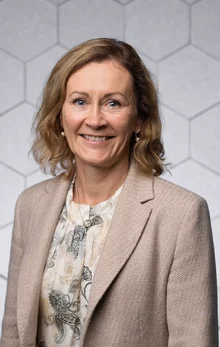
Helena Hedblom
CEO and President
Jon Stanton
Chief Executive Officer
Nicholas Cumins
Chief Executive Officer
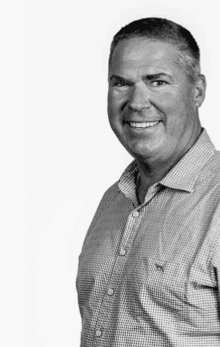
Richard Mathews
CEO
Stefan Widing
President and CEO