Top 10: Sustainable Mining Companies
Sustainability has moved beyond a simple compliance requirement to become a central force shaping investment decisions and operational resilience across the mining industry.
With ore grades declining and operations expanding into deeper and more complex environments, leading miners are shifting away from the traditional ‘extraction-only’ model. Technologies such as AI and green hydrogen are helping to separate mineral production from carbon emissions.
Today’s sustainable mines are built on four core pillars: decarbonisation through fleet electrification, water stewardship via closed-loop recycling, nature-positive land restoration and social equity grounded in meaningful Indigenous partnerships.
The Top 10 companies listed below demonstrate that the responsible supply of critical minerals is essential to achieving a net-zero future, showing that the transition to green technology must begin with greener extraction.
10. Teck Resources
Founded: 1913
CEO: Jonathan Price
Location: Vancouver, Canada
Teck Resources is a major producer of copper and zinc, essential for global electrification. The company has made significant strides in its Nature Positive goal, which aims to restore three hectares of land for every one hectare disturbed.
Their sustainability efforts are anchored by their industry-leading water treatment facilities in British Columbia’s Elk Valley, which utilise advanced biological processes to remove selenium from local watersheds. Teck has also pioneered ‘Product Passports’, providing full lifecycle transparency for their metals.
9. Fortescue
Founded: 2003
CEO: Dino Otranto
Location: Perth, Australia
Fortescue is the industry’s most aggressive advocate for ‘Real Zero’ (no carbon offsets) by 2030. Their sustainability model is driven by Fortescue Energy, which focuses on green hydrogen and ammonia production to replace fossil fuels in heavy industry.
They have successfully trialed the ‘Infinity Train’, a battery-electric locomotive that uses gravity to recharge its batteries on downhill runs, and has begun deploying hydrogen-powered haul trucks.
Their notable achievement is the commissioning of a green iron pilot plant in the Pilbara, which produces high-purity iron using green hydrogen instead of coal.
8. Anglo American
Founded: 1917
CEO: Duncan Wanblad
Location: London, United Kingdom
Anglo American’s sustainability strategy is centred on its FutureSmart Mining™ program, which integrates digital technology with environmental stewardship.
Their most prominent achievement is the expansion of their hydrogen-powered ultra-class haul truck fleet, which emits only water vapour.
They have also implemented ‘coarse particle recovery’ technology, allowing them to extract metals with 30% less energy and water by avoiding the over-grinding of waste rock.
7. Agnico Eagle
Founded: 1957
CEO: Ammar Al-Joundi
Location: Toronto, Canada
Agnico Eagle is recognised for its excellence in social sustainability and cold-climate mining operations. Operating primarily in Canada, Finland and Mexico, the company has built its reputation on strong Indigenous partnerships, particularly in the Nunavut region, where they are the largest private employer.
They have achieved a 15% reduction in carbon intensity by transitioning to hybrid power systems and battery-electric underground vehicles. A notable achievement is their Goldex mine’s innovative tailings management, where mining waste is used to neutralise acidic water at a nearby abandoned mine site, effectively solving two environmental problems at once.
6. Vale
Founded: 1942
CEO: Gustavo Pimenta
Location: Rio de Janeiro, Brazil
Vale has transformed its business model to focus on safety and ‘green iron’ solutions.
Their most significant sustainability milestone is the global scaling of green iron ore briquettes. These briquettes allow steelmakers to reduce CO2 emissions by up to 10% in traditional blast furnaces and serve as a vital precursor to hydrogen-based steelmaking.
Vale has also moved entirely away from traditional upstream tailings dams, instead utilising dry stacking technology to eliminate the risk of dam failures.
Their achievement in reforestation is equally notable, with a goal to protect and restore 500,000 hectares of the Amazon rainforest.
5. LKAB
Founded: 1890
CEO: Jan Moström (Retiring)
Location: Luleå, Sweden
LKAB is the driving force behind the HYBRIT project, an initiative that aims to revolutionise the steel industry by replacing coking coal with green hydrogen.
They have begun industrial-scale production of fossil-free sponge iron at their demonstration plant in Gällivare, Sweden. This process ensures that the only byproduct is water, rather than CO2.
This is a monumental achievement that addresses one of the world’s hardest-to-abate sectors.
4. Freeport-McMoRan
Founded: 1912
CEO: Kathleen Quirk
Location: Phoenix, USA
Freeport-McMoRan is a leading supplier of copper for EVs and renewable energy. Their sustainability strategy is built on the Copper Mark, a rigorous third-party assurance framework for responsible production. All of their global sites have achieved this certification.
Another major achievement is their advanced water management in the desert regions of Arizona and Peru, where they recycle up to 80% of their process water. In Spain, their Atlantic Copper smelter has also become a leader in the circular economy by recovering copper, gold, and silver from electronic waste.
3. Newmont
Founded: 1916
CEO: Natascha Viljoen
Location: Denver, USA
Newmont, the world's largest gold miner, is a perennial leader in ESG performance. The company is on track to reach its target of a 30% reduction in greenhouse gas emissions through a US$500mn investment in renewable energy and fleet electrification.
A notable achievement is the full electrification of the Borden mine in Ontario, which operates without any diesel equipment, significantly improving air quality for workers and reducing costs. Newmont also excels in water stewardship, maintaining a goal of zero high-risk water incidents across its global operations.
2. Rio Tinto
Founded: 1873
CEO: Simon Trott
Location: London, United Kingdom
Rio Tinto’s sustainability strategy is anchored in the belief that green metals must be produced with a green footprint.
Their most notable achievement is the commercial rollout of ELYSIS, a carbon-free aluminum smelting technology that emits oxygen as a byproduct.
In Australia, they have successfully deployed a massive 34-megawatt solar farm and battery storage system at the Gudai-Darri iron ore mine, which is now one of the most technologically advanced mines in the world.
Rio Tinto has also pivoted toward lithium production to support the battery supply chain, while maintaining strict biodiversity standards.
1. BHP Group
Founded: 1885
CEO: Mike Henry
Location: Melbourne, Australia

BHP sits at the top of this list due to its massive scale and its successful pivot to future-facing commodities like copper, nickel and potash. BHP has achieved its historic goal of eliminating all freshwater usage at its Escondida mine in Chile, relying 100% on desalinated seawater, a major feat in the world’s driest desert.
Another notable achievement is the development of the Jansen Potash project in Canada, designed to be the most sustainable potash mine in the world, with a 50% lower carbon footprint than traditional mines.
BHP is also a pioneer in nickel production for the EV market, with long-term green nickel supply agreements with companies like Tesla. Their sustainability framework includes a commitment to reach net-zero Scope 1 and 2 emissions by 2050, supported by extensive R&D into carbon capture and hydrogen-based smelting.
Company portals





Executives

Ammar Al-Joundi
President & Chief Executive Officer
Dino Otranto
Chief Executive Officer
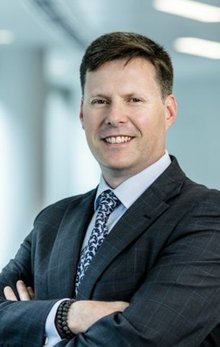
Duncan Wanblad
Chief Executive Officer
Gustavo Pimenta
CEO
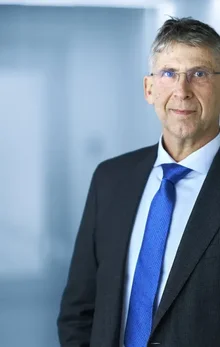
Jan Moström
CEO
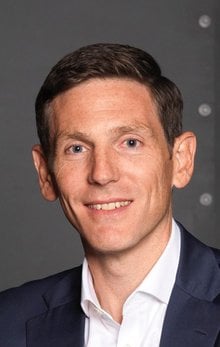
Jonathan Price
President and Chief Executive Officer
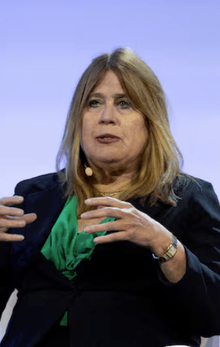
Kathleen L. Quirk
President and Chief Executive Officer

Mike Henry
CEO
Natascha Viljoen
President & Chief Executive Officer
Simon Trott
Chief Executive - Rio Tinto