
How RPA Systems are Helping Amid Surging Mineral Demand
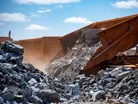
Robotic Process Automation is transforming the mining industry as demand for key critical minerals and rare earth elements is set to double by 2040
Tracing back to prehistoric times, mining’s relationship with technology and automation has been a gradual process as companies rely on legacy systems.
- 75% of mining companies are already realising a positive return on investment from AI agents, or expect to within the next year. (SAP Mining AI Insights report)
- 25% supply gap for copper against 2035 demand under current policy settings (IEA)
But with the increase in demand for minerals across the globe, businesses are looking to eliminate bottlenecks and streamline workflows for a rise in production.
According to the SAP Mining AI Insights report, mining companies are adopting AI-enabled applications at rates 8% higher than the cross-industry average.
Rise in mineral demand
Global demand for critical minerals including lithium, cobalt, nickel, copper and rare earth elements is outpacing the current supply.
According to the International Energy Agency, demand for key energy minerals has grown by almost 10% each year on average in recent years.
This rise can be attributed to a variety of factors, from electric vehicle production to society’s increasing reliance on AI and semiconductors.
Electric vehicles require six times more critical minerals than combustion engine vehicles, as lithium is essential for energy storage and battery cell performance.
Global EV sales exceeded 20 million units in 2025, marking a 20% increase from 2024.
Semiconductors play a vital role in almost every modern electronic device, from smartphones to cloud-scale AI accelerators.
Silicon and copper are key components in PCB manufacturing, and several countries are looking to create a localised supply chain due to China’s dominance within the industry.

IEA's Global Critical Minerals Data
Lithium: Demand is projected to almost triple by 2040
Copper: Expected to add around 7 million tonnes of demand growth by 2040
Base metals: Prices rose by a third between January 2025 and April 2026
How RPA systems help
RPA systems contain software robots that automate specific tasks that are often repetitive and rule-based.
These tasks include data entry, reporting and system monitoring, which can slow down production times within a company.
In mining specifically, RPA can be applied to procure-to-pay cycles, accounts processing and financial reporting.
Businesses can tackle these back-office functions through automated systems and upskill current staff as opposed to a complete replacement.
Infosys, a global leader in next-generation digital services and consulting, works with businesses to implement RPA systems in everyday operations.
In three to five years, RPA and AI will become a commodity productivity tool, the same way as you use Excel and PowerPoint
The company reports that RPA has delivered a 30-80% reduction in manual effort, resulting in fewer errors, improved productivity and reduced cycle times.
According to an Infosys case study, a large gold mining company improved productivity in its back-office procurement and finance functions by 35% through RPA technology.
By speeding up administrative and procurement processes, RPA allows mining companies to adjust to changes in demand and pricing.
Key benefits
- Reduces manual work in back-office tasks like invoicing, payroll and procurement
- Speeds up compliance reporting for safety and environmental regulations
- Cuts equipment downtime by triggering maintenance checks through sensor data
- Unifies fragmented data across legacy and modern systems
Future innovations
RPA is being combined with AI to handle more complex tasks, including intelligent document processing and computer vision.
Infosys has recently developed AI-driven tools such as BlastAID, which automates blast design within mining operations.
Although this is not a typical RPA system, the implementation within the mining industry signifies a shift towards AI platforms.
The wider RPA market is projected to reach US$247bn by 2035, as automation technology is set to scale across multiple industries.
For mining companies, combining RPA with AI agents can enable further automation of complete tasks rather than isolated assignments.
This expansion from back office operations to more specialised applications can support exploration and production planning to meet mineral demand.
UiPath
Founded in 2005, UiPath is a leading business automation platform, specialising in AI-powered hyperautomation and global RPA solutions.
The Romanian company is publicly traded and is consistently expanding its platform capabilities beyond basic task bots.
Through these capabilities, businesses can monitor AI processing and automated testing through its operations.
Mining companies use UiPath’s technology as a digital connector, unifying legacy systems, IoT sensor networks and management databases.
UiPath Process Mining combines with the Action Centre to map complex supply chain and equipment maintenance workflows.
This implements automation across ERPs and SCADA field systems, eliminating repetitive data tasks.
For the mining sector, this means real time visibility can be cast across critical safety requirements to adhere to contractor compliance regulations.
From modern SaaS to legacy applications and virtual environments, UiPath’s RPA solutions can automate systems across a company.
Microsoft
Microsoft is a global leader in low-code automation and enterprise software, integrating RPA directly into its Microsoft Power Platform through its Power Automate technology.
In 2021, Microsoft expanded its automation capabilities by acquiring Softomotive, combining desktop RPA with cloud workflows to create a unified platform.
Microsoft Power Automate helps mining companies to bridge the gap between field-level operational technology and corporate ERP systems.
Businesses within the mining industry use Microsoft's Task Mining and Power Automate to automatically locate bottlenecks.
Its cloud-based desktop completes automated tasks across siloed systems without complex IT infrastructure.
This allows mining operators to track safety audits and vendor workflows continuously, while automating alerts on Microsoft Teams and Outlook.
Through Microsoft’s ecosystem, mining enterprises can govern end-to-end execution, which leads to lower costs, Microsoft 365 integration and scalable operational efficiency.
SS&C Blue Prism
SS&C Blue Prism is a market leader and pioneer in enterprise Intelligent Automation and Robotic Process Automation software.
In 2022, SS&C acquired Blue Prism for around US$1.6bn, combining SS&C’s software with Blue Prism’s RPA platforms.
Within the mining industry, SS&C Blue Prism’s RPA platform helps to unify traditional hardware with modern enterprise systems.
Blue Prism Process Intelligence maps out maintenance workflows to identify any delay points, before Blue Prism Enterprise Digital Workers are deployed to monitor the entire system.
Its digital workers implement automation to connect siloed systems, without overhauling any existing infrastructure.
This allows companies to monitor operational data against strict environmental and safety regulations to ensure compliance without manual overhead.
The company categorises RPA into three sections, attended, unattended and hybrid which are distinguished by how digital workers are triggered and where they run.
Through these categories, SS&C Blue Prism aims to achieve five key benefits through RPA systems: operational efficiency, process accuracy, cost reduction, scalability and workforce productivity.
- 1) UiPath: UiPath is a leading business automation platform, specialising in AI-powered hyperautomation and global RPA solutions.
- 2) Microsoft: Microsoft Power Automate helps mining companies to bridge the gap between field-level operational technology and corporate ERP systems.
- 3) SS&C Blue Prism: Within the mining industry, SS&C Blue Prism’s RPA platform helps to unify traditional hardware with modern enterprise systems.
- 4) Automation Anywhere: According to Automation Anywhere its the number one provider of agentic automation, automating routine back-office and operational workflows.
- 5) SAP: SAP Autonomous Enterprise aims to embed AI in mining businesses applications to offer quick solutions to real time data.
- 6) Tungsten Automation: Mining enterprises use Tungsten Automation’s RPA system to manage unstructured data, such as freight invoices, procurement forms and vendor onboarding paperwork.
- 7) IBM: IBM’s Process Mining platform has helped clients reduce the amount of time spent on manual processes by 90%.
- 8) Appian: Appian drives efficiency in mining companies through its RPA bots, automating high volume office workflows and bridging the gap between legacy systems and real time compliance reports.
- 9) Pegasystems: Pegasystems’s tools target the digital enterprise sector, connecting the business office, ERP systems and human workers.
- 10) Nintex: Nintex’s Robotic Process Automation system is used in the mining industry to streamline back-office operations and supply chain management.
Did you know?
Company portals









Executives

Bill Stone
CEO

Boris Krumrey
Global VP for Automation Innovations
Satya Nadella
Member Board Of Trustees