Miner LKAB Wins Permit for Fossil-Free Sponge Iron Plant
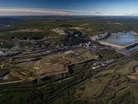
The Swedish Land and Environmental Court granted a permit for mining company LKAB for continued and expanded mining and processing activities in Malmberget, Sweden, as well as measures to reduce impact on air and water.
The permit gives the greenlight for LKAB to go ahead with the establishment of a demonstration plant for fossil-free sponge iron production.
Sponge iron, also known as direct reduced iron, is a metallic product produced from the direct reduction of iron ore.
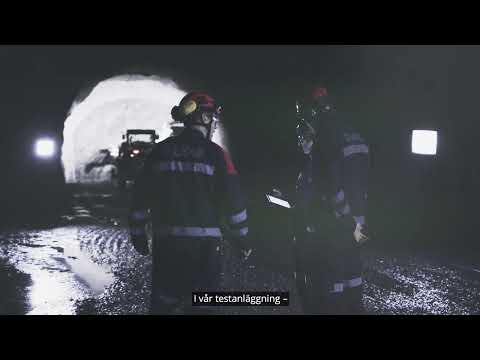
LKAB’s permit approved
The permit covers both continued and expanded mining and processing activities in Malmberget and a new processing plant for apatite to supply LKAB’s planned industrial park in Luleå with apatite concentrate, in addition to the fossil-free sponge iron facility.
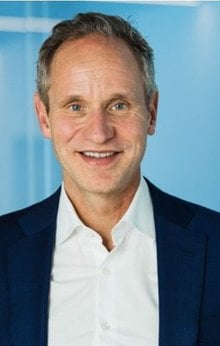
Johan Menckel, President and CEO of LKAB, says: “At last, we have a ruling in place. We now need to review it and assess how to proceed.
“We operate in a time of major challenges and uncertainty, where it is crucial to gradually create better conditions for conducting and developing our operations. For us, this is not just about opportunities to grow and develop, but about being able to continue mining operations at all.”
The demonstration plant
The demonstration plant for fossil-free sponge iron production in Gällivare is part of LKAB’s HYBRIT Demonstration Project, a joint venture with steel makers SSAB and energy company Vattenfall.
LKAB says the HYBRIT technology could potentially replace the traditional blast furnace technology, using coke and coal, with fossil-free, hydrogen-based direct reduction.
The milestone facility in Gällivare aims to yield around 1 to 1.5 million tonnes of sponge iron annually.
The project has received support from the EU's Innovation Fund, CINEA.
A recent report from Reuters highlighted that an investment decision is still pending for the Hybrit demonstration plant. The demonstration facility is a key part of the company's plans for green steel.
Monika Sammelin, Area Manager in Malmberget, LKAB, says of the permit approval: “This enables us to contribute to reduced carbon emissions from iron and steel production, while also allowing us to implement concrete environmental improvements locally."
Iron and steel industry and greenhouse gas emissions
According to Global Efficiency Intelligence, the global iron and steel industry is one of the most energy-intensive sectors and a central focus of climate policy, accounting for approximately 11% of global CO₂ emissions and more than 8% of total greenhouse gas emissions, making it the largest single industrial source of emissions worldwide.
Many green steel projects have been pushed back, delayed or cancelled, despite the EU pushing for automakers to adopt low carbon steel as part of its proposed Industrial Accelerator Act and a variety of other legislation.
The approval of LKAB’s permit marks a significant step in securing production in sustainable metals. Speaking about the recent permit and its necessity in securing a sustainable future, Johan adds: “The permit is a prerequisite for securing our operations for decades to come.
“Our ambition is to gradually strengthen our competitiveness by further processing our pellets into fossil-free sponge iron, while also broadening our business with critical minerals.
“Our mines and the quality of our ore are an asset in the transition towards a sustainable future, and for increasing self-sufficiency in critical raw materials in Sweden and Europe.”