
ARM Approves R16bn Restart of Bokoni and Nkomati Mines
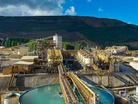
African Rainbow Minerals (ARM) has approved a phased R15.2bn (US$927m) upgrade of its Bokoni platinum group metal operations, alongside the resumption of nickel mining at its Nkomati mine. The South African miner's board signed off on both projects this week.
The Bokoni expansion will add a new 120,000 tonne per month PGM concentrator to the site's existing, recently refurbished 60,000 tonne per month plant. The new concentrator is expected to be commissioned in 2030, with the operation reaching steady state in 2032.
ARM expects Bokoni to produce between 350,000 and 400,000 ounces of PGMs a year from 2032 onwards. The company produced 615,719 ounces of PGMs across its operations in the year to June 2025.
Separately, ARM is restarting open-pit mining and nickel concentrate production at Nkomati, investing US$46m to target annual output of 56,065 tonnes of nickel concentrate.

- ARM has approved a R15.2bn (US$927m) upgrade of its Bokoni platinum operations
- ARM is investing US$46m to restart nickel mining at Nkomati, targeting 56,065 tonnes of annual output
- Bokoni's new concentrator is expected to add 120,000 tonnes per month of capacity, commissioning in 2030
- ARM expects Bokoni to produce 350,000-400,000 ounces of PGMs a year from 2032
Two mines back from mothballs
Both projects mark a return to production for assets ARM had previously shut down due to weak commodity prices.
Bokoni was suspended in June 2025 after ARM said its smaller 60,000 tonne per month capacity was not enough to be profitable, while Nkomati was placed on care and maintenance in 2021 due to rising operational costs and weak nickel prices.
ARM took full ownership of Nkomati in July 2025, following the exit of former joint venture partner Nornickel. The restart is underpinned by a conditional offtake agreement with Sweden's Boliden, which will see nickel concentrate from Nkomati supplied to the company's Harjavalta smelter in Finland.
ARM said the outlook for PGMs remains positive despite the expected impact of battery electric vehicles, which do not require the emission control systems that rely on the metals.
Platinum group metals are used mainly in autocatalysts to reduce vehicle emissions, while nickel is a key input for stainless steel, batteries and superalloys.
A bet on recovering prices
The restarts are part of a broader trend of mining operators returning to existing assets rather than developing new ones from scratch, as commodity prices recover from recent lows.
Platinum prices have risen 14% over the past 12 months, having risen as high as US$2,773 an ounce in January before the Middle East conflict pulled investors back toward the dollar.
Nickel prices are also approaching two-year highs, driven in part by supply cuts in Indonesia, the world's largest producer.
ARM held estimated net cash of around R9.5bn (US$580m) as of the end of June, giving the company the capacity to fund both projects without seeking external financing.
BHP has taken a similar view with its Cerro Colorado copper mine in Chile, submitting plans to reopen the site rather than pursue new development, while GEM Mining Consulting's recent research has argued that extending the life of existing assets often unlocks more value than building new capacity.