
Barrick and First Quantum Back Zambia's Copper Ambitions
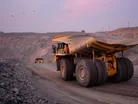
Zambia has extended its suspension of the 10% duty on copper concentrate exports, as it works toward its ambitious target to reach three million tonnes of copper production by 2031.
The companies benefiting from the suspension include Canada's Barrick Mining and First Quantum Minerals, as well as Chinese-owned Nkana Mining and Minerals Processing.
The move comes as multiple Western countries race to secure critical mineral supply chains. Canada has mobilised more than US$18.5bn in critical minerals partnerships under its Critical Minerals Production Alliance.
The UK published its Vision 2035 Critical Minerals Strategy in November 2025, setting a target to reduce its reliance on any single country for key minerals including copper.
Washington is also actively courting Zambia, with Zambian Mines Minister Paul Kabuswe confirming investment talks with the US are underway.
With ambitious production targets and investment flowing from both East and West, Zambia is well placed to benefit from growing global competition to secure copper supply in the region.

Zambia’s copper ambitions
Zambia is currently Africa’s second largest producer of copper, behind Democratic Republic of Congo (DRC), and its ambitious target of three million tonnes per year by 2031 is not unrealistic.
Copper is a critical mineral in the production of electric vehicles, data centres and other green energy storage. In its May 2025 Global Trade Update, UN Trade and Development (UNCTAD) predicted there will be a more than 40% rise in demand for copper from now until 2040.
The West’s willingness to invest in Zambian copper production as part of its push back on Chinese reliance is helping to build the operational capabilities needed to meet the target.
There is still a long way to go, however. The extension of the 10% export duty is an effort to help clear stockpiles of unprocessed material, as the country's major smelters undergo extended maintenance and repairs.
The country produced 890,000 tonnes in 2025, missing its target of one million tonnes. The race to close the gap is underway.
The companies driving production
Canada’s First Quantum operates two of the largest copper mines in Zambia. The Sentinel Copper Mine in the North-Western Province produced 396,000 tonnes of copper in 2025, according to First Quantum data.
Its sister mine, the Kansanshi Mine, near Solwezi, is thought to be Zambia’s largest open-pit copper mine.
Barrick Mining’s Lumwana Mine is undergoing a US$2bn ‘Super Pit Expansion Project’ which aims to double its copper production to 240,000 tonnes a year. The project is part of Barrick’s direct support of Zambia’s growth targets.
“We’re not just expanding a mine, we’re strengthening a partnership,” says Mark Bristow, Barrick Mining’s former Chief Executive Officer. “Our teams are actively exploring further growth opportunities across the Zambian copperbelt, building on our recently signed Memorandum of Understanding with the Government of Zambia.”
The field extends further than Canada. Mopani Copper Mines, jointly owned by Abu Dhabi's International Resources Holding and Zambia's state miner ZCCM-IH, has a duty-free export quota of 100,000 tonnes under the current waiver.
Chinese-owned Nkana Mining and Minerals Processing and India's Vedanta are also operating in the country. Add in US-backed KoBold Metals, and you have a broad global investment picture that spans East and West.
The race for Zambia’s copper
China is already deeply embedded in Zambia's mining sector. JCHX Mining's Lubambe Copper Mine and Nkana Mining and Minerals Processing are both Chinese-owned, and Beijing has backed the TAZARA railway upgrade, a major infrastructure project connecting Zambia to the Tanzanian coast.
The US and EU are backing the Lobito Corridor, a competing rail route running west through Angola to the Atlantic, designed to bring Zambian and Congolese copper to Western markets rather than Chinese ones.
Canada's position is already strong. First Quantum alone produces nearly half of Zambia's annual copper output, and Canada has mobilised US$18.5bn in critical minerals partnerships globally under its Critical Minerals Production Alliance.
The UK has signed a non-binding minerals agreement with Zambia and is targeting supply chain diversification away from China under its Vision 2035 strategy.
"Nobody wants to be locked out of these critical minerals," Kakenenwa Muyangwa, Chief Executive Officer of ZCCM Investment Holdings, told the Globe and Mail.
Western capital is competing with Chinese money, copper demand is rising, and Zambia knows its worth. Three million tonnes is a big ask, but conditions to get there are taking shape.
Company portals


Executives

Mark Bristow
Former President and CEO