
What Europe's Minerals Stockpile Means for Mining
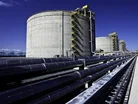
The EU has shortlisted tungsten, rare earths and gallium for its first coordinated strategic mineral reserve. Magnesium, germanium and graphite are also under consideration.
Most of the materials on the list feature on NATO's register of 12 elements considered critical to defence procurement.
The RESourceEU Action Plan, launched in December 2025, established a European Critical Raw Materials Centre to oversee joint purchasing and reserves management. A pilot stockpiling scheme became operational in early 2026.
Funding mechanisms, drawdown protocols, replenishment thresholds and valuation frameworks across member states are yet to be disclosed, however.
A February 2026 European Court of Auditors report found that EU diversification efforts have produced no tangible results, while domestic processing capacity is declining, partly due to high energy costs.
Recycling rates for seven of the 26 critical minerals needed for the energy transition sit between 1% and 5%.
Rolf Kuby, Director General of Euromines, says Europe has the assets and expertise required, "but must now accelerate delivery through greater coherence, speed and trust-building across stakeholders."
Why Western governments are acting now
The EU's announcement came on the same day Beijing published implementation regulations for its revised Mineral Resources Law, which tighten central control over domestic mining output. China holds leading positions in production and processing across most of the materials being discussed.
Beijing's export restrictions on gallium, germanium and graphite, introduced from 2023, demonstrated how quickly supply disruption can happen. The US, Japan and South Korea have responded with parallel reserve programmes and alternative supply chain investment.
According to the International Energy Agency, the combined market share of the top three producing countries for key minerals rose to 86% in 2024, up from 82% in 2020. China leads in most categories.
The geopolitical scramble for non-Chinese mineral supplies is already producing uncomfortable situations. The Economist reported in May 2026 that the Rwanda-backed M23 rebel group, which controls large areas of eastern Democratic Republic of Congo (DRC), has been pitching itself to the Trump administration as a supplier of tantalum, tin and tungsten.
The group hopes Washington's push for alternative mineral sources could be leveraged into political legitimacy and economic support.
Eastern Congo is among the world's richest mineral regions. The DRC supplies most of the world's cobalt and a significant share of global tantalum feedstock.
The Rubaya mining area alone accounts for around 15% of world coltan production. However, United Nations experts have accused M23 and Rwanda of overseeing large-scale illicit mineral exports from occupied territory.
This surfaces a core difficulty in Western stockpiling strategy: the minerals governments need most are often found in jurisdictions where clean supply chains are hardest to guarantee.
The US has not responded to M23's offer, but it is moving fast on other fronts. It has issued executive orders to accelerate domestic mineral production, fast-tracked permitting for strategic mining projects and signed bilateral agreements with Australia, Canada and several African nations.

What it means for producers
Government-backed demand is becoming a structural feature of mineral markets rather than an emergency measure.
Governments are different buyers than industrial customers. They work in longer cycles, weigh strategic considerations above price and care about provenance in ways commercial procurement typically does not.
Producers of tungsten, gallium and rare earth elements are most directly exposed. These materials are relied upon in defence, semiconductor manufacturing and energy technology, which is why they appear on both NATO's critical list and the EU's shortlist.
Copper, lithium, nickel and cobalt are largely absent from the EU's initial priority list. Western investment in alternative supply chains for these materials is more advanced, and market volumes make pure stockpiling less practical as a policy tool.
The logistics challenge
Critical minerals are not equal when it comes to storage requirements. Rare earth oxides are relatively stable, but processed gallium metal requires controlled conditions. Certain graphite forms are sensitive to temperature and humidity, and magnesium carries fire risk in bulk.
The EU has reportedly been in discussions with logistics hubs including the Port of Rotterdam, Europe's largest, over storage arrangements. No public detail on the chosen model has emerged so far.
Whether Europe's reserve becomes a functioning programme or another initiative that performs better on paper than in practice remains to be seen.
For producers of the materials on the priority list, the question now is how to engage with a buyer they have never had to deal with at scale before: governments.
Company portals

Executives
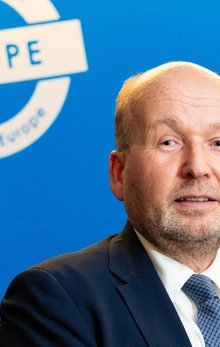
Rolf Kuby
Director General, Euromines