
How Botswana Critical Minerals Detection Impacts Diversity
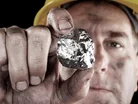
Rare earth elements and other critical minerals have become key commodities, due to the increase in electric vehicles, smart phones and renewable energy.
Despite this, the availability of critical minerals has been a main area of concern for supply chains around the world due to their limited resources.
However, Tsodilo Resources Limited has detected these materials within its operations.

The need for diversification
Rare earth elements consist of 17 metallic elements which have become vital for modern manufacturing. Their unique properties make them essential components in smartphones, solar panels and high-powered magnets. Due to this, any supply disruption is potentially devastating for global value chains.
According to the International Energy Agency (IEA), China controls 61% of global rare earth production and approximately 90% of processing operations. As a result, the nation's dominance gives it considerable influence over the global supply, making supply chain vulnerability a strategic concern for high-tech manufacturers.
This became a larger concern amid the growing geopolitical tensions across 2025, with trade wars and inflation causing businesses around the world to change their strategies and look to diversify their supply chains. This dominance, however, has made it difficult – even though many countries have found some critical materials and rare earth elements across their landscape, they do not have the infrastructure, the potency nor the volume in order to meet demand.
Now, however, Tsodilo Resources Limited (Tsodilo) has announced the verification of critical minerals and rare earth element mineralisation from its 100%-owned Gcwihaba Metals Project in northwest Botswana. Tsodilo is an exploration stage company engaged in the acquisition, exploration and development of mineral properties in Botswana.
“The targets were originally identified as geophysical anomalies through ground magnetic and gravity surveys. Subsequent diamond core drilling has confirmed that these anomalies host skarn-type mineralisation containing an extensive suite of minerals,” the company said.
All supply chain, sustainability, Scope 3 and net zero leaders should attend:
- Procurement and Supply Chain LIVE: The Net Zero Summit - QEII Centre, London, March 4-5
- Procurement and Supply Chain LIVE: The US Summit - Navy Pier, Chicago, April 21-22
Co-located with Sustainability LIVE, these events brings together CSCOs, CSOs and senior decision-makers at a moment when sustainability, supply chains and commercial performance are increasingly interconnected.
Tickets can be booked online today for The Net Zero Summit and The US Summit. Group discounts available.
Site findings
The site is polymetallic, including 15 rare earth elements and critical materials such as cobalt, copper, nickel, silver and vanadium.
Following these findings, the company has developed a conceptual exploration target across 81-97 million tonnes at grades 0.05%-1.49% total rare earth oxide (TREO). This is based on integrated geophysical modelling, drilling results and geological modelling of the skarn deposits. Tsodilo has identified 20 out of 60 CML minerals at the Gcwihaba site.
“The 1.49% TREO intercept at C27 represents the highest grade recorded so far for Gcwihaba,” says James M. Bruchs, Chairman and CEO at Tsodilo.
“These results validate our systematic exploration approach and demonstrate evidence of a polymetallic REE skarn system with both vertical extent and grade. Our conceptual exploration target of 81 to 97 million tonnes was generated through integrated magnetic and gravity geophysical modelling using a ground magnetics inversion model, constrained by drilling results and geological interpretation.
"This modelling was completed in-house using Paradigm GOCAD software. Beyond rare earth elements, the skarn system has returned encouraging base and precious metal values, including copper up to 0.41% in the C26 skarn, cobalt up to 320 ppm, and silver up to 5.1 g/t in the C27 skarn.
"The 2026 drilling program will focus on defining high-grade REE zones while further evaluating the polymetallic potential of the system to support preparation of an initial mineral resource estimate.”
This is the first systematic assessment of REE potential within the project, with 76% of its samples returning with detectable REE mineralisation.
Moving forward
The minerals were found 20-50 meters below the surface, which is relatively shallow in the mining industry. As a result, these minerals are easier and less expensive to dig up. This means they are relatively accessible for extraction.
The potential for Botswana to become a supplier of critical minerals is a significant step forward in diversified supply chains. It could bring greater economic prosperity for the country, alongside major trade partnerships. For other countries, the potential of Botswana's supply could reduce their dependence on China.
Moving forward, the Tsodilo is planning a 15,000 meter drilling programme throughout 2026, following the initial tests which demonstrated enough resources to further investigate. The campaign will support preparation for an initial mineral resource statement to explore whether there is enough potential to act.
Company portals
Executives
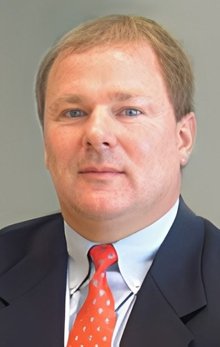
James Bruchs
Chairman and CEO