
Wood Mackenzie: Greenland's Underdeveloped Rare Earth Sector
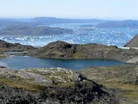
In a new report titled 'Polar prize? The realities of developing Greenland's rare earth potential', Wood Mackenzie explores the state of Greenland's rare earth sector.
As rare earth supply chain diversification from China becomes a main priority, businesses are looking at other developments for their sourcing needs.
Despite this, Wood Mackenzie finds that, although Greenland ranks in the top 10 for reserves, it faces a wealth of development delays and requires significant restructuring.

Greenland's untapped wealth
Rare earths are a critical material within modern manufacturing, with their properties making them necessary to smartphones, solar panels and high-powered magnets. High-tech value chains depend on these resources and any disruption to the supply chain could be devastating.
Currently, China is responsible for approximately 61% of global rare earth production and 90% of processing, but with global tensions rising and businesses looking to diversify their supply chains, leaders are beginning to look elsewhere for their minerals and metals.
The European Commission has estimated that Greenland has the potential to produce 27 out of the 34 minerals which are deemed 'critical' under its Critical Raw Materials Act. This Act was formed in 2022 by President von der Leyen to address EU dependency on imported critical raw materials. The aim is to diversify sourcing at the same time as developing a domestic supply of the critical materials.
Despite Greenland having a wealth of potential, it has no active mines and most rare earth projects remain in early-stage development. Their undeveloped capabilities are caused by infrastructure deficits, geographic constraints and regulatory restrictions, according to Wood Mackenzie.
All sustainability, net zero and sustainable procurement leaders should attend:
- Procurement & Supply Chain LIVE: The Net Zero Summit - QEII Centre, London, March 4-5
- Procurement & Supply Chain LIVE: The US Summit - Navy Pier, Chicago, April 21-22
Co-located with Sustainability LIVE, these events brings together CPOs, CSCO, CSOs, ESG leaders and senior decision-makers at a moment when sustainability, supply chains and commercial performance are increasingly interconnected.
Tickets can be booked online today for The Net Zero Summit and The US Summit. Group discounts available.
Unsuitable conditions
Greenland is facing challenges with the mining of its rare earths because it lacks the necessary infrastructure. Wood Mackenzie suggests that the companies would need to develop their own energy infrastructure and transport in order to maintain the mines, as they currently do not have the capabilities.
The local population within Greenland is small and its mining relies on imported skill labour due to its developing mining sector. As it is previously untapped, there is not enough local labour or trained skills in order to meet new demand for the mining of rare earths. Currently, only the southwestern ports in Greenland operate at all times of the year and Nuuk is the only mine with modern port infrastructure.
Operating conditions are harsh in this region due to its high snowfall, freezing temperatures and shortened daylight hours. Mining is a harsh industry anyway, but the conditions of the country make it even more difficult for workers. Moreover, regular weather disruptions makes access to many areas limited, meaning that the mines are problematic to run.
Geographic challenges are a concern for the growing mining industry in Greenland, as these conditions cannot be altered. Their current needs of capital investments and administrative support are more easily granted, but even they have their challenges.
"Projects in Greenland must compete for investment with projects in countries such as Canada, Australia and the US that have more developed infrastructure and established mining sectors," states David Riley, Senior Research Analyst at Wood Mackenzie.
"The lack of infrastructure, low labour pool and high capital requirements are the main barriers to development. We expect these to remain major limiting factors on Greenland's ability to establish a rare earth mining sector, irrespective of whether Greenland remains a Danish territory, becomes a US territory, or looks to independence."
- Energy Transition Metals - the Kvanefjeld project has faced numerous stalls since early 2022, caused by legal challenges over uranium content. In 2021, Greenland established a 100 parts per million limit for uranium, but the project had content exceeding 300 ppm. The project began in 2007, with an initial plan of 30 kt rare earth oxide (REO) per year production
- Critical Metals - its Tanbreez project received a US$120m Letter of Interest from the US Export-Import Bank, with plans of a mid-2026 pilot facility
- Neo Performance Materials' - the Sarfartoq project is still in the earliest exploration stage
- Motzfeldt (0.260% total rare earth oxides (TREO)) has only completed exploratory drilling
- Gronnedal shows only 0.63% REO
Regulation barriers
Greenland's mining industry has seen an influx of regulatory issues, with the development of mining projects being a contentious topic. In 2021, the highest number of seats in Greenland's leadership was won by the Inuit Ataqatigiit party, following a campaign which focussed on the opposition of the Kvanefjeld project. December of that same year, uranium exploration and exploitation was banned by Greenland's Parliament.
In 2025, the Democrats became the largest party for the country, but while they support private-sector resource use, the country's current Minister of Industry, Raw Materials, Mining and Energy is still linked with Inuit Ataqatigiit.
The country's Mineral Resources Strategy 2025-2029 emphasises sustainability and high environmental standards. In 2019, an MoU between Greenland and the US about mineral development was formed, alongside a partnership on sustainable raw materials with the EU in 2023.
Currently, 6.5% of Energy Transition Metals is held by China's Shenghe Resources Holding Co.
Wood Mackenzie points to regulatory concerns, inappropriate infrastructure and unsuitable climate have all become key factors to Greenland's inability to operate rare earth mines, despite its wealth of capabilities.