
Why Canada is Investing in Rio Tinto Scandium Production

Rio Tinto has partnered with the Canada Growth Fund (CGF) in a bid to scale up production of scandium oxide at its site in Sorel-Tracy, Québec.
This expansion focuses on Rio Tinto’s Critical Minerals and Metallurgical Complex, where CGF has committed approximately C$25m (US$18m) to enhance output and strengthen the region’s strategic position in the critical minerals sector.
Through this investment, the facility’s nameplate production capacity rises to nine tonnes per year, positioning Canada to supply a larger portion of global scandium demand from within North America. It also supports the country’s efforts to solidify a resilient critical minerals supply chain.
The deal includes two commercial agreements with the Government of Canada: an offtake arrangement and a marketing and storage partnership.

Scandium's growing strategic importance
Scandium is a rare metal used in a range of applications across advanced manufacturing. It is vital for high-performance aluminium alloys, solid oxide fuel cells and a number of emerging technologies.
The metal's true value lies in how it enhances material performance, especially under extreme conditions.
Canada, the US and Australia classify scandium as a critical mineral. Although it occurs widely in the Earth's crust, it does so in very low concentrations and is often tightly bound with other elements. This makes extracting and refining scandium technically complex and expensive, with environmental concerns further complicating traditional methods.
Rio Tinto has developed a pioneering process to extract high-purity scandium from waste streams produced during titanium dioxide production. This eliminates the need for additional mining, cutting environmental impacts while unlocking economic value from existing operations.
The process takes place at Rio Tinto Iron and Titanium’s site in Québec, which now hosts North America’s only scandium oxide production facility.
Sophie Bergeron, Managing Director of Rio Tinto Iron and Titanium and Diamonds, explains: “Rio Tinto is pleased to partner with CGF and the Government of Canada to expand our Canadian production of scandium oxide, a high-performance material used for advanced manufacturing and energy generation.
"This project leverages an innovative process developed in Canada by our scientists, fully supplied from our domestic mining and metallurgical assets to provide a secure, North American supply of this critical mineral.”
Scaling up supply
Until now, Rio Tinto’s Québec facility has operated as a demonstration plant.
Since beginning production in 2022, it has provided the only scandium oxide output in North America. It also stands as one of the few sources of refined scandium in Organisation for Economic Co-operation and Development (OECD) countries.
The global supply, however, remains small, with China producing the majority.
With CGF’s backing, Rio Tinto is set to transition from demonstration to scaled commercial production, expanding capacity to nine tonnes annually. The investment takes the form of a structured financial royalty, similar to equity, which allows CGF to share in the project’s long-term value without taking ownership.
This method fits CGF’s broader role: to fund projects that align with Canada’s industrial and economic priorities, particularly those that reduce emissions or build up domestic supply chains for critical technologies.
“With its unique investment mandate, CGF invests into innovative transaction structures that directly support projects of strategic priorities," says Yannick Beaudoin, President and CEO of Canada Growth Fund Investment Management.
"This transaction, completed alongside an established operating partner, enables us to unlock new models for risk-sharing and value creation that advance Canada’s supply chain resilience strategy.
"Our commitment to the project demonstrates how targeted investment and disciplined structuring can deliver tangible benefits for the Canadian industry and economy.”
Commercial agreements
In addition to CGF’s investment, the Government of Canada has entered the fray with two commercial agreements aimed at supporting the long-term success of the project.
First is an offtake agreement, under which the government has committed to purchasing a fixed volume of scandium from Rio Tinto. Offtake agreements help anchor new production capacity by giving producers a guaranteed buyer, which in turn can support financing and long-term planning.
Second is a marketing and storage agreement, which will see Rio Tinto assist the government in selling and storing the scandium. This approach allows the material to be held until demand emerges in sectors such as lightweight transport, defence or fuel cell technologies.
Benefitting advanced manufacturing
Scandium acts as a highly-effective microalloying agent in aluminium, giving it improved strength, corrosion resistance, flexibility and heat tolerance. These properties benefit advanced manufacturing across automotive, aerospace and energy sectors.
In fuel cells, scandium’s conductivity enhances energy efficiency, helping to expand adoption in off-grid and backup power applications, including in hospitals, data centres and public infrastructure.
Deborah K Orida, President and CEO at PSP Investments, which supports CGF’s operations, adds: "We are delighted to bring PSP Investments’ rigorous investment process, depth of expertise and arm’s length governance model to the execution of CGF’s mandate.
"CGF continues to provide innovative solutions that enable the development of important projects, improving Canada’s investment climate and contributing to PSP’s foresight on the evolution of the critical minerals supply chain.”
Together, these moves support Canada’s ambition to become a competitive and secure producer of high-value critical minerals.
By backing domestic extraction methods and building partnerships between public and private entities, the project serves as a template for supply chain resilience amid shifting global dynamics.
Company portals

Executives
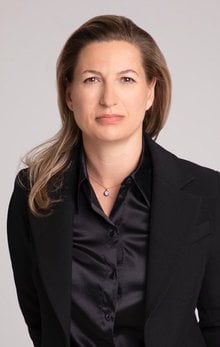
Sophie Bergeron
Managing Director of Rio Tinto Iron and Titanium and Diamonds
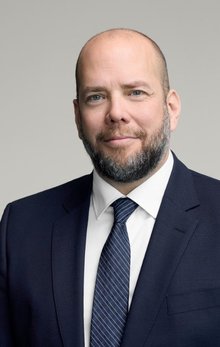
Yannick Beaudoin