
Electrifying the Pilbara: The BHP & Rio Tinto Collaboration
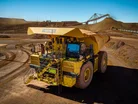
In an industry-first collaboration, BHP, Rio Tinto and Caterpillar are bringing battery-electric haul trucks to Western Australia's Pilbara.
Following three months of testing, the companies have launched a trial at a mine-site demonstration, aiming to reduce greenhouse gas emissions across operations.
The trial could also unlock new levels of efficiency, transforming the industry in more ways than one.

An industry first
The Pilbara is an area in Western Australia, known for its red earth and significant mineral deposits – particularly iron ore. As such, it is a mining powerhouse, acting as an economic engine for the region. BHP and Rio Tinto are just some of the organisations which operate in this region, introducing innovative measures and significant pieces of infrastructure to the area.
As the industry becomes a more critical one, organisations are understanding the need to decarbonise their operations. As a result, automated tools are being introduced, as are renewable energy sources and battery-powered vehicles.
Now, BHP and Rio Tinto have partnered with Caterpillar in an industry-first collaboration. The companies are trialling two Cat 793 XE Early Learner battery-electric haul trucks at a mine-site demonstration in the Pilbara.
“Heavy industry needs to embrace the challenge of lowering their emissions as we work towards decarbonising the Pilbara," says Amber-Jade Sanderson, Minister of Energy and Decarbonisation at the Western Australian Government.
“Our Government’s Energy Transition is good for jobs, good for the WA economy and good for the future of this vital region. It’s great to see mining companies trialling battery-electric haul trucks in the Pilbara – this is an important step towards net zero.”
Growing to scale
There has already been three months of on-site testing at BHP's Jimblebar iron ore mine. Already, the trial is demonstrating progress – reflecting a wider industry attempt decrease emissions across large-scale operations.
The trucks underwent controlled testing at Caterpillar’s Tucson Proving Ground in the United States, before transportation to the Jimblebar site at the end of 2025. Now, they are undertaking work within a demanding mining environment.
Due to the scale and intensity of the Pilbara, it acts as an ideal testing ground for these trucks, particularly as demand for critical minerals has increased and mining operations have grown.
“I want Western Australia’s economy to remain the strongest in the nation, which is why my government is fully behind BHP and Rio Tinto’s efforts to decarbonise and help make WA a renewable energy powerhouse," explains Roger Cook, Premier of Western Australia.
“Thanks to Caterpillar, these electric trucks will help deliver my government’s vision of reducing emissions in the Pilbara so this region can continue keeping both the WA and national economy strong.”
Industry impact
The collaborative trial is creating significant data, which assesses technical readiness, infrastructure requirements and commercial feasibility. This also includes the trialling of high-powered static and dynamic charging solutions.
The early phase testing has already included more than 200 test laps and 100 hours of operation. The insights generated from this has helped solidify insights on safety, technology and maintenance of the trucks.
By conducting these trials, the organisations have gained the confidence that this is a worthwhile investment – both for operational efficiency and emissions reduction.
“Decarbonising haulage across the Pilbara is a complex challenge that is going to require collaboration across industry to solve," says Matthew Holcz, Rio Tinto Iron Ore Chief Executive.
"This trial will give us real-world data in some of the most demanding operating conditions on earth.
“The Pilbara's scale and intensity are unique, and that's exactly what makes it the right place to test this technology to understand what’s needed to support broader deployment.”
Moving forward in the trial, the companies are aiming to expand the capabilities of operational efficiency, evaluating a new charging format. The trial will explore an energy transfer system, which means the trucks will be able to remain in motion while charging. This will mean they can operate for longer, without the need for charging breaks.
As a result, operations will be more streamlined and less fragmented, allowing for new opportunities across the Pilbara. For Caterpillar, this acts as an opportunity to develop its solutions and help tackle the challenges faced by its customers. Through ongoing innovation, the company is helping drive reliability and sustainability across sites.
For BHP and Rio Tinto, this collaboration is helping them work towards their decarbonisation goals. The mining industry, though a critical one, is an unsustainable one, due to its emission-heavy processes and reliance on heavy-goods vehicles. By working on battery-electric trucks, they are accelerating electrification across the mining industry and tackling emissions.



Executives

Matthew Holcz
Chief Executive, Iron Ore