
What do Glencore's Restoration Methods Mean for Mining
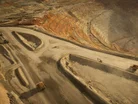
Glencore has released data showing how operational adjustments at coal assets are affecting emissions alongside a new biodiversity assessment system built on machine learning.
The Swiss company reported 399.9m tonnes CO₂e in Scope 1, 2 and 3 emissions for 2025, down from 416.2m tonnes in 2024, excluding Elk Valley Resources.

Coal operations wind down
The reduction in emissions corresponds with lower output at thermal coal sites. According to Glencore's 2025 Sustainability Report, the company has committed to reducing thermal coal production by 15% by 2026, 25% by 2030 and 50% by 2035, all measured against 2019 baseline levels.
The company has confirmed plans to become one of the world's largest copper producers over the next 10 years. Glencore currently ranks as the sixth largest copper producer globally and is listed as the largest coal producer.
The shift comes after the collapse of a potential Rio Tinto deal that had been discussed over two decades. Glencore is now pursuing copper expansion independently.
"We remain focused on delivering on our 2026 priorities, achieving our operational targets and de-risking and successfully progressing our organic production growth options," says Gary Nagle, Chief Executive Officer at Glencore.
Machine learning tracks biodiversity
Glencore completed development of its No Net Loss methodology in 2025 with international consultants. The system allows biodiversity measurement across multiple sites and regions.
The methodology uses machine learning algorithms and satellite imagery to produce standardised assessments of ecosystem conditions. This could enable detection of ecological change at scale, letting teams measure impact using consistent parameters.
Glencore's No Net Loss target applies at the point of site closure. This provides time for rehabilitation work to offset disturbance during active operations.
The company owned or leased 20,000 sq km by December 2025. According to the report, 8.4% of this area was disturbed, with 30% of disturbed land having been restored.
Rehabilitation exceeds new disturbance
In 2025, Glencore restored 26.7 sq km of land, exceeding the 24.5 sq km newly disturbed during the same period. Land management practices vary according to regional conditions and ecosystem type.
The report does not specify which geographical areas or mine sites accounted for the majority of restoration activity. Implementation methods differ across operational contexts.
"The commodities in our portfolio support the world's growing energy and infrastructure needs, as well as efforts to transition to a lower-carbon economy," says Gary.
"We are proud to help secure the supply of critical minerals while remaining a responsible operator and a trusted partner to the communities that host us."
Gary added that the company aims to achieve net zero emissions by 2050, contingent on supportive policy frameworks being in place.
Closure planning underway
Several Glencore sites will close within five to 10 years. A management team has been assigned to oversee these transitions.
"Integrating closure planning into all phases of the life of our assets is essential to the sustainability of Glencore's operations. Early consideration and regular review of closure concepts is key to supporting economically viable and technically achievable closure plans, enabling us to appropriately address closure risks and liabilities, while identifying opportunities to add environmental and social value in order to leave a positive legacy for the regions where we operate," says Helen Harper, Head of Legacy Assets at Glencore.
The company states that its approach to closure planning aims to provide communities with advance notice and support. How effectively this transition occurs will depend on how well local requirements are addressed and whether sustainability objectives are met.
Glencore's thermal coal reduction timeline aligns with production adjustments already underway at managed sites. The biodiversity methodology represents an attempt to standardise ecological impact measurement across varied operating environments.
Company portals
Executives
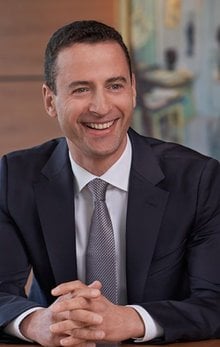
Gary Nagle
CEO