
IFS & Boston Dynamics: Industrial AI for Asset-Heavy Sectors
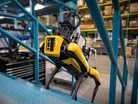
A partnership between industrial AI provider IFS and mobile robotics firm Boston Dynamics looks set to create a new model for how asset-heavy sectors approach field operations.
The collaboration integrates Boston Dynamics’ autonomous Spot robots with the IFS.ai platform, forming what both companies describe as a fully-agentic AI system. In doing so, the two firms are aligning physical asset monitoring with predictive decision-making in real time.
The integration aims to turn what has traditionally been a reactive approach to asset management into a continuous, predictive loop. IFS and Boston Dynamics say their joint solution can gather operational data, process it through AI agents and trigger autonomous field actions – all within one connected system.

Merging field robotics with intelligent systems
As industries struggle with labour shortages and the challenge of maintaining uptime in hazardous environments, the need for technologies that support field workers grows. Field teams, which make up around 70% of the global workforce, remain underserved by standard AI solutions. This partnership aims to close that gap.
Boston Dynamics' Spot robots now carry out inspections in industrial facilities. These mobile robots, equipped with thermal cameras, acoustic sensors and gauge readers, collect key operational data. As they move through a site, they identify heat irregularities, listen for the signs of air or gas leaks, interpret pressure and flow readings from analogue dials and watch for potential safety threats such as chemical spills or abnormal electrical activity.
All sensor data collected by the robots feeds directly into IFS.ai. This is where AI agents assess the data, identify anomalies and initiate the required responses without human input. In practice, this could mean triggering maintenance schedules, detecting patterns that point to potential failures or flagging hazards that require immediate intervention.
Christian Pedersen, Chief Product Officer at IFS, explains: "Asset-intensive organisations face unrelenting pressure to improve operational performance. Together with Boston Dynamics, we're delivering a truly autonomous system that connects the physical and digital worlds for the first time.
"IFS.ai and IFS Loops turn robot observations into enterprise action, from preventative maintenance scheduling to predictive failure analysis and automated anomaly detection. Data flows from the field into enterprise systems, decisions are made autonomously and actions are executed back in the field, all within a single integrated platform."
This model creates a full loop of inspection, analysis and response – with robots acting as the eyes and ears on the ground, and the AI acting as the brain behind the decisions.
Industrial focus with high-impact use cases
The solution focuses on asset-intensive sectors including energy, utilities, mining and manufacturing – areas where operational disruptions can carry steep costs. As Spot handles routine monitoring and hazard detection, the system helps reduce risk for human workers and increase the frequency of inspections without increasing manpower.
Dr Merry Frayne, Director of Product at Boston Dynamics, says: "This collaboration represents the future of industrial operations. Our robots excel at navigating complex environments and gathering critical data.
"Combined with IFS' agentic decision-making capabilities, we're enabling organisations to achieve levels of operational excellence and safety that simply weren't possible before."
Demonstrated at Industrial X Unleashed in New York, the system showcases how robot-gathered data and AI insights can link up in real time to support operations. Use cases span everything from preventative maintenance and system reliability checks to emergency response and predictive alerts.
For mining operators, this means robotic patrols that catch warning signs early – such as overheating equipment or abnormal sounds from mechanical assets – with AI systems directing resources where they’re needed most.
Impact on safety, uptime and efficiency
The combined offering from IFS and Boston Dynamics aims to deliver clear outcomes across three operational priorities: safety, efficiency and uptime.
Safety improves as robots take over inspections in high-risk zones, removing workers from hazardous tasks while also increasing how often those inspections can occur
Efficiency grows through intelligent automation, with AI systems reducing decision delays and helping managers allocate resources where they’re most effective
Uptime gets a boost through predictive maintenance, where faults are flagged and resolved before they interrupt operations
Ron Utterbeck, Chief Information Officer at energy provider Eversource, sees the potential of the partnership in critical infrastructure work: "As the largest New England energy provider managing critical infrastructure across multiple states, this integration has the potential to radically transform our operations.
"As our grid continues to advance we need to utilise not only traditional data gathering but more advanced data gathering and modelling.
"To meet the reliability and the energy demands for our customers, we look forward to the opportunity in utilising advanced industry technology such to enable data collection at a different level that can support routine inspections of substations and facilities with automatically prioritising and dispatching our crews.
"This will allow our highly-skilled crews to be focused on the right priorities at the right time and ensure mission-critical work is completed. It's a genuine shift from reactive to predictive maintenance."
For industries that rely on extensive physical assets and remote fieldwork, this new model – built on autonomous robotics and AI systems that act without manual oversight – offers a path to more reliable, safe and efficient operations.
Company portals


Executives
Christian Pedersen
Chief Product Officer
Merry Frayne
Director of Product

Ron Utterbeck
Vice Chair Board of Directors