
Rio Tinto & Glencore: The $260bn Case, Context and Challenge
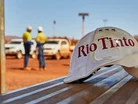
The global mining industry could see significant change as Rio Tinto and Glencore have resumed merger discussions.
The renewed talks concern a potential consolidation that would create a combined entity with an enterprise value exceeding US$260bn.
These discussions are taking place following discussions in March 2025, when a previous attempt at a combination ended.
On Friday, both firms confirmed each was in "preliminary discussions" regarding a "possible combination of some or all of their businesses, which could include an all-share merger".

Rio Tinto, the FTSE 100 company founded in 1873, currently holds an enterprise value of US$162bn (£120bn).
In a formal statement, the company says: "The parties' current expectation is that any merger transaction would be effected through the acquisition of Glencore by Rio Tinto by way of a court-sanctioned scheme of arrangement.
"There can be no certainty that an offer will be made or as to the terms of any such offer, should one be made."
This development follows a period of deal-making in the natural resources sector, notably the $53bn (£39bn) merger between Anglo American and Teck in September 2025.
Derren Nathan, Head of Equity Research at Hargreaves Lansdown, says: "Last year's theme of consolidation in the natural resources sector has shown no sign of let-up in the early part of 2026."
Copper demand and AI infrastructure
A key driver for the potential merger is global demand for copper. On 27 January 2026, prices for the metal reached over $13,300 (£9,900) a tonne, with projections from the International Copper Study Group indicating a potential supply shortfall of 10 million tonnes by 2040.
Copper is required for power distribution and cooling systems in data centres supporting AI infrastructure. A merged Rio-Glencore entity would hold significant copper assets.
As Derren says: "A full combination would create a global leader in multiple industrial metals including iron ore and transition metals such as copper, cobalt and lithium."
Glencore's CEO, Gary Nagle, says the company's goal is to become "the biggest copper producer in the world".
Changing approach to coal assets
One notable aspect of the 2026 talks is the potential shift in approach to fossil fuels. In 2024, the Financial Times reported that negotiations faced challenges partly due to disagreements over Glencore's coal operations; Rio Tinto exited the coal sector in 2018.
However, the political context has changed. Following Donald Trump's decision on 20 January 2025 to withdraw the US from key United Nations climate treaties and shifts in global energy policies, coal has remained profitable.
The Financial Times reported that Rio may now be open to retaining Glencore's coal business, which could allow the company to maintain exposure to both transition metals and fossil fuel assets.
The merger would combine two companies with different operational profiles. Rio Tinto is a mining company with 60,000 employees, while Glencore – established in the 1970s by trader Marc Rich – has a workforce of 150,000 and operates in commodities trading.
The deal faces regulatory scrutiny. Under UK takeover rules, Rio has until 5 February 2026 to make a formal offer. If it proceeds, it must navigate:
- China's regulators: As the largest consumer of iron ore and copper, Beijing's State Administration for Market Regulation (SAMR) may examine the merger's impact on pricing power
- The Australian Competition and Consumer Commission (ACCC) in Australia: Both firms operate in Western Australia and Queensland, where regulators may scrutinise control over ports, rail and market concentration
- EU review: Brussels may assess the combination's implications for access to critical raw materials for European manufacturing
As Gary argues recently, the industry needs to consolidate "not just for the sake of size, but also to create material synergies, to create relevance, to attract talent, to attract capital". The regulatory response to these discussions remains to be seen.

Executives
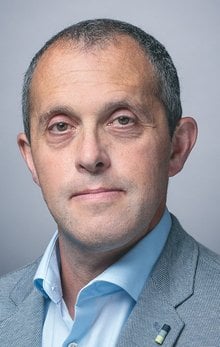
Derren Nathan
Head of Equity Research
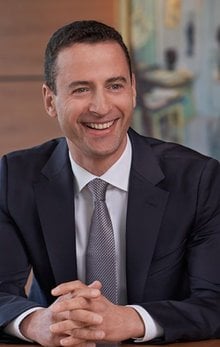
Gary Nagle
CEO