
How a US Oil Push in Venezuela Reshapes Resource Politics
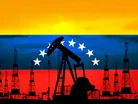
An announcement by US President Donald Trump signals a major change in global resource politics, with US firms set to invest billions to rebuild Venezuela's failing energy infrastructure. This follows a US-led military operation and the capture of former leader Nicolás Maduro.
While focused on oil, this initiative could offer a framework for large-scale foreign investment in other extractive sectors, presenting both opportunities and cautionary lessons for the mining industry.
Speaking from his Mar-a-Lago estate on 3 January, Trump detailed a plan to deploy US capital and technical expertise to restore Venezuela's production capabilities.
In remarks to reporters at the estate, Trump said: "We're going to have our very large United States oil companies go in, spend billions of dollars, fix the badly broken infrastructure and start making money for the country. They will be reimbursed."
For Washington, this move leverages US energy influence to affect global markets. For the companies involved, it means entering one of the world's most complex operating environments.
Reviving national resource infrastructure
Venezuela holds the world’s largest crude reserves, estimated at 303 billion barrels, but its output is less than one per cent of global supply. This collapse is a result of prolonged underinvestment, corruption and a loss of skilled labour under the nationalisation policies of Hugo Chávez and Nicolás Maduro.
The situation presents a case study in the challenges of reviving a dormant, world-class resource base, a scenario familiar to mining corporations assessing assets in politically complex regions.
Experts suggest a full revival could require a decade of work and substantial capital. Bob McNally, President of Rapidan Energy Group, says: "Just stabilising existing production will require low single-digit billions of dollars for workovers, power, water handling and export infrastructure repairs."
The scale of this reconstruction, from power generation to export terminals, mirrors the foundational work required to establish or reopen major mining operations.
Chevron, with its existing 20% share of Venezuelan output under a US sanctions waiver, is well-positioned to expand its role. Other firms like Exxon Mobil and ConocoPhillips, which left Venezuela after their assets were expropriated, have so far been more cautious about re-entering the country.
Bob McNally, President of Rapidan Energy Group, says: "Just stabilising existing production will require low single-digit billions of dollars for workovers, power, water handling and export infrastructure repairs."
Transforming commodity supply chains
From a logistics perspective, the rehabilitation of Venezuela’s infrastructure could be transformative.
A functional and stable Venezuela could reintegrate into global trade, altering freight routes and processing operations from the Caribbean to the US Gulf. This holds implications not just for oil but for any bulk commodity, as the development of efficient transport corridors can reshape the economics of mineral extraction and export for an entire region.
The logistics networks of the state-run oil company Petróleos de Venezuela, S.A. (PDVSA) need a complete overhaul. This points to considerable opportunities for engineering contractors, equipment manufacturers and maritime port operators.
For miners, refiners and commodity traders, renewed access to Venezuelan resources and transport links could provide new avenues for diversifying supply chains, potentially reducing the current reliance on more distant sources. A modernised Caribbean transport hub could create new efficiencies for sourcing and shipping various raw materials.

Assessing geopolitical and investment risk
The opportunities in Venezuela are matched by major risks, primarily concerning governance and political stability.
In his remarks, Trump stated the US would cooperate with Acting Venezuelan President Delcy Rodríguez to facilitate a transition towards a democratic government, but initial reports suggest political friction. Without clear constitutional frameworks or dependable guarantees on property rights, long-term capital commitments from US firms may not materialise.
The geopolitical climate is also tense, with Trump warning that neighbouring Colombia and Mexico could face "military action" if they do not curb the transnational narcotics trade. This regional instability highlights the link between political events and market reactions.
The cautious market response, with Brent crude rising just 0.9% to US$61.30 a barrel after the announcement, shows that traders are weighing the uncertain timeline for Venezuela's recovery.
For mining executives, this situation serves as a potent reminder of the complex interplay between geopolitical strategy, investment security and commodity market stability when considering ventures in resource-rich but volatile nations.
Company portals



Executives

Bob McNally
President