
How Rio Tinto is Leading Circular Mining
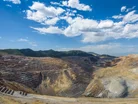
Rio Tinto has energised a new 25-megawatt solar plant at its Kennecott copper operations in Utah, which is demonstrating its ability to install a circular critical-minerals supply chain in which tellurium produced at the site is used to manufacture the panels now powering it.
Together with the 5MW solar plant completed in 2023, Kennecott now has 30MW of solar capacity – enough to power approximately 1,026 average American homes annually and reduce Kennecott's Scope 2 emissions by about 6% (20,000 tonnes CO₂e).
This is equivalent to removing 4,400 cars from the road each year.

Closing the loop: From mine to solar panel and back
Nate Foster, Managing Director of Rio Tinto Kennecott, says: "This new solar plant is more than a source of renewable power for our operations; it's a demonstration of circularity and supply chain resilience. By mining copper and tellurium, both classified as critical minerals in the United States, here at Kennecott and using that tellurium in the panels powering our site, we're proving how domestic critical minerals support renewable energy manufacturing.
"This approach strengthens North America's supply chain for essential resources, supports national energy security, and reinforces our commitment to a low-carbon future."
The United States designates both copper and tellurium as critical minerals due to their essential role in clean energy technologies and supply chain security. Kennecott produces both and runs one of just two copper smelters operating in the country, positioning it as a vital supplier for the energy transition.
As one of only two domestic tellurium producers – a crucial material for photovoltaic solar panels – Kennecott also plays an important part in supporting U.S. renewable energy manufacturing.
All sustainability, net zero and sustainable procurement leaders should attend:
- Procurement & Supply Chain LIVE: The Net Zero Summit - QEII Centre, London, March 4-5
- Procurement & Supply Chain LIVE: The US Summit - Navy Pier, Chicago, April 21-22
Co-located with Sustainability LIVE, these events brings together CPOs, CSCO, CSOs, ESG leaders and senior decision-makers at a moment when sustainability, supply chains and commercial performance are increasingly interconnected.
Tickets can be booked online today for The Net Zero Summit and The US Summit. Group discounts available.
Fast-tracked construction delivers ahead of schedule
Construction of the 25MW facility started in October 2024 through a partnership with Bechtel, reached completion and commissioning by October 2025, and became operational in December.
The solar installation features more than 71,000 panels made with tellurium – a critical mineral for solar technology – produced at Kennecott itself.
Scott Austin, General Manager of Renewables & Clean Power at Bechtel, adds: "Working closely with Rio Tinto, Bechtel is proud to have delivered this project two months ahead of schedule while supporting 200 local jobs, helping bring renewable energy to the mine. We look forward to future projects together."

A North American supply chain built on critical minerals
The United States designates both copper and tellurium as critical minerals due to their essential role in clean energy technologies and supply chain security. Kennecott produces both and runs one of just two copper smelters operating in the country, positioning it as a vital supplier for the energy transition.
As one of only two domestic tellurium producers – a crucial material for photovoltaic solar panels – Kennecott also plays an important part in supporting U.S. renewable energy manufacturing.
In 2022, Kennecott started extracting tellurium during its copper refining process, joining just one other US company in producing this critical mineral. The tellurium follows a North American supply chain: 5N Plus Inc. in Canada processes it into thin-film semiconductor materials, which are then delivered mainly to First Solar.
First Solar uses these materials to manufacture photovoltaic panels, including those currently operating at Kennecott's own facilities.
Gervais Jacques, Chief Executive Officer of 5N Plus, says: "Our partnership with Rio Tinto helps deliver industry-leading products that support the clean energy transition and advance national energy security.
"At a time when the security of critical minerals supply chains is under intense scrutiny, we're pleased to reinforce our position as a trusted partner to deliver the advanced materials this critical and growing sector depends on."
This is just another way Rio Tinto is a leader in mining decarbonisation, which also includes the use of battery-electric haul truck trials at BHP's Jimblebar iron ore mine in Australia's Pilbara. Working alongside BHP, Caterpillar and WesTrac for Pilbara battery truck testing – to accelerate technology adoption and secure low-carbon supply chains.
Company portals


Executives
Gervais Jacques
CEO
Nathan Foster
Managing Director - Rio Tinto Kennecott