
Iron-Air Batteries Reducing Demand for Rare Earth Minerals
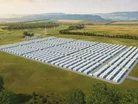
A potential development in the clean technology sector could be enabled by one of the world’s most common electrochemical processes: rusting.
According to Mark Loveridge, Commercial Director of Renewable Exchange: “The most exciting clean tech innovation of 2025? It might just be rust.” This interest is not in degradation but in the potential for reversible rusting to solve one of the largest problems facing the renewable energy industry.
The core issue for renewables like solar and wind is the difficulty of storing power at the scale required to ensure grid stability. When weather conditions are not favourable for generation, energy supplies can be affected.
For years, the sector has relied on lithium-ion technology, but a different chemical process is now moving from the laboratory to grid-scale application.
A new contender for long-duration energy storage
The conversation around energy storage has long been dominated by lithium-ion cells. However, a new technology based on an iron-air process is emerging as a viable alternative for specific applications.
"After decades of dominance by lithium-ion, 2025 is potentially the turning point for long-duration energy storage (LDES), and iron-air batteries are leading the charge," Mark says.
The battery functions by harnessing reversible rusting. It inhales oxygen from the air, which converts iron into rust to discharge energy. An electrical current is then used to reverse the process, converting the rust back into iron while exhaling oxygen.

The main limitation of lithium-ion is its storage duration, which typically lasts between two and four hours, becoming expensive for longer periods. Iron-air technology addresses this gap.
"They're capable of storing energy for 100+ hours – enabling wind and solar to keep the lights on, even when the sun doesn’t shine or the wind doesn’t blow," Mark explains.
This extended duration means the technology could replace fossil fuel peaker plants used to support grids during periods of high demand.
Commercialising iron-air battery technology
The move from concept to infrastructure has been rapid.
"This year, Ore Energy in the Netherlands delivered the world’s first grid-connected iron-air battery, and Form Energy in the US raised over US$400m to bring this tech to commercial scale," Mark says.
In July 2025, the Ore Energy pilot was connected to the grid in Delft, providing a proof of concept for the European market and showing that these systems could be integrated into urban environments.
In the US, Form Energy has opened a commercial-scale factory in Weirton, West Virginia, on the site of a former steel mill.
The company is now producing batteries for major utilities such as Xcel Energy and Georgia Power. These projects are anticipated to come online in late 2025 and 2026, marking a major step in the commercial application of the technology.
Iron abundance and the geopolitics of mined minerals
Beyond its technical capabilities, the iron-air battery presents a key geopolitical advantage related to mineral supply chains.
The transition to clean energy has increased the demand for rare earth minerals like lithium, cobalt, and nickel.
The supply of these materials is finite and concentrated in specific geographic regions, creating potential vulnerabilities in supply chains.
Iron-air batteries are constructed from iron, air and water. The use of globally abundant iron ore could reduce dependency on scarce minerals. This abundance could translate to greater stability for national energy strategies.
From a sustainability perspective, the active materials are non-toxic and can be recycled at the end of the system's life, aligning with circular economy principles.
This transition away from rare earth minerals for grid storage could also free up those resources for use in other climate technologies where there are no viable alternatives, such as electric vehicles.
It is important to note that these batteries are heavy and bulky, making them unsuitable for mobile applications. Their value lies in stationary grid-scale storage, where size is less of a concern than cost and durability.
The target cost is less than US$20/kWh, a fraction of the cost of lithium-ion, which could allow utilities to build vast energy reserves.
As Mark says, "For those watching the future of energy: keep an eye on iron-air. It’s not just innovative, it’s potentially transformative for the sector."
Company portals

Executives

Mark Loveridge
Commercial Director