
Sandvik: Here's How an EV Would Look Without Mining
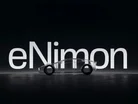
Sandvik has unveiled the world’s first electric car made without any metals or minerals.
The catch? It's transparent and does not move.
eNimon, or the 'no mine car', serves as a reminder of what the world would look like without mining.
More than 90% of the components making up electric vehicles come from mined materials. Without these, there would be no electric vehicles, wind turbines or solar panels.
Sandvik came up with eNimon in a bid to demonstrate what is at stake if the world fails to scale sustainable mining.
“Sustainable mining is the backbone of the green transition,” explains Mats Eriksson, President at Business Area Mining at Sandvik. “Without it, we can’t meet climate goals.”
Demand outpacing supply
Electric vehicles need roughly six times more minerals than conventional cars, while wind farms require about nine times more than gas plants. Reaching net zero by 2050 means up to five times more lithium, nickel and cobalt.
The International Energy Agency (IEA) forecasts global demand for critical minerals will triple by 2030 and quadruple by 2040, with more than three billion tonnes of minerals and metals needed to deploy wind, solar and energy storage at the required scale.
Meeting this need safely and responsibly requires more intelligent mining.
"There wouldn’t be a green transition without mining," adds Mats. "We want to electrify the world because it makes the world more sustainable."
Modern underground operations are becoming invisible, autonomous, electrified and digitised. Mines now optimise themselves in real time through continuous data collection, improving productivity and cutting energy use per tonne.

Digital mining
Automation is now central to mining, with battery-electric loaders, trucks and drills, coordinated by advanced software, removing the need for most people to work at the face.
Compared to a decade ago, the technology stack is on a different level. Digital tools effectively remove the lid from the mine, providing a live, system-wide view that allows operators to fine-tune everything from blasting and haulage to ventilation and maintenance.
The result is higher throughput with fewer interruptions and a smaller environmental footprint.
What's more, safety is transformed. Autonomous fleets can operate deeper and in harsher conditions without exposing workers, while collision-avoidance systems, remote operation and condition monitoring reduce risk across the shift.
These advances are not about mining more at any cost; instead, they are about mining smarter to supply the metals that decarbonisation demands.
Mine the gap
Demand for critical minerals is soaring, yet enrolment in mining studies is declining and many young people are hesitant about joining the sector.
New global research from Sandvik shows only about half of engineering students view mining favourably, but more than 90% would consider a career if they understood its role in the green transition.
The industry must prove its sustainability credentials, from electrified fleets and recycled water to transparent reporting and community engagement, and make clear that today’s mines are high-tech workplaces where data science, automation and environmental stewardship meet.
The eNimon car is now on display at the National Museum of Science and Technology in Stockholm, Sweden.