
Why Chile & Germany Are Tackling Lithium Extraction Together
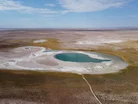
The PaNaBat platform is a joint venture between Chile and Germany that aims to make lithium extraction cleaner and more sustainable.
Germany’s Fraunhofer Institute for Silicate Research (ISC), the Institute for Solar Energy Systems (ISE) and the Institute for Thin Film and Surface Technology (IST) are working alongside Chile’s Universidad Católica del Norte Lithium I+D+i Center.
Together, the two nations are developing a circular economy for battery minerals, including lithium, cobalt, nickel and aluminium.
- More than 50% of the world's lithium reserves are in Latin America
- Lithium-rich brines were first discovered in Chile's Salar de Atacama in 1962
- German government provided €450,000 to fund the PaNaBat platform
Chile and Germany’s ‘PaNaBat’ platform
In April 2025, government officials from Germany and Chile signed an official declaration to continue the ‘Partnering in Business with Germany’ initiative.
The German government provided €450,000 (US$517,601) in funds for the opening phase of what is now known as the PaNaBat platform.
Following its launch in July 2026, the PaNaBat platform is aiming to build a long-term German-Chilean networking system.
This collaboration will be used to build industrial collaboration in sustainable battery raw materials, battery recycling and lithium extraction industries.
According to US Geological Survey's Mineral Commodity Summaries 2025, Chile holds more than 30% of the world’s lithium reserves.
Germany’s interest in lithium follows a government initiative in 2024 to have 15 million battery-electric vehicles on the roads by 2030.
The partnership with Chile through the PaNaBat platform can bring a sustainable supply chain for lithium.

Lithium extraction in 2026
More than 50% of the global lithium reserves are in Latin America, including Chile, Bolivia and Argentina, according to the US Geological Survey's Mineral Commodity Summaries 2025.
The Atacama Desert in Chile has been a hub of lithium extraction since lithium-rich brines in the Salar de Atacama were first discovered in 1962.
Companies use large evaporation ponds for extraction, which has contributed to a drop in water levels across the region.
A 2024 study by the IEEE Transactions on Geoscience and Remote Sensing revealed that groundwater levels fell by more than 10 metres in the last 15 years.
To battle this, more sustainable approaches have received funding like direct lithium extraction (DLE).
With the growing demand of lithium-ion batteries, DLE has become a key area in lithium extraction as it allows for more selective extraction from brines without evaporation.
According to IDTechEx Research: “DLE technologies can extract lithium from brines in just hours or days due to their selectivity, creating far more market flexibility to closely match lithium supply with demand.”