Top 10: AI-Based Forecasting Tools
In 2026, the mining industry has pivoted from reactive operations to a state of agentic foresight. Innovation in AI forecasting is no longer just about predicting when a haul truck might break down but about the autonomous synchronisation of the entire value chain.
Modern AI models now ingest multi-modal data, ranging from satellite hyperspectral imagery and seismic vibrations to real-time commodity market fluctuations, to create a living digital twin of the mine.
These systems use prescriptive analytics to not only forecast risks but to automatically re-optimise production schedules in seconds.
This shift has reduced exploration cycles and cut unplanned downtime to historic lows, as agentic AI begins to handle complex decision-making loops that once took human teams weeks to resolve.
10. KMO-Fleet (Machinery Management Platform)
Founded: 2014
Location: Perth, Australia
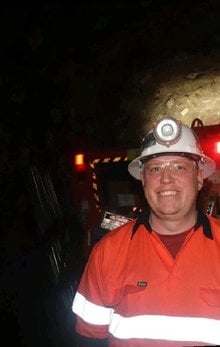
CEO: Matthew Eyre
KMO-Fleet defines the modern sensor-to-insight era by specialising in the granular forecasting of mobile mining fleet performance.
By capturing high-fidelity motion data and converting it into precise financial metrics, the platform forecasts fuel consumption and cycle times with startling accuracy.
KMO-Fleet’s AI algorithms have become essential for identifying hidden bottlenecks in haulage routes. The system predicts road degradation, such as rolling resistance increases or pothole formation, before it visibly impacts production.
This allows for proactive maintenance, ensuring that a mine’s highest-cost assets, the haul trucks, operate at peak efficiency and lower carbon intensity.
9. Tractian (Smart Trac)
Founded: 2019
Location: São Paulo, Brazil / Atlanta, US
CEO: Igor Marinelli

Tractian has disrupted the reliability sector with its plug-and-play AI sensors. Its tool forecasts mechanical failures by creating an acoustic and vibration ‘fingerprint’ for every motor and pump on site.
Tractian’s AI has moved beyond simple alerts to diagnosing the specific root cause, such as stage-two bearing wear and forecasting the exact window of failure.
This granularity allows maintenance teams to avoid the calendar-based servicing trap, moving to a pure condition-based model that reduces spare parts waste and saves millions in avoided catastrophic failures.
8. ABB Ltd. (ABB Ability Genix)
Founded: 1988
Location: Zurich, Switzerland
CEO: Morten Wierod
ABB focuses on the process side of forecasting, specifically targeting the energy-intensive stages of crushing and grinding.
The ABB Ability Genix platform uses deep learning to forecast ore throughput and energy demand. In 2026, this tool is critical for Green Mining initiatives, as it predicts peak energy prices and adjusts plant operations to maximise recovery when renewable energy is most abundant.
By forecasting the behaviour of complex mineral processing circuits, ABB helps miners maintain consistent output even when ore hardness and grade vary unexpectedly from the forecast.
7. Komatsu (FrontRunner AHS)
Founded: 1921
Location: Tokyo, Japan
CEO: Takuya Imayoshi
Komatsu, through its expanded partnership with Applied Intuition, has turned autonomous haulage into a forecasting powerhouse.
Its FrontRunner system doesn't just drive trucks; it forecasts the most efficient path through a mine based on real-time traffic, weather and terrain conditions.
In 2026, Komatsu’s AI Pathfinder modules can predict potential collisions or soil slippages in GPS-denied environments.
This foresight allows for higher autonomous speeds and tighter cycle times, effectively forecasting and then manifesting the most productive version of a mine’s logistical flow.
6. Dassault Systèmes (GEOVIA)
Founded: 1981
Location: Vélizy-Villacoublay, France
CEO: Pascal Daloz
Dassault’s GEOVIA suite is the premier tool for ‘What-If’ forecasting.
By leveraging 3DEXPERIENCE digital twins, GEOVIA allows mine designers to simulate and forecast the long-term impact of different extraction strategies.
Whether it’s forecasting the stability of a 500-meter pit wall or the environmental footprint of a new tailings dam, their AI-driven simulation engines provide a high-confidence look at the mine’s 20-year future.
Its software can also be used to forecast ESG metrics, ensuring that production targets align with carbon-neutrality commitments.
5. Hexagon Mining (MinePlan)
Founded: 1975
Location: Stockholm, Sweden
CEO: Anders Svensson
Hexagon provides the industry’s most robust safety and geotechnical forecasting. Its tools integrate data from ground-based radar and satellite InSAR to forecast slope instability and pit wall failures.
Hexagon’s MinePlan has evolved into a real-time risk-forecasting hub. It can predict hazardous events hours before they occur, triggering automated site evacuations or equipment rerouting.
This proactive safety layer has redefined ‘Zero Harm’ targets by removing the human lag time between a detected anomaly and a life-saving operational decision.
4. IBM (Maximo with Watsonx)
Founded: 1911
Location: Armonk, New York, US
CEO: Arvind Krishna
IBM’s Maximo remains the dominant force in enterprise-scale asset forecasting. The integration of Watsonx has introduced a conversational interface where engineers can ask, "What is the probability of a conveyor failure in Sector 4 next week?"
The tool forecasts the remaining useful life of infrastructure by analysing decades of historical data alongside real-time IoT feeds.
Its primary innovation is its ability to forecast the supply chain ripple, predicting how a single machine failure will delay downstream shipping and impact quarterly revenue.
3. Seequent
Founded: 2004
Location: Christchurch, New Zealand
CEO: Graham Grant
Seequent’s Leapfrog is the industry leader for seeing through the ground. It uses AI-driven implicit modelling to forecast geological structures from sparse drill data.
Seequent’s algorithms have become so advanced that they can forecast ore-grade continuity with 30% more accuracy than traditional geostatistical methods.
This forecasting is the foundation of mining profitability, as it allows companies to predict exactly how much metal they will extract from every cubic meter of rock, reducing the grade reconciliation errors that plague the industry.
2. Sandvik (Deswik & Micromine)
Founded: 1862
Location: Stockholm, Sweden
CEO: Stefan Widing
Sandvik has consolidated the most powerful planning tools under one roof. Deswik is the brain of mining scheduling, using AI to forecast the most profitable extraction sequence across thousands of variables.
Sandvik’s Deswik.OPS platform provides a short-term forecast that updates every shift, re-optimising the schedule if a machine breaks down or a storm delays operations.
By merging production forecasting with actual machine data from Sandvik’s autonomous fleets, they have created a closed-loop system where the plan and the reality are constantly synced.
1. KoBold Metals (TerraShed™)
Founded: 2018
Location: Berkeley, California, US
CEO: Kurt House
KoBold Metals holds the top spot as the pioneer of AI-first mineral exploration. Its TerraShed™ platform is a digital prospector that forecasts where the world’s next critical battery metal deposits are located.
By 2026, KoBold’s AI has successfully identified blind deposits that traditional geology missed by finding subtle patterns in massive, disparate datasets.
Its ability to forecast mineral wealth under hundreds of meters of cover has revolutionised the risk-return profile of exploration, making it the most significant innovator in the mining technology space.
Company portals







Executives

Bouke Hoving
Executive Vice President Networks & IT
Anders Svensson
President and CEO

Arvind Krishna
CEO
Graham Grant
Chief Executive Officer
Igor Marinelli
Founder, CEO

Kurt House
Chief Executive & Co-Founder
Matthew Eyre
Associate Professor- Intelligent Mining (CSM)
Morten Wierod
CEO

Pascal Daloz
CEO
Stefan Widing
President and CEO

Takuya Imayoshi
CEO