Top 10: Digital Twins
The global mining sector is undergoing a massive digital overhaul to tackle dropping ore grades, deeper underground operations, and strict environmental mandates. To navigate these complex challenges, mining majors are turning away from small tech startups and heavily investing in industrial software giants.
The world's largest engineering, cloud and automation conglomerates are now deploying massive Digital Twin platforms to unify physical mine sites with advanced predictive software. By creating dynamic, real-time replicas of complete supply chains, from subsurface geology to automated surface fleets, these industry giants are successfully driving the Next Generation of mining efficiency, safety and operational predictability.
10. Ansys
Platform: Ansys Twin Builder
Founded: 1970
CEO: Sassine Ghazi (Synopsys)
Ansys is the premier global authority on high-fidelity, physics-based simulation software. While many platforms focus on broad site data, Ansys Twin Builder specialises in highly technical asset twins, creating virtual replicas of individual components operating under extreme stress. In mining environments, where drills, rock crushers and structural components regularly endure intense vibration and abrasion, Ansys merges physical sensor data with complex structural, thermal and fluid dynamics simulations.
This allows operators to track internal wear, micro-fractures, and structural fatigue that are invisible to standard sensors or visual inspections. By knowing precisely when a component will break under specific operational loads, mining companies can maximise asset lifespans, reduce catastrophic failures and move away from rigid calendar maintenance to a highly accurate, predictive model.
9. ABB
Platform: ABB Ability™ MineOptimize
Founded: 1988 (Formed via ASEA and BBC merger)
CEO: Morten Wierod
ABB applies its deep expertise in industrial electrification and automation to optimise energy consumption and safety through the ABB Ability™ MineOptimize platform. This digital twin solution specialises in managing energy-intensive mining systems, particularly underground ventilation layouts and massive hoisting equipment. In deep underground mines, ventilation-on-demand twins simulate airflow, gas levels and ambient temperatures in real time, automatically routing fresh air only to areas where workers or diesel fleets are actively operating.
This saves mines up to 50% on ventilation energy costs. Additionally, ABB builds highly detailed digital twins of grinding mill drives and conveyor loops, monitoring electrical harmonics and mechanical stress to optimise energy usage and protect critical equipment from sudden electrical failures.
8. RPMGlobal
Platform: HAULSIM
Founded: 1968
CEO: Richard Mathews

RPMGlobal is a highly respected, publicly traded mainstay deeply embedded within the international mining ecosystem. While other giants offer cross-industry solutions, RPMGlobal’s HAULSIM platform is built explicitly for the unique logistics of mining haulage. HAULSIM is a powerful discrete event simulation engine that creates a high-fidelity 3D digital twin of a mine’s entire transportation network, including open pits, ramps and underground shafts.
The twin models the exact physics of haul trucks, loading equipment, and road conditions, simulating how changes in grade, payload and rolling resistance affect overall cycle times. This allows mining operations to run virtual stress tests before making multi-million dollar haulage investments, accurately testing how changing a fleet composition or modifying haul road topology will alter production numbers.
7. Microsoft
Platform: Azure Digital Twins
Founded: 1975
CEO: Satya Nadella
Microsoft provides the core cloud infrastructure and data framework that powers the mining industry’s largest digital twin initiatives. Rather than building niche geological applications, Azure Digital Twins lets mining enterprises model complex operational spaces by connecting data from diverse IoT sensors, business applications and legacy systems.
This architecture acts as a bridge, unifying disparate software tools, from fleet management to environmental tracking, into one cohesive data model. For mining giants like BHP, Microsoft’s platform processes billions of data points daily, enabling executive teams to monitor cross-continental operations from a single dashboard. Furthermore, Azure allows companies to layer generative AI models over their digital twins, letting managers query complex asset metrics and maintenance records using natural language.
6. Hexagon
Platform: HxGN MineEnterprise
Founded: 1992
CEO: Anders Svensson
Hexagon focuses heavily on spatial reality capture, autonomous haulage management, and personnel safety systems. The HxGN MineEnterprise platform serves as a central control centre that builds a real-time, spatial digital twin of the mine's physical layout and active fleets. By integrating high-precision GPS, radar systems and vehicle telematics, Hexagon creates a moving, three-dimensional map of open-pit and underground operations.
This live twin tracks material payloads, optimises equipment hauling routes and manages advanced collision avoidance systems to protect workers from heavy machinery. Furthermore, Hexagon uses aerial drones and laser scanners to regularly update the twin with high-resolution topographic data. This gives management an exact, updated picture of material volumes extracted, shifting topography and overall operational efficiency on a shift-by-shift basis.
5. GE Vernova
Platform: Asset Performance Management (APM) & GridBeats
Founded: 2024
CEO: Scott Strazik
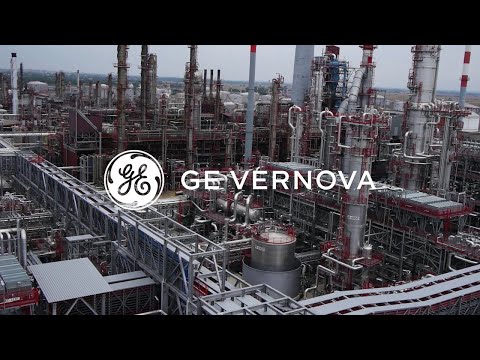
GE Vernova operates as a massive, standalone energy and industrial software force focused directly on optimising capital-intensive machinery and complex grids. In the mining ecosystem, their Asset Performance Management (APM) platform uses physics-based models combined with advanced machine learning to build twins of heavy mining assets, such as massive draglines, haul fleets and grinding mills.
The twin continuously monitors thermal stress, vibration signatures and structural load distributions, alerting maintenance teams weeks before a component actually fails. Concurrently, their GridBeats software acts as a digital twin for the mine's power infrastructure, allowing operators to monitor power quality, manage localised distribution networks and balance microgrids. This prevents sudden power drops that can paralyse heavy mining operations and cost companies millions of dollars in lost productivity.
4. Bentley Systems
Platform: iTwin IoT & Seequent
Founded: 1984
CEO: Nicholas Cumins
Bentley Systems occupies a highly specialised niche by seamlessly blending surface infrastructure engineering with subsurface earth sciences. By combining their enterprise iTwin IoT platform with Seequent, the gold standard geological modelling software they acquired, Bentley builds incredibly detailed, geostructural digital twins. This platform combination proves vital for high-risk environmental asset management, such as Tailings Storage Facilities (TSFs) and deep open-pit walls.
The twin pulls real-time data from localised slope stability sensors, piezometers measuring water pore pressure and satellite radar imaging, layering it all over an accurate 3D structural model. This allows mine operators to continuously evaluate safety variables, detect micro-movements in structural earthwork early on and prevent catastrophic failures. It transforms environmental risk management from a reactive exercise into a live, highly visual science.
3. AVEVA
Platform: AVEVA Process Simulation & PI System
Founded: 1967
CEO: Caspar Herzberg
AVEVA, fully backed by the industrial architecture of Schneider Electric, excels at creating highly detailed process twins for ore processing and refining plants. The cornerstone of their mining success lies in integrating the AVEVA Process Simulation engine with the foundational AVEVA PI System. While the PI System acts as a massive data repository, ingesting and contextualising millions of real-time sensor streams from across the mine site, the simulation engine builds a mathematically sound, live replica of material flows and chemical reactions.
This lets process engineers run "what-if" scenarios on fluid dynamics, chemical additions and heating elements in real time. Operators can safely push production limits, eliminate costly bottlenecks and reduce water and chemical consumption without risking actual plant equipment, ensuring optimal throughput even when processing highly variable, lower-grade ore qualities.
2. Siemens
Platform: Siemens Xcelerator
Founded: 1847
CEO: Roland Busch (Global AG) / Brian Holliday (Digital Industries UK)
Siemens utilises its industrial clout to dominate the physical-to-digital processing layer of the mining sector. The Siemens Xcelerator platform functions as an open digital business ecosystem, stitching together heavy physical machinery with intelligent, cloud-based data layers. In mining, Siemens heavily focuses on twinning complex mineral processing plants, massive crushing circuits and large-scale electrification grids.
By layering advanced analytics over operational technology, the platform tracks the health of massive haulage drivetrains and conveyor systems, accurately predicting mechanical failures before they cause unexpected, costly downtime. Additionally, Xcelerator plays a major role in simulating and optimising local energy grids at remote mine locations. This enables operators to successfully manage fluctuating renewable energy integration, balance heavy industrial power loads and sharply reduce carbon footprints while simultaneously maximising total throughput and asset reliability.
1. Dassault Systèmes
Platform: GEOVIA (integrated on the 3DEXPERIENCE platform)
Founded: 1981
CEO: Pascal Daloz
Dassault Systèmes brings its world-renowned product lifecycle expertise directly into the earth with GEOVIA. Operating within the massive 3DEXPERIENCE ecosystem, this digital twin platform goes far beyond simple site mapping. It acts as an interconnected virtual environment that unifies geological exploration, pit design and long-term production scheduling.
By building a live digital twin of the subsurface repository, engineers can dynamically model complex cave footprints, run rapid risk assessments and simulate different extraction scenarios before committing real-world infrastructure. This unified approach bridges the traditional gap between mine design and active operations, allowing global teams to collaborate on identical models simultaneously.
Ultimately, the platform transforms raw, siloed geospatial data into an enterprise-wide tool that optimises resource extraction, improves environmental safety and drives predictable financial outcomes across the entire mine lifecycle.
Company portals









Executives
Anders Svensson
President and CEO
Caspar Herzberg
Chief Executive Officer
Morten Wierod
CEO
Nicholas Cumins
Chief Executive Officer

Richard Mathews
CEO
Roland Busch
President and CEO of Siemens AG
Sassine Ghazi
President and Chief Executive Officer
Satya Nadella
Member Board Of Trustees

Scott Strazik
Chief Executive Officer