The Asia Pacific region sits at the heart of the global mining economy. Australia is the world's largest exporter of iron ore and lithium. Indonesia holds the largest nickel reserves on earth, while China consumes more mined commodities than any other country in the world.
The metals that are powering the world's transition to clean energy, including copper, lithium, nickel and cobalt, are largely dug out of the ground across this region.
This means the executives running the biggest APAC mining operations are making decisions that will shape global supply chains for decades.
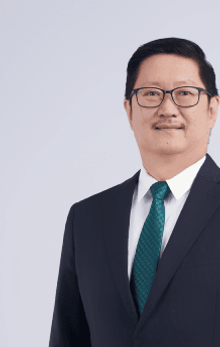
10. Roy Arman Arfandy
Role: President Director
Company: Harita Nickel (PT Trimegah Bangun Persada)
Operations: Nickel, cobalt
Regions: Obi Island, North Maluku, Indonesia
Roy Arman Arfandy came to mining from the banking industry, which is an unusual route but one that he has made work.
Since taking charge of Harita Nickel in December 2022, he has pushed the company deep into battery-grade nickel production through high-pressure acid leach technology.
This is the process that converts laterite ore into the mixed hydroxide precipitate that electric vehicle battery makers need.
Indonesia supplies more than half the world's mined nickel, and Harita is one of its most significant operators.
Roy has also made Harita the first Indonesian miner to submit to an independent audit under the Initiative for Responsible Mining Assurance, a progressive move that arguably makes Harita more attractive to investors.
9. Dale Henderson
Role: Managing Director and Chief Executive Officer
Company: Pilbara Minerals (PLS)
Operations: Lithium
Regions: Pilbara, Western Australia
Dale Henderson has served as Managing Director and CEO of Pilbara Minerals (PLS) since July 2022, overseeing the company's Pilgangoora operation in Western Australia through a period of low lithium prices.
Pilgangoora is one of the largest hard-rock lithium deposits in the world and Dale has kept operations running efficiently, while a number of competitors have cut production or sought additional funding.
Lithium prices bottomed out in 2024 and have been recovering through 2025 and 2026, as electric vehicle demand increases, especially in China.
The discipline Dale has shown through the downturn leaves PLS well placed to capitalise on the recovering market.
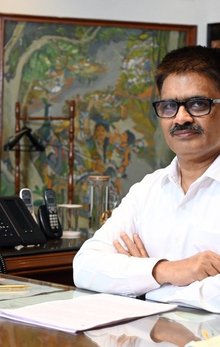
8. B. Sairam
Role: Chairman and Managing Director
Company: Coal India
Operations: Coal
Regions: India
India's power sector runs on coal, and Coal India controls more than 80% of the country's domestic supply, making it one of the most strategically important companies in the Indian economy.
B. Sairam has held the Chairman and Managing Director role since December 2025, having spent more than three decades working his way up through Coal India subsidiaries Central Coalfields Limited and Northern Coalfields Limited.
He is a mining engineer by training, and his career has spanned mine operations, planning, logistics and regulatory affairs.
Sairam has flagged solar power, coal gasification and critical mineral acquisitions as strategic priorities, showing he is pushing the business well beyond its traditional remit.
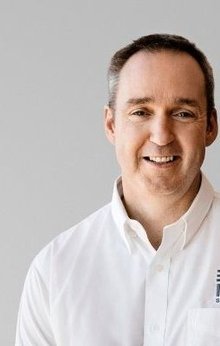
7. Graham Kerr
Role: Chief Executive Officer
Company: South32
Operations: Aluminium, manganese, copper, zinc
Regions: Australia, South Africa, South America

Graham Kerr took South32 public when BHP demerged it in 2015, and he has run it ever since. His decade-plus tenure is rare among major mining CEOs, and the portfolio he has built looks nothing like the one he started with.
Coal has been dropped, and now the focus is on manganese, aluminium, copper, zinc and other commodities with long-term green energy demand.
Operations span Australia, southern Africa and South America. South32's share price has consistently outperformed those of competitors during Graham's tenure, reflecting investor confidence in how he has run the business.
Graham is stepping down as CEO later in 2026 after more than a decade in the role. The transition to his successor, Matthew Daley, is being managed carefully, with Graham remaining in post until Matthew is ready to take over.
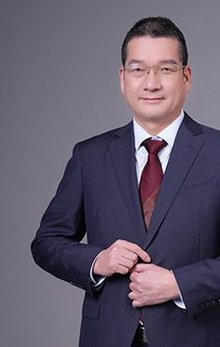
6. Zou Laichang
Role: Chairman
Company: Zijin Mining
Operations: Gold, copper, zinc
Regions: China, Papua New Guinea, Australia
Zijin Mining's founder Chen Jinghe spent three decades building a company now valued at US$100bn. Zou Laichang took over as Chairman in late December 2025 with the straightforward task of proving the business can keep growing without him.
So far so good for Zou. Zijin is targeting 105 tonnes of gold and 1.2 million tonnes of copper in 2026, across a portfolio of assets spanning 19 countries including Papua New Guinea and Australia.
Only Rio Tinto and BHP have a higher market capitalisation among listed metal miners. Zou's first year in charge will be the real test of whether Zijin can sustain its growth without its founder.
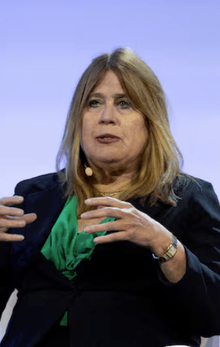
5. Kathleen Quirk
Role: President and Chief Executive Officer
Company: Freeport-McMoRan
Operations: Copper, gold
Regions: Papua, Indonesia; North America; South America
Kathleen Quirk joined Freeport-McMoRan in 1989, working her way from CFO to become CEO in June 2024.
She has led the company's response to a fatal mud rush at Grasberg Block Cave in September 2025, in which seven workers lost their lives and operations across the entire district were halted.
Grasberg in Papua, Indonesia is one of the largest copper and gold deposits ever found, and is the centrepiece of Freeport's APAC operations.
Freeport is targeting 85% production capacity recovery by the second half of 2026, with full recovery not expected until 2027.
4. Dino Otranto
Role: Chief Executive Officer
Company: Fortescue Metals
Operations: Iron ore
Regions: Pilbara, Western Australia and Gabon
Dino Otranto joined Fortescue in 2021 as Chief Operating Officer for iron ore, having previously served as COO at Vale Base Metals.
He was appointed CEO of Fortescue Metals in August 2023. Fortescue has committed to reaching Real Zero emissions by 2030, and under Dino the programme has advanced through large-scale renewable energy investment and a push toward electric mining equipment across the Pilbara.
Fortescue completed its first iron ore shipment from Gabon in 2025, the first time the company has produced and exported ore from outside Australia.
In July 2025, his responsibilities expanded to include global electrification, decarbonisation and hydrogen production.
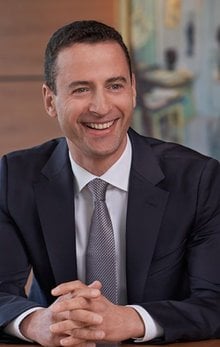
3. Gary Nagle
Role: Chief Executive Officer
Company: Glencore
Operations: Coal, copper, cobalt, zinc
Regions: Australia, Papua New Guinea, Philippines, globally

Gary Nagle has been at Glencore since 2000, working his way up through coal operations in Colombia, South Africa and Australia to become CEO in July 2021.
He made a deliberate choice to keep Glencore's coal business when shareholders pushed for a spin-off, and the share price since has vindicated the decision. He now runs the world's largest listed coal producer, with major operations across Queensland and New South Wales.
Glencore also operates copper and cobalt assets in Papua New Guinea and the Philippines, which account for most of its growth across Asia Pacific outside coal.
The company is targeting 1.6 million tonnes of copper production by 2035, a figure that would fundamentally reweight Glencore's commodity mix toward electrification metals.
2. Mike Henry
Role: Chief Executive Officer
Company: BHP
Operations: Iron ore, copper, potash, coal
Regions: Western Australia, Queensland, South Australia
Mike Henry leaves BHP on 30 June 2026 after six and a half years as CEO, having overseen one of the biggest shifts in the company's strategy in its 140-plus year history.
During his tenure, BHP acquired OZ Minerals for approximately US$6.4bn, making it the world's largest copper producer.
Mike is also responsible for the development of the Jansen potash mine in Saskatchewan, Canada. Potash is a primary ingredient in agricultural fertiliser, and Jansen is expected to be one of the largest potash operations in the world when it reaches full capacity.
Even so, Western Australian iron ore remains the core of group earnings, with no other miner coming close to BHP's volumes supplying Asian steel mills.
Mike leaves having repositioned BHP around the commodities the global energy transition will demand the most.
1. Simon Trott
Role: Chief Executive Officer
Company: Rio Tinto
Operations: Iron ore, copper, aluminium, lithium
Regions: Western Australia, Mongolia, Queensland, globally
Simon Trott became CEO of Rio Tinto in August 2025, having spent more than 25 years at the company across iron ore and commercial leadership, including serving as its first Chief Commercial Officer.
Before becoming CEO, Simon ran Rio Tinto's iron ore business, so he knows the company's biggest operation from the inside.
Rio Tinto ships more iron ore out of Western Australia's Pilbara than any other operator, and is the largest supplier to China's vast steel industry.
The Oyu Tolgoi mine in Mongolia is ramping toward becoming the fourth-largest copper mine in the world, a project that has taken years and billions of dollars to reach this point. Rio Tinto also produces aluminium and lithium, meaning it has a much wider range of commodities than competitors.
Simon’s priorities are cost discipline, capital efficiency and expanding a pipeline that extends well into the 2030s.
Company portals






Executives
B. Sairam
Dale Henderson
Managing Director and CEO
Dino Otranto
Chief Executive Officer
Gary Nagle
CEO
Graham Kerr
Strategic Advisor
Kathleen L. Quirk
President and Chief Executive Officer

Mike Henry
CEO
Roy Arman Arfandy
Simon Trott
Chief Executive - Rio Tinto
Zou Laichang