
Drive System Design Panel Rethinks Mine Powertrains
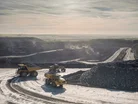
Electrification in mining goes far beyond swapping a diesel engine for a battery – it requires a complete system redesign.
Speaking exclusively with Mining Digital in this expert roundtable, Drive System Design (DSD) leaders David Kelly, Chief Technology Officer, Jason Allen, Managing Director and Jon Brentnall, President, break down why holistic engineering is critical for heavy equipment.
Together, they discuss site-specific duty cycles, virtual simulation versus physical testing and the key risks of isolated component design.
Why is replacing a diesel engine with a battery and e-motor an oversimplified approach to mine-vehicle electrification?
David Kelly: To put it simply, electrification isn't a component swap; it fundamentally changes how energy is generated, stored, managed and delivered.
Mining duty cycles are exceptionally demanding, with high loads, steep gradients, long operating hours and harsh environmental conditions, so battery size, power capability, charging strategy and thermal management all become interconnected decisions.
Introducing a large battery changes vehicle mass significantly, affecting payload, structural loads, braking and durability, while heat becomes a critical design driver for batteries, motors, power electronics and charging systems.
Regenerative braking and energy recovery strategies can also reshape the wider system architecture. Infrastructure, charging and site power availability matter just as much. The best electrified mine vehicle is the result of whole-system optimisation, not maximising one component.
Jason Allen: I agree with David. The powertrain is only part of the bigger picture. Mining vehicles operate in very demanding environments.
Simply replacing a diesel engine with a battery and motor doesn't necessarily deliver the right outcome – for the exact reasons David mentioned.
The starting point should be understanding what the vehicle needs to do: what's the duty cycle, what are the payloads, what infrastructure is available, what level of utilisation is required?
Once you understand the application, you can determine the most appropriate propulsion architecture. In some cases that will be battery electric, in others hybrid, trolley assist or another solution.
The mistake is starting with the technology and trying to make it fit the application, rather than the other way round.
Jon Brentnall: That’s a great point by Jason. With a battery-electric vehicle, you inherently get a simpler powertrain architecture than with an internal combustion engine, which has the potential to improve up-time and reduce maintenance costs at a minimum.
However, to David’s point earlier, the complexity and the risk really come from adopting electrification itself: installing and managing on-site charging infrastructure, and managing high-voltage health and safety for employees.
Those operational and safety considerations are where the real engineering and planning challenge lies, far more than in the core powertrain swap itself.
Getting that infrastructure and safety planning right early is often the deciding factor in how smoothly a mine transitions to electrified equipment.
How should mining operators evaluate battery-electric, hybrid and alternative propulsion architectures based on actual site demands rather than trend chasing?
Jason: The starting point should always be the business case. Mining operators should assess propulsion solutions against the same criteria they'd use for any major investment: productivity, availability and total cost of ownership. Every mine is different.
At DSD, our internal ePOP process (Electrified Powertrain Optimisation Process) lets us evaluate thousands of potential architectures against specific vehicle requirements, drive cycles and performance targets.
The objective isn't to find the newest technology; it's to find the most appropriate one for the use case.
There's a strong parallel with autonomy: the question isn't which technology is winning; it's which makes the most sense for that mine.
Jon: I think Jason’s spot on regarding simulation—it's essential, but I’d add a caveat: virtual models can’t catch everything.
Nothing exposes the practical challenges of an electrified solution, from charging behaviour to operator experience, quite like putting real equipment to work in the real environment it's intended for.
It takes longer and costs more upfront, but it de-risks the investment decision in a way simulation alone cannot.
David: To pull together what both Jason and Jon are saying, operators have to lead with site operational demands, not tech preferences.
Infrastructure constraints, including grid connectivity, charging availability and energy costs, need equal weight.
Different mine types favour different solutions: battery-electric can be highly effective where charging opportunities exist and ventilation savings are significant, while hybrid architectures may suit long-haul, high-energy applications with limited charging infrastructure.
What are the critical engineering risks when motors, transmissions, energy storage and cooling systems aren't designed as a single integrated architecture?
Jason: The biggest risk is optimising individual components but not the vehicle as a whole. All these systems are interconnected.
You can select a motor that meets the performance target, only to create a thermal problem elsewhere. You can increase battery size to improve range but introduce weight, packaging or payload issues. You can optimise transmission ratios and inadvertently hurt efficiency.
When systems are developed in isolation, those compromises often aren't discovered until much later in the programme. That's why we take a systems engineering approach, considering the motor, transmission, controls, battery, power electronics and thermal systems together from the start.
The best overall solution isn't always the one with the best individual components; it's usually the one with the best balance across the whole system.
David: To Jason's point, sub-system optimisation often creates system-level inefficiency.
When battery, inverter, motor and transmission cooling requirements are assessed independently, thermal issues frequently emerge, and component operating limits can be exceeded under extreme mining conditions.
Control systems become increasingly complex and unstable when architectures are developed in isolation, while packaging conflicts increase vehicle mass and reduce maintainability.
Reliability can also suffer when the interactions between electrical, mechanical and thermal domains aren't fully understood, and unexpected durability issues can emerge from torque transients, vibration, thermal cycling and duty-cycle extremes.
Safety risks increase if energy storage, power electronics and fault-management strategies aren't designed cohesively.
Jon: Well, worst case, they won't even bolt up together! Powertrain integration needs careful engineering, and taking a whole-system approach to define each subsystem's requirements early on is critical.
That's easier for an OEM to achieve, since they have visibility and control across the full vehicle architecture from the outset, rather than trying to reconcile components that were specified independently of one another.
Getting that early definition right avoids costly rework once hardware has been committed and eliminates the risk of finding out too late that components simply don't work together.
How do advanced simulation tools and physical testing de-risk these high-consequence propulsion systems before heavy hardware hits the mine?
David: Modern simulation lets engineers explore thousands of operating scenarios before any prototype is built, predicting energy consumption, thermal behaviour, performance, durability and control-system interactions.
Duty-cycle simulation enables architecture selection based on real mine operating conditions, and virtual validation helps identify design weaknesses early, when changes are cheaper and faster to make.
Control, software and energy management strategies can be developed and refined before production hardware exists.
Jason: To David’s point, it's much cheaper to find a problem in a simulation model or test facility than in a vehicle operating on a mining site. But simulation on its own isn't enough.
The important step is validating those models through physical testing, using component, subsystem and full-system testing to make sure virtual results reflect the real world.
For mining applications, reliability is everything: the aim is to identify issues early and avoid surprises once equipment reaches site or high costs have been incurred.
Company portals
Executives
David Kelly
Chief Technology Officer

Jason Allen
Managing Director
Jon Brentnall
President