How Mining Giants Became Their Own Energy Companies
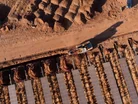
In the red-dirt Pilbara of Western Australia, a place that could have been borrowed from Mad Max, more than a million solar panels are being bolted to the desert floor some 120 kilometres south of Port Hedland. They exist to feed one company's pits, trains and trucks, a power station the size of a small town built to serve holes in the ground.
This is Turner River, a 690MW solar farm being built by Fortescue, the Australian iron ore giant, and it tears up a bargain mining has kept since the first steam shovel.
Energy, the industry always assumed, was something you bought, hauled in and burned. Diesel moved the mountains; convoys of tankers crossed the outback to keep the engines fed; the fuel invoice was simply the price of the dirt. Fortescue is done with all that.
Now the planet's biggest miners have quit buying power to make it themselves, storing it in batteries, wiring it straight into the pits, the trains, the ports. The mine of the future is not plugged into the grid. It is the grid.
Fortescue calls its version the Pilbara Green Grid: solar and wind, batteries, electric trucks and 620 kilometres of its own transmission, wired straight to the pits and the port. The goal is energy autarky, a mine that makes every electron it burns.
What is a "green grid"?
A green grid is a mine's private power system, built so the site generates and stores the energy it once bought as diesel.
It has four parts: generation (utility-scale solar and wind on or beside the lease); storage (big batteries to firm supply overnight and through cloud); an electrified fleet (battery haul trucks, excavators, drills and locomotives, plus fast chargers); and transmission (high-voltage lines linking it all to pits, rail and port).
Fortescue's Pilbara Green Grid is the fullest example: past 1.4GW of solar, wind, batteries and more than 620 kilometres of its own transmission. The pitch to a finance director is simple, that a one-off capital build replaces a fuel bill that never ends.
The hardest target
Fortescue's goal is not net zero, the accountant's version softened by offsets bought elsewhere. It is "Real Zero" by 2030, the actual elimination of fossil fuels from its Pilbara mines, including the roughly one billion litres of diesel it burns each year.
No rival has set the bar so near. Most of the industry still points at 2050; Fortescue has dragged the finish line two decades closer.
Turner River will lift Fortescue's solar capacity past 1.4GW, enough for half a million homes; batteries at Cloudbreak firm the supply; 16 electric excavators, plus the first battery-electric haul trucks, are running or arriving, fed by an in-house 6MW charger that refills a truck in half an hour.
The heavy machines come from China's XCMG, the loaders and dozers a Western miner would once have run on diesel.
While others are still debating whether decarbonisation is possible, Fortescue is getting on with building what's needed to do it
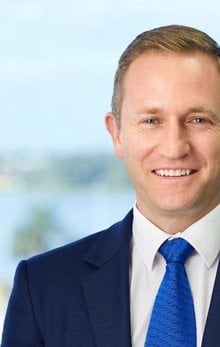
"Real Zero is about transforming the way we power our assets, move our materials and run our operations, not offsetting emissions but eliminating emissions at source," Dino Otranto, Chief Executive Officer at Fortescue says.
Half the excavator fleet will be electric by year-end, with battery-electric locomotives already on the rails.
Founder Andrew Forrest's bet is that sunlight, once the capital is spent, is simply cheaper than fuel you must keep buying. Prove the model in the Pilbara, the hardest ground going, and everywhere else is easier.
"Real Zero means not having to worry about despots, oligarchs, fruitcakes and invaders," he told the Smart Energy Council summit. Power you generate yourself cannot be embargoed, sanctioned or priced by someone else.
Copper, and the smelter problem
The other two energy giants are moving on different fronts. Broken Hill Proprietary Company Limited (BHP) has come at it from the copper side.
In Chile's Atacama, the driest desert on Earth, it has signed deals with the Chinese firm Sungrow to bolt 195MW of solar and 960MWh of batteries onto Escondida and Spence, keeping the world's largest copper mine on 100% renewable electricity inside a US$14.7bn expansion.
The plants arrive from 2029, sized to hold that green supply even as output climbs. The logic is as much defensive as green. Power beside the pit turns the desert sun into insurance against a congested national grid.
“By placing generation directly at the point of consumption, we strengthen the resilience and efficiency of our operations' energy supply,” says Adam Favero, a BHP Vice-President.
Copper is the metal the transition cannot happen without, the stuff of every motor, cable and battery. It now out-earns iron ore at both BHP and Rio Tinto. The miners digging the transition are now wiring themselves into it.
- 690MW / 650MWh: Fortescue's Turner River solar farm and Cloudbreak battery, now under construction
- 1bn litres: diesel Fortescue aims to eliminate from its Pilbara operations by 2030
- 100%: renewable electricity at BHP's Escondida, the world's biggest copper mine
- US$14.7bn: BHP's Chilean copper expansion, underpinned by new solar and storage
- A$2bn (US$1.3bn): government backing to repower Rio's Boyne aluminium smelter with renewables
- 620km: high-voltage transmission in Fortescue's Pilbara Green Grid
For Rio Tinto, the dirtiest work is not in the pit but the furnace. Turning bauxite into aluminium is ferociously power-hungry; a single smelter swallows the electricity of a small city.
Rio's Australian plants have drawn that power from coal for decades. In a landmark deal, the Queensland and federal governments have put A$2bn (US$1.3bn) behind repowering its Boyne smelter at Gladstone with firm renewables, part of some A$7.5bn (US$4.9bn) of clean generation Rio is underwriting.
Tomago, the country's largest smelter, is getting the same lifeline to survive past 2028.
The most poetic touch sits in Utah, where Rio's new solar plant at Kennecott is built partly from tellurium mined at Kennecott itself, an ouroboros in the desert, the mine now helping to make the panels that power it.
The peloton behind
Most of the field is not chasing this. The industry pledged net zero by 2050, a date safely beyond any sitting CEO's tenure, while Fortescue went and picked 2030. Its diesel-free Real Zero stays a purist's creed. A private gigawatt grid is a game only giants can afford to play.
Which is why Fortescue's next move matters most. It is turning its green grid into a product. Having built the battery-electric locomotives and 6MW chargers for its own railway, it now plans to sell that technology to other miners, marketing decarbonisation the way it once sold ore.
A US-Congolese consortium has agreed to wire up to 2GW of clean power into the Democratic Republic of Congo's copper and cobalt belt, the mines as anchor tenants of a new national grid.
None of it would matter if it did not pay. It does. Solar is now, as International Energy Agency chief Fatih Birol puts it, “the new king of the world's electricity markets,” the cheapest power the agency has ever measured. For an industry built on diesel, that reprices the whole game.
If it works, the gigawatt mine stops being a cost centre and becomes an export in its own right, mining's newest commodity dug not from the earth but from the sun above it. The tanker, after a century, is finally being sent home.
Did you know?



Executives
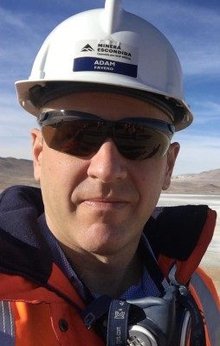
Adam Favero
VP Development and Strategic Services
Dino Otranto
Chief Executive Officer
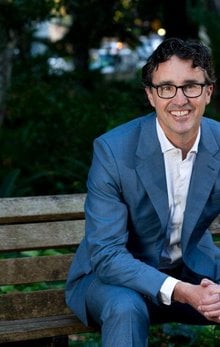
Simon Trott
Chief Executive - Rio Tinto