
The Mining Interview: Warren Smith, John Crane

The Mining Interview: Warren Smith, John Crane
Mining is entering a new era of intensity. As demand for critical minerals surges and operators push existing assets harder than ever, the real battle is no longer about component choice – it is about keeping rotating equipment alive under conditions that would break most machinery.
There are few people who bear witness to this pressure more clearly than John Crane’s Global Mining Market Director, Warren Smith.
Through his role, Warren works to translate the daily realities of abrasive slurries, high solids, unstable duties and remote maintenance into engineering solutions that actually shift performance. But his focus goes far beyond supplying a seal or coupling.
Warren works to help sites uncover hidden constraints, eliminate recurring failures and build reliability into the system rather than chase it after breakdowns.
In an exclusive interview with Mining Digital, Warren shares the mindset: how smarter upgrades, better data interpretation and disciplined root‑cause learning can unlock safer, more predictable throughput across the mining lifecycle.
With critical mineral demand surging, how can mining operators extract higher throughput from their current rotating equipment without pushing assets past their operational limits?
The starting point is to understand the true operating envelope of the complete asset, rather than looking at the pump, seal, bearings or drive in isolation.
Higher throughput changes flow, pressure, vibration, temperature and solids concentration. A component that performed reliably at the original duty may become the constraint when production increases.
Operators can identify that constraint through asset criticality reviews, operating-data analysis and condition monitoring. The aim is to distinguish between available capacity and apparent capacity.
If vibration, cavitation, misalignment or seal-chamber conditions are already deteriorating, simply increasing speed or flow will accelerate wear and raise failure risk.
Targeted changes can then be made, such as selecting a slurry seal and face materials suited to the revised duty, improving the seal environment, correcting alignment or upgrading a coupling.
This allows the asset to operate more consistently within safe limits. In practice, sustainable throughput comes from removing reliability bottlenecks, not from running equipment harder and accepting shorter maintenance intervals.
The strongest operations will be those that treat every failure as information, share that learning across similar assets and make targeted improvements before increasing duty
Many sites remain stuck in a loop of repeatedly swapping failing seals or packings. How do you help engineers break the cycle of reactive maintenance and fix root causes?
A failed seal is often evidence of a wider problem rather than the original cause.
Replacing it like-for-like may restart the pump, but it does not address issues such as dry running, pressure fluctuation, abrasive solids entering the seal chamber, shaft movement, misalignment, cavitation or an unsuitable water supply. The same failure therefore returns.
We begin by combining the physical evidence from the failed component with the asset's operating and maintenance history.
That can include failure-mode inspection, process conditions, vibration and temperature trends, flush pressure and flow, installation practices and changes in duty. We then test the likely causes and agree corrective actions with the site team.
Those actions might involve changing the seal design or face material, improving the support arrangement, correcting equipment condition or revising operating and maintenance practices.
Just as importantly, the outcome should be recorded and measured through indicators such as mean time between repair, leakage, water use and maintenance hours. That closes the learning loop and turns each intervention into a reliability improvement rather than another repair.
Procurement often focuses on initial component prices, but how do you help operations calculate the real total cost of ownership regarding water, energy, downtime and safety?
The purchase price is usually only a small part of the cost associated with a production-critical asset. We build the assessment around the consequences of the current arrangement over an agreed period.
That includes replacement components and labour, production lost during planned and unplanned downtime, water and energy consumption, inventory, craneage and specialist support.
It should also recognise maintenance exposure, particularly where technicians must work around heavy equipment, abrasive media or difficult access.
The baseline is important. We use site data wherever possible, including failure frequency, repair duration, resource consumption and the cost of lost production.
We can then compare the existing arrangement with a proposed upgrade and state the assumptions clearly.
For example, a lower-priced packing arrangement may require continuous clean water and frequent sleeve replacement, while a more robust engineered sealing solution may reduce water use and allow maintenance to align with the pump's planned overhaul.
The right decision is the option that delivers the best operational value and acceptable risk over the asset lifecycle, not necessarily the lowest initial invoice.
What are some examples of targeted engineering retrofits or seal-face upgrades that deliver major availability gains without requiring massive capital expenditure?
Some of the most effective improvements can be made around the existing equipment. A good example is replacing packing on a demanding slurry pump with an engineered mechanical seal package designed to fit the installed pump.
At a major copper mine, John Crane retrofitted a seal to a critical underflow thickener pump without modifying the pump itself.
The previous arrangement required a shaft-sleeve replacement around every four months, involving a full crew, two shifts and a 100-tonne crane.
The retrofit was designed to align intervention with the annual major service and reduced sealing-water demand by around 288,000 litres per day, subject to operating conditions.
Seal-face upgrades can also be highly effective. Diamond-faced materials offer greater robustness where abrasive solids may reach the seal faces, while upstream-pumping face technology can reduce contact, heat generation and wear in suitable applications.
Elsewhere, correcting, improving the seal-flush arrangement or adding a bearing isolator can remove a recurring failure mechanism.
The key is to engineer the smallest appropriate change around the specific cause, rather than assuming that the entire asset must be replaced.
Reliability is therefore not separate from safety; it is a direct way to reduce exposure
Mining operations are inundated with sensor telemetry. How does John Crane combine condition monitoring with engineering expertise to turn raw data into actionable maintenance decisions?
More data is not automatically better. A useful condition-monitoring programme starts with asset criticality and a clear understanding of which failure modes matter.
For pumps, motors and fans, vibration and temperature trends can provide early evidence of imbalance, misalignment, cavitation, bearing wear or process instability. The value comes from interpreting those patterns in the context of the equipment, its duty and its maintenance history.
John Crane Sense Monitor provides wireless, near real-time visibility of rotating-equipment health, including alerts and trend information.
As a value-added service included with the platform, our reliability and application engineers then help translate an anomaly into a practical next step: continue to monitor, inspect at the next planned opportunity, change an operating condition or intervene before a failure develops.
This avoids two common problems: alarm overload and unnecessary maintenance.
A single threshold breach rarely tells the whole story, whereas the direction, persistence and combination of trends can be much more informative.
By combining monitoring with engineering judgement and root-cause analysis, sites can prioritise the assets that genuinely need attention and plan work with the right people, parts and access.
Unplanned repairs put technicians in high-risk environments under time pressure. How does improving rotating-equipment reliability directly reduce line-of-fire safety hazards?
Every avoidable intervention removes a period in which people may be exposed to stored energy, suspended loads, rotating parts, pressurised systems, slurry, confined access or mobile equipment.
Emergency work can increase that exposure because the job is unplanned, production is waiting, and the equipment may have failed in an uncertain condition.
Reliability improves safety in two ways. First, it reduces how often technicians must enter the work area.
Longer, more predictable operating intervals mean fewer dismantling, lifting and recommissioning activities. Second, condition monitoring and planned maintenance give teams time to isolate the equipment correctly, prepare the job, confirm parts and tooling, and understand the developing fault before work begins.
Remote monitoring can also reduce routine inspections of hard-to-reach or hazardous assets.
The copper-mine retrofit is a practical example: repeated sleeve replacements had required a full mechanical crew working across two shifts with a 100-tonne crane.
Designing the sealing arrangement to align with the annual overhaul reduces additional intrusive work. Reliability is therefore not separate from safety; it is a direct way to reduce exposure.
Sustainable throughput comes from removing reliability bottlenecks, not from running equipment harder and accepting shorter maintenance intervals
As the vendor model shifts from transactional sales to long-term lifecycle support, how is John Crane structuring its application engineering and local service to partner with mine sites?
Mining customers need both specialist knowledge and support close to the operation. We therefore combine global application expertise with local engineers, technicians and service capabilities.
The global team can bring experience from comparable slurry, dewatering, tailings and mineral-processing applications, while the local team understands the site's equipment, operating practices and practical constraints.
The relationship can be scaled to the customer's needs. It may begin with an application review, root-cause investigation or targeted retrofit and then extend into condition monitoring, reliability engineering, repair, training, inventory support or a longer-term reliability programme.
Under John Crane Performance Plus, these services are modular, so the customer can focus support on the assets and outcomes that matter most rather than adopting a standard package.
The important shift is in how success is measured. Instead of focusing on how many components are repaired or replaced, both parties can work towards agreed outcomes such as improved uptime, longer mean time between repair, lower water use, fewer recurring failures and safer planned maintenance.
That creates accountability and builds site knowledge over time.
Looking ahead at the critical minerals push, what key asset-reliability lesson from today will be most vital for mine operations over the next decade?
The most important lesson is that reliability has to be designed and managed as a system.
A mine cannot achieve sustainable growth by optimising individual components in isolation or by accepting recurring failures as the cost of higher production. The process duty, pump, seal, support system, bearings, coupling, monitoring and maintenance strategy all influence one another.
That matters because the next decade will ask existing operations to deliver more while managing water, energy, workforce and safety constraints.
New technology will help, but data alone will not solve the problem. Sites will need reliable asset information, clear criticality, engineering judgement and disciplined root-cause learning so they can direct investment to the constraints that have the greatest operational impact.
The strongest operations will be those that treat every failure as information, share that learning across similar assets and make targeted improvements before increasing duty.
In that environment, reliability is not merely a maintenance measure. It is an enabler of production, resource efficiency, workforce safety and the dependable supply of the minerals required for electrification and infrastructure.
Did you know?
Company portals
Executives
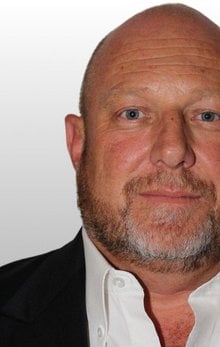
Warren Smith
Global Mining Market Director