
Can Satellite Power Your Cloud-Based Operations?
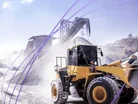
Mines are often located in remote, geographically challenging areas which means connectivity can be an issue.
Turning data into actionable business intelligence requires connectivity, spanning from on-site and off-site data.
SES utilises a mix of Medium Earth Orbit (MEO), Low Earth Orbit (LEO) and Geostationary Orbit (GEO) satellites to provide uninterrupted, high-speed and low-latency broadband.

Multi-orbit satellite connectivity
The mining sector is facing a shift in how operators think about and approach connectivity.
Digital technologies have become key enablers of the mining industry, allowing miners to improve production, reduce downtime, enhance safety and optimise asset performance.
Leading satellite solutions company SES designs space solutions to complement the requirements of mining connectivity and enable unified, digital operations.
Digital transformation is accelerating globally and across sectors, within mining operations it depends on continuous and reliable access to data.
From autonomous equipment and sensor networks to fleet management systems and environmental monitoring platforms, the need to utilise cloud operations is essential.
By combining GEO, MEO and LEO satellite networks, versatility is increased which is essential throughout the energy-operations lifecycle.
SES’s predictable, SLA-backed connectivity complements terrestrial networks to enhance network reliability and coverage, while adding features like the industry’s highest upload (return path) throughput to facilitate cloud-based aggregation and analysis of mountains of data generated at remote sites.
Intelligent network orchestration
SD-WAN enables mining operations to combine satellite, LTE/5G, fixed wireless and terrestrial networks into a single intelligent infrastructure, automatically prioritising critical applications and rerouting traffic if a connection fails.
This ensures operational technology, equipment telemetry and workforce communications remain uninterrupted, even in challenging environments.
As networks evolve towards software-defined, 5G-enabled architectures, mining companies can benefit from greater agility, with connectivity adapting in real time to changing operational demands.
Backed by infrastructure spanning 99% of the world's populated regions, 120 GEO and MEO satellites, 500,000 miles of fibre, 150 teleports and 50 points of presence, these hybrid networks provide the global coverage needed to support modern digital mining operations.
“Mining operations generate enormous volumes of data, but that data only creates value for the miner when it can be turned into actionable intelligence," says Jean-Philippe Gillet, President, Fixed Data Vertical, SES.
"As part of the collection of technologies used by miners, SES’s MEO adds the kind of reliable, high-performance connectivity that enables companies to leverage cloud applications, AI and automation to improve productivity, enhance safety and reduce operational downtime everywhere they operate.”
Cloud and industrial IoT
As mining operations become increasingly connected, the ability to securely transport data from remote sites to cloud platforms is becoming a key driver of operational performance.
Data collected from equipment, autonomous vehicles, processing plants, environmental sensors and workforce systems enables real-time visibility across mining operations, supporting cloud applications, automation, AI and business intelligence.
Rather than simply connecting remote sites, modern communications networks help mining companies turn operational data into measurable business outcomes, including:
- Reduced unplanned equipment downtime through predictive maintenance
- Improved fleet utilisation and production efficiency
- Enhanced worker safety through real-time monitoring and remote support
- Faster decision-making through centralised operational intelligence
- Improved environmental and regulatory reporting
- Greater operational resilience across geographically dispersed assets
As mining companies continue their digital transformation, connectivity is becoming a strategic enabler rather than a utility.
The combination of cloud-based analytics, resilient communications and intelligent networking allows operators to convert data into insights and insights into action, helping them improve efficiency, resilience and long-term competitiveness across even the most remote mining sites.