
Davos: How Materials are Redefining the New World Order
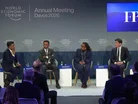
When nearly 3,000 government and industry leaders descended upon the snow-capped Swiss Alps for the World Economic Forum's 2026 Annual Meeting, they arrived amid mounting geopolitical tensions.
The gathering in Davos, themed "A Spirit of Dialogue," unfolded against intensifying geo-economic confrontation and a shifting world order.
Within this high-stakes environment, a panel titled "The Geopolitics of Materials" addressed a fundamental challenge: the energy transition and AI revolution represent hardware problems, not merely software challenges. The race to secure critical minerals has emerged as a primary driver of national security and industrial policy.

Ravi Agrawal, Editor-in-Chief of Foreign Policy, opened the session by framing the current period as an "AI revolution" that has triggered a "new scramble" for materials in a world increasingly defined by protectionism and shifting alliances.
Critical minerals supply challenges
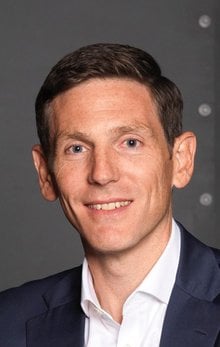
Jonathan Price, CEO of Teck Resources, outlined the stark mathematical reality confronting the global economy.
"By 2035, we expect to see a doubling in the copper that is required relative to today and based on known supply forecasts, we expect to fall 30% short by then," Jonathan warns.
"And that's a huge problem because supply and demand always meet. And if the metals aren't available, it means that we can't build the grid that we need or we can't develop the data centres that are required."
This supply-demand gap could represent a substantial obstacle to infrastructure development globally, potentially limiting grid expansion and data centre construction essential for the AI revolution.
Saudi Arabia's mining diversification
Saudi Arabia, represented by Minister Bandar Alkhorayef, is positioning mining as its third industrial pillar alongside oil and petrochemicals. The Kingdom is addressing supply bottlenecks by streamlining bureaucratic processes.
"Now in Saudi Arabia, it takes between 30 and 90 days [to have a permit]," Bandar says, contrasting this with mining-rich Canada where the process can take a decade.
"Mining doesn't have a good reputation globally and for good reason."
However, he positioned mining as essential for diversifying the Kingdom's economy, noting that "more than 50% of our GDP is actually coming from non-oil revenue."
Boitumelo Mosako, CEO of the Development Bank of Southern Africa, emphasised that for the continent, critical minerals represent "strategic assets" rather than commodities. She advocated for moving beyond the colonial "pit to port" extraction model toward local processing, or beneficiation.
"What is key for us as a continent is to ensure that the previous models of extraction are not adopted," Boitumelo insists. "We actually need to negotiate the terms of how [we are] going to take advantage of this opportunity together."
Technology as a solution
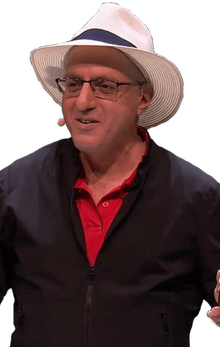
Jack Hidary, CEO of SandboxAQ, suggested that technology – specifically AI and quantum computing – could reduce reliance on scarce materials by enabling the design of alternatives.
"We can now ask the question of the software, help us design a different alloy, an alloy of other materials that are readily available that were already mining, already have permits already at scale and already plentiful that can give us the performance of a neodymium base magnet," Jack explains.
He also challenged current processing concentration, noting that "85% of all the batteries in the world are made in one country... 92% of all the lithium for those batteries is processed in China."
According to Jack, the future lies in "sovereign battery production" enabled by robotics and automation, potentially reducing geopolitical vulnerabilities in supply chains.
In a Davos defined by raw power dynamics and shifting borders, the panel's message emphasised that prosperity could depend on securing innovative and equitable supply chains for critical materials.



Executives
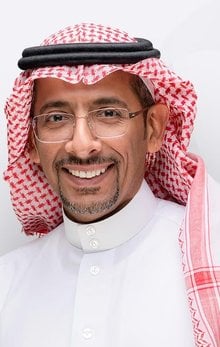
Bandar Alkhorayef
Minister
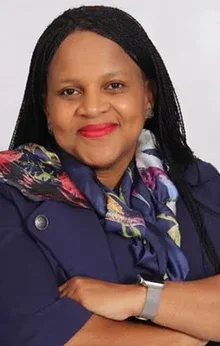
Boitumelo Mosako
CEO
Jack Hidary
CEO
Jonathan Price
President and Chief Executive Officer