
Resilience: G7 Strategy Talks on Critical Minerals Concerns
Amid attempts to diversify away from China's stronghold of critical mineral supply, the G7 administration is in talks to set up a permanent strategy.
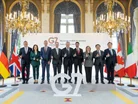
The Trade Ministers of the G7 met in Paris on May 5 and 6 2026, in advance of the June meeting, with discussions surrounding critical mineral supply chains.
Having formed the G7 Critical Minerals Action Plan in 2025, these talks are reportedly focused on making this a more permanent strategy.

Diversifying sourcing
The G7 acts as an intergovernmental political and economic forum, constituting of Canada, France, Germany, Italy, Japan, the UK and the US. Since the mid-1980s, these countries have been meeting regularly in order to discuss global economic policy and other transnational concerns.
Key topics include governance, international security, AI, critical minerals and more. The EU participates as a 'non-enumerated member', with the Commission president and European Council president joining heads of state during the annual G7 summit.
The upcoming summit will take place in Evian, France on the 15-17 June 2026. In preparation for the summit, leaders have been taking part in meetings to discuss moving away from reliance on Chinese sourcing.
The need for diverse sourcing across critical minerals is strong – as the world delves further into the energy transition, materials such as copper and lithium are facing high demand. Moreover, growing manufacturing demand and innovations in the defence sector increase further demand for core materials – of which, production is dominated by China.
Recent geopolitical events have demonstrated the risk of single-sourcing and over-reliance on a singular country. As a result, more countries have been investing into their own reserves and forming alliances with one another. In April, the US and the EU agreed to ally with one another surrounding critical mineral strategy – particularly with materials such as rare earths, lithium and cobalt.
Commitment to cooperation
In 2025, the G7 launched its Critical Minerals Action Plan, taking inspiration from the Five-Point Plan for Critical Minerals Security, which had been established in 2023. The Action Plan had a focus on diversifying the production and supply of critical minerals, as well as the encouragement of investments and innovation.
The G7 partners appointed Envoys to the alliance – focussed individuals who are leading the acceleration of critical mineral projects and working to strengthen global supply chains.
On 5th and 6th May 2026, trade ministers gathered in Paris to reaffirm their commitment to cooperation within the G7. As growing pressures on value chains continue, with ongoing market volatility and increasing risks to the energy market, the leaders discussed the importance of cooperation, economic resilience and security.
In preparation for the June summit, leaders gathered to pre-discuss topics of conversation which will take place in Evian.
Upon arrival, French Foreign Trade Minister Nicolas Forissier said: "I believe we will make very concrete progress on rare earths and critical minerals, securing our supply chains and ensuring we are not held hostage by certain countries."
Despite agreements of a necessary diversification from Chinese production, officials told Reuters that there were differing perspectives on how to do so.
Supply chain resilience
Throughout the discussions and subsequent statements, the need for collaboration and transparency are key to developing resilience supply chains.
"We express our grave concerns regarding economic coercion, including coercion through arbitrary export restrictions that may lead to supply chain disruptions, notably for critical minerals, and undermine economic security and resilience," wrote the trade ministers in a joint statement.
"We underscore the strategic importance of critical minerals supply chains for our economic security and resilience. We recognise that they remain vulnerable to high levels of concentration, supply disruptions and market distorting practices, which undermine the development of alternative supply capacities."
Various countries are already presenting themselves as strong contenders to China's dominance, with Brazil, Mexico and Australia emerging as having strong supplies.
For now, it is unclear what strategies the G7 leaders are forming, but the June Summit may provide some answers to critical mineral supply chain stability.