Sweden Declares Mining a National Security Interest
Sweden's government has declared mining of critical metals and rare earth minerals a national security interest, launching a new strategy to reduce the country's dependence on China.
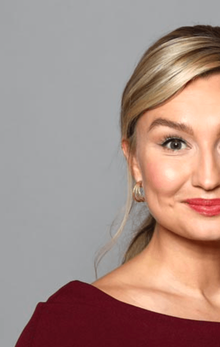
The announcement came on 23 July, 2026, from Ebba Busch, Sweden's Enterprise Minister and Deputy Prime Minister.
China accounts for around 69% of global rare earth mine production, according to the US Geological Survey, which gives Beijing significant leverage in its trade disputes with Washington, and other trading partners.
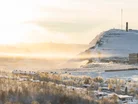
State-owned mining company LKAB’s Kiruna mine is home to the Per Geijer deposit, one of the European Union's flagship projects to reduce reliance on China, holding 1.2 billion tonnes of total mineral resources, including 2.2 million tonnes of rare earth oxides.
Johan Menckel, who became President and CEO of LKAB earlier this year, has said the company can play a decisive role in developing Europe's industrial value chains.
“A smaller country like Sweden, rich in natural resources and home to world-class mining companies, must leverage that strength ”
Sweden’s new national mining strategy
Sweden will create a dedicated authority to handle environmental permits for mining projects, with the aim of speeding up the approvals process, which currently faces long lead times.
The government is also looking into the creation of a state-owned investment company to support the sector.
Deputy Prime Minister Busch says: "A smaller country like Sweden, rich in natural resources and home to world-class mining companies, must leverage that strength."
The strategy also proposes reviewing the mineral fee paid by mining companies, so that areas hosting mines receive a bigger share of the revenue.
"Today the fee goes straight into the national treasury, while local residents live with the machines, the traffic and the environmental impact," adds Deputy Prime Minister Busch.
Designating certain mineral deposits as areas of national interest will allow the state to intervene earlier in land-use conflicts, according to the Swedish government.
- Sweden produces around 89% of the European Union's iron ore, per the USGS
- The Per Geijer deposit holds 1.2 billion tonnes of total mineral resources, including 2.2 million tonnes of rare earth oxides
- LKAB's new rare earth processing plant near Luleå is expected to begin commercial operation in late 2029 or early 2030
Strengthening Europe's supply chain
Sweden accounts for around 89% of the European Union's iron ore production, according to the US Geological Survey, making it the bloc's leading mining nation. The country also produces lead, zinc and copper, alongside its growing rare earth ambitions.
Deputy Prime Minister Busch has previously described the stakes in stark terms. "Electrification, the EU's self-sufficiency and independence from Russia and China will begin in the mine," she said when LKAB first announced the Kiruna discovery in 2023.
The Per Geijer find remains years away from production, even with faster permitting. Rare earth exploration and development timelines typically run into decades, meaning Sweden's new strategy is as much about long-term positioning as immediate supply relief.
Sweden's move follows a wider pattern of Western governments seeking to reduce dependence on Chinese critical mineral supply chains, including coordinated efforts through the G7 and moves by individual countries including the UK, which is investing £50m (US$66.5m) into strengthening its domestic supply chain.
What happens next
The strategy's expansion of mining rights complicates an ongoing dispute with Sweden's indigenous people, the Sami, who say expanded mining threatens their traditional way of life. The government has not yet detailed how the new national interest designation will address the Sami’s concerns.
LKAB is already building a demonstration plant near Luleå, designed to process waste from its Malmberget mine, and eventually by-product from Per Geijer, into rare earth oxides.
The plant is expected to begin commercial operation in late 2029 or early 2030, with LKAB targeting up to 18% of Europe's rare earth oxide needs once at scale.
The creation of the new permitting authority and the proposed state-owned investment company will require further legislative detail before either can move forward, according to the government.