
G7 Acts on Critical Minerals as China Tightens Grip
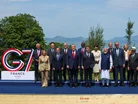
G7 leaders have committed to reducing dependence on any single non-G7 supplier of rare earths and permanent magnets to below 60% by 2030, during talks at the Évian summit in France.
Member states agreed to establish a new coordination platform led by the International Energy Agency (IEA), alongside piloting stockpiling mechanisms for critical minerals. Lithium and nickel will be the two pilot metals, with more to be added later.
According to the IEA, China currently accounts for more than 90% of global rare earth refining capacity. The Évian agreement is the West's strongest attempt yet to loosen that dependence.
France held the G7 presidency throughout 2026 and made critical minerals supply chain security a central priority, with trade ministers meeting in Paris twice before the summit to prepare the ground.
Why the G7 is acting now
Rare earths are the 17 metallic elements that go into high-performance magnets and electronic components. China built its dominance in processing them through decades of state-backed investment, and Western countries gradually came to rely on that capacity for their own manufacturing, including defence.
That reliance was brought into sharp focus in 2025 when China imposed export controls on rare earth permanent magnets, the critical materials that go into EV motors, wind turbine generators, jet engine components and consumer electronics. Some parts of Western supply chains came close to halting, revealing how little alternative processing capacity existed outside China.
The G7 had already begun addressing the issue at the 2025 Kananaskis summit in Canada, where member states established a Critical Minerals Production Alliance, but it stopped short of coordinated market intervention.
The Évian agreement builds on the Kananaskis summit with the introduction of formal IEA involvement, pilot mechanisms for specific minerals and targets to ensure no single non-G7 country supplies more than 60% of rare earth imports by 2030.
What the agreement covers
Under the agreement, the IEA's job will be to monitor critical minerals markets, issue early warnings of supply risks and provide analysis to support G7 policy decisions.
As the pilot minerals, lithium and nickel will begin to be stockpiled by G7 members. Both metals are essential to EV battery manufacturing.
The G7 has committed to backing investment across the full supply chain, from extraction through to finished product. According to the joint statement, member governments have already announced 195 critical minerals projects since the start of 2026, totalling €64bn (US$74bn) in investment.
Measures under active consideration include price support mechanisms, subsidies, joint procurement arrangements and quotas for specific sectors, including defence.
What it means for mining operators
Major miners with lithium and nickel interests including BHP, Vale and Rio Tinto stand to benefit from the Évian plan. Price volatility has killed viable-looking projects in the past, but government price floors and purchase guarantees would reduce that risk, which could help operators secure financing.
Price guarantees cannot address the processing problem, but work is being done on that front. Hertha Metals has been working to close the high-purity iron gap in the US rare earth magnet supply chain, targeting a specific US bottleneck between raw ore and finished magnet production.
The Pentagon committed US$500m to Phoenix Tailings this year for a midstream rare earth processing facility, dubbed the Freedom Facility, designed to separate and refine rare earth metals for use across US industry and defence supply chains.
Both projects are responses to the 2027 Defense Federal Acquisition Regulation Supplement (DFARS) deadline that requires US defence contractors to source rare earth magnets, like those found in the F-35 fighter jet, domestically.
Although they are not a response to the Évian agreement, G7 coordination could make the next wave of similar projects easier to finance and faster through permitting.
The limits of the agreement
Neha Mukherjee, research manager at Benchmark Mineral Intelligence, told Reuters that the pace of supply chain diversification will depend on whether policy support translates into investment across the midstream and downstream parts of the supply chain.
Japan has been attempting to reduce its Chinese rare earth dependence since 2010 yet still relies on China for around 80% of its rare earth imports, according to Benchmark Mineral Intelligence.
The US proposal for a formal critical minerals trading bloc met resistance from allies during negotiations, according to Reuters. The final agreement is a coordination framework, not a binding arrangement.
France has proposed a permanent secretariat to carry the critical minerals agenda between G7 presidencies. Whether other members back that will be an early indicator of how seriously the Évian commitments are being treated.